

"Benchmark interest rate to be lowered within the year" ... Large inflows into bond funds
Summary
- It was reported that domestic bond fund assets under management have increased by ₩2.4054 trillion in the past month, drawing concentrated investor capital.
- With expectations for a benchmark interest rate cut within the year, capital gains from rising bond prices as rates fall are anticipated.
- Experts emphasize the importance of establishing a bond investment strategy, noting that now is a favorable time to buy long-term bonds.
'Money move' amid interest rate cut expectations
Bond fund AUM up 2.4 trillion in one month
Potential for capital gains when rates fall
Demand for 'safe assets' from high-net-worth individuals also an influence
Billions flowing into bond ETFs as well
Experts: "Good time to preemptively buy long-term bonds"
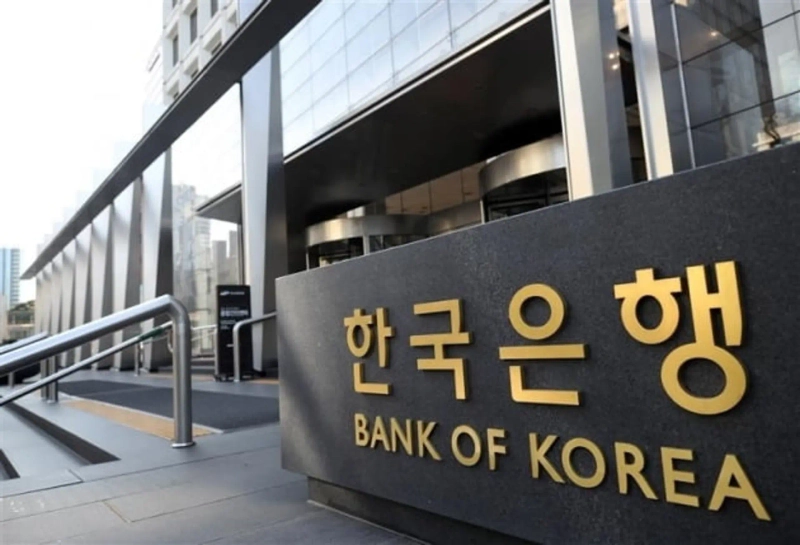
Huge amounts of money are flowing into domestic bond funds. As the expiration of the mutual tariff suspension between the US and China draws near, demand for safe assets among high-net-worth individuals is rising. Anticipation that the Bank of Korea will cut its benchmark interest rate within the year is also fueling expectations for bond price increases, which move inversely to rates.
◇Bond fund AUM up by 2 trillion
According to financial information provider F&Guide on the 1st, domestic bond fund assets under management reached ₩90.6559 trillion at the end of last month. This marks an increase of ₩2.4054 trillion over the past month, making it the largest inflow among all fund categories. In contrast, money market funds (MMFs), which had steadily attracted capital throughout this year, saw outflows of ₩5.6272 trillion in the past month. MMFs are products that invest in short-term bonds (maturing within a year), commercial paper (CP), and certificates of deposit (CD), generating returns from these assets.
Despite concerns about rising real estate prices, expectations of a Bank of Korea rate cut within the year are stoking the 'money move' into bond funds. When rates fall, bond yields drop and prices rise, generating capital gains for investors. There's also a growing preference for safe assets. Due to increased volatility in the US stock market and a rapid short-term surge in the domestic KOSPI index, some funds are flowing into the bond market as investors seek to realize profits and secure stable, fixed interest income.
Yeha Ahn, a researcher at Kiwoom Securities, predicted, "There are concerns that the Bank of Korea's rate cut schedule will be delayed, but considering the need for economic stimulus such as a supplementary budget, the central bank will ultimately move to cut rates." Eol Shin, head of investment strategy at Sangsangin Securities, also stated, "If domestic and international conditions remain stable, there is a possibility of a rate cut in October this year," adding, "The final rate for this year is likely to be 2.00% per annum." Starting with a cut in the benchmark rate by the Bank of Korea in October last year (from 3.50% to 3.25% annually), it was further reduced in four steps by May of this year (October and November last year, February and May this year, each by 0.25 percentage points). The current base rate stands at 2.50% per annum.
◇Bond ETFs remain popular despite low yields
Large amounts of capital are also flowing into bond products in the ETF market. Among the top 10 ETFs with the highest inflows over the past month, half were bond-focused ETFs. According to KOSCOM's ETFCheck, the ETF with the largest net inflow over the month was 'TIGER Money Market Active', which drew ₩562.6 billion. This is a short-term cash management ETF investing in ultra-short-term bonds (maturing within 3 months), CP, and similar assets. The one-month yield is only 0.23%, but it offers efficient management of short-term funds.
'KODEX 26-12 Corporate Bond (AA- and Above) Active', investing in high-quality corporate bonds rated AA- or above, attracted ₩228.4 billion to rank fourth. 'KODEX KOFR Rate Active (Synthetic)' and 'TIGER Short-Term Bond Active' came in fifth and sixth, with inflows of ₩217.8 billion and ₩197.6 billion, respectively.
There are also views that now is a good time to buy long-term bonds which have recently risen in the short term. Long-term bonds are more sensitive to interest rate changes. When rates fall, long-term bond prices rise more sharply, offering greater returns. The 10-year treasury bond yield stood at 2.78% per annum on this day, up more than 0.20 percentage points from 2.56% at the end of April. Similarly, the 20-year bond yield rose from 2.54% to 2.72% over the same period. Yoonmin Baek, a researcher at Kyobo Securities, commented, "The base rate is likely to be kept at its current level at the July MPC meeting, but the general direction toward a rate cut within the year will remain unchanged. From an investment strategy perspective, it’s an appropriate time for bond investment."
Reporter Ara Jo rrang123@hankyung.com

Korea Economic Daily
hankyung@bloomingbit.ioThe Korea Economic Daily Global is a digital media where latest news on Korean companies, industries, and financial markets.