

Collapsed Dollar Value… 'Worst in 50 Years'
Summary
- It was reported that the value of the dollar fell by more than 10% in the first half of this year, recording the largest decline since the introduction of the floating exchange rate system in 1973.
- It was stated that concerns over the uncertainty of tariff policies, credit rating downgrades, fiscal deficit expansion, and the possible weakening of the Fed's independence are undermining confidence in the U.S. financial system.
- Bloomberg News predicted that dollar weakness is likely to continue in the second half of the year, citing ongoing policy uncertainties.
U.S. Dollar Index Plunges 10% in First Half
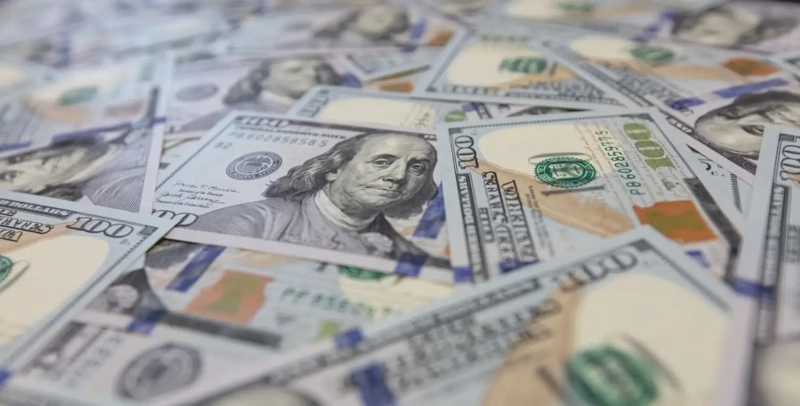
The value of the U.S. dollar dropped by over 10% in the first half of this year, marking its weakest performance since the introduction of the floating exchange rate system in 1973.
According to Bloomberg News on the 30th (local time), the U.S. Dollar Index—which compares the value of the dollar against the currencies of six major countries, such as the euro and yen—fell by 10.8% in the first half of this year. This is the steepest decline since the first half of 1973 (-14.8%), when the gold standard under the Bretton Woods System collapsed and the era of floating exchange rates began.
In the first half of this year, the dollar weakened by 14.4% against the Swiss franc, 13.8% against the euro, and 9.7% against the British pound. The U.S. Dollar Index, which peaked at 110.176 in mid-January just before President Donald Trump took office, fell to 96.69 as of the 1st, marking its lowest point of the year.
What is especially notable is that, despite President Trump delaying tariffs on most countries and the U.S. stock market recouping its early-year losses, the weakening trend in the dollar has persisted.
Some analysts interpret this as an indication that the dollar's status as a safe haven asset is wavering. Concerns about the uncertainty of tariff policies, credit rating downgrades, widening fiscal deficits due to large-scale tax cuts, and the possible weakening of the Fed's independence have all surfaced simultaneously, leading to perceptions that America’s standing as the central pillar of the global financial system is not what it once was.
Steve Englander, Global Head of Foreign Exchange Research at Standard Chartered Bank, pointed out, "In the past, the U.S. was regarded as exceptional, but now there is concern that it is increasingly being seen as just one country among many." Bloomberg News forecasted that, given the persistent policy uncertainties, the dollar is likely to remain weak in the second half of the year as well.
Reporter: Lim Da-yeon allopen@hankyung.com

Korea Economic Daily
hankyung@bloomingbit.ioThe Korea Economic Daily Global is a digital media where latest news on Korean companies, industries, and financial markets.