

Trump criticizes Japan: "Won't import rice even in shortage" after pressure on cars
Summary
- "President Trump threatened high tariffs while pressuring Japan to open its automobile and rice markets."
- "Following this trade pressure, instability emerged in the Japanese stock market as the Nikkei 225 Index plunged 1.2%."
- "It was noted that the results of future U.S.–Japan trade talks could impact tariff rates and the risk of a recession in Japan's economy."
One week before July 9, threatens to "send a tariff letter"
Watching to see if Japan will open the rice market to lower auto tariffs
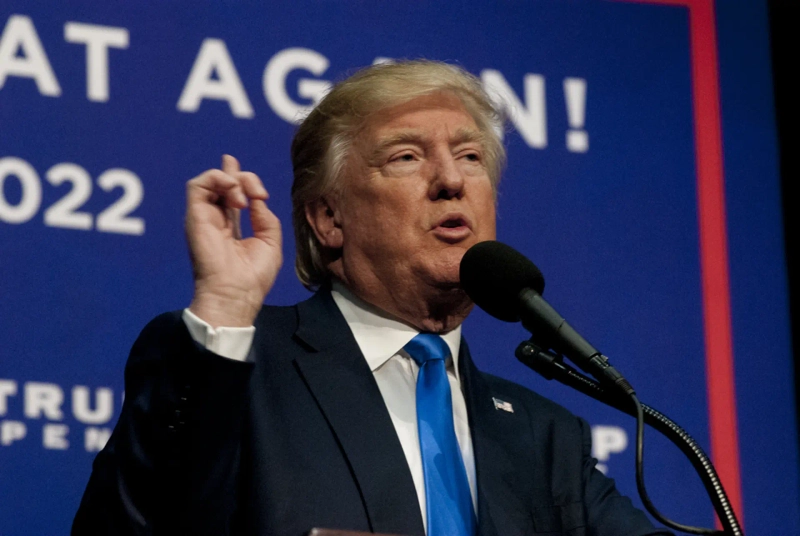
President Trump, after pointing out that Japan does not buy U.S. automobiles, went on to say that even amid a rice shortage, Japan refuses to import U.S. rice—threatening to raise tariffs. In response to Trump's threats, the Japanese stock market showed anxiety as the Nikkei 225 Index plunged 1.2% that day.
On the 1st (local time), President Trump posted on his social media, "Japan refuses to take our rice even as it suffers from a serious rice shortage," adding, "We will send them a letter (to resume imposing high tariffs)."
Immediately following Trump's statement, Kevin Hassett, the Chairman of the National Economic Council (NEC), said that talks with Japan would nonetheless continue and that deals with partners are planned to be finalized after the U.S. Independence Day holiday on July 4.
Ahead of the scheduled resumption of high mutual tariffs on July 9, Japan has maintained its stance of not opening the rice market nor accepting the 25% auto tariff.
Trump's brinkmanship against Japan, pressuring for the opening of the rice market following auto imports, came one week before July 9. He has repeatedly stated that he would shorten talks with nations where deals are deemed difficult and instead send a letter stipulating tariff rates.
Since the announcement of mutual tariffs in April, the only comprehensive trade agreements announced by the Trump administration have been those with China and the United Kingdom.
Kevin Hassett, Chairman of the National Economic Council (NEC), stated, "Currently, the government is focusing on getting President Trump's tax cut bill (BBB) passed in Congress before Independence Day." He added that after this, he would explain country-specific negotiation plans to the president and seek his approval.
Over the past year, rice prices in Japan have doubled due to shortages, with the Japanese government releasing emergency reserves to the market and shutting down established distribution networks.
Ahead of the House of Councillors election on July 20, the government of Prime Minister Shigeru Ishiba of Japan has repeatedly stated that it "will not sacrifice farmers to secure a much more economically impactful reduction in auto tariffs."
Previously, in a weekend interview, President Trump emphasized that it is unfair for Japan to sell millions of cars to the U.S. while buying almost none in return, stressing that he had no intention of dropping auto tariffs on Japan. He also hinted at a willingness to demand the opening of other sectors, saying that Japan could buy many other products, such as oil, from the U.S.
The central issue in Japan–U.S. trade negotiations is auto tariffs. Japan is focused on eliminating tariffs to protect its auto industry, a pillar of its economy, while the U.S. is seeking to reduce its substantial deficit in the auto sector.
In 2024, Japan's trade surplus with the U.S. reached ¥8.6 trillion (about ₩80.77 trillion), with roughly 82% stemming from cars and auto parts. According to the U.S. Census Bureau, Japan's trade surplus with the U.S. is the 7th largest among individual U.S. trading partners.
Akazawa, the top negotiator on the Japanese team, argued that Japan's auto industry has contributed significantly to the U.S. economy by investing over $6 billion and creating 2.3 million jobs there.
Given Japan's focus on automobiles in negotiations and U.S. demands for further opening to agricultural products, these talks could have implications for Korea as well. The U.S. is urging Japan to open its rice market and pressing Korea to further increase beef imports.
The U.S. already imposes a 25% tariff on automobiles and auto parts and a 50% tariff on steel and aluminum. Currently, the 10% tariff will rise to 24% for Japan if an agreement is not reached in time. If a breakthrough is not found, Japan's economy, already contracted in the first quarter, could enter a technical recession.
Japan is one of America's most important trading partners, so Trump administration officials have categorized Japan as a subject for negotiation rather than for blanket tariff imposition.
U.S. Secretary of Commerce Howard Lutnick stated last week that the government is finalizing a series of trade agreements with about 10 'major' partners, and for other countries, will send letters specifying tariff levels.
Guest reporter Jung-ah Kim kja@hankyung.com

Korea Economic Daily
hankyung@bloomingbit.ioThe Korea Economic Daily Global is a digital media where latest news on Korean companies, industries, and financial markets.