

"Low Korean Income Means Tariffs"?…The U.S. Uses 'Superpower' Status to Push Through [Lee Sang-eun's Washington Now]
Summary
- The U.S. government is reportedly pressuring negotiating countries by signaling the possibility of applying high tariffs ahead of the mutual tariff grace period’s end.
- The U.S. pharmaceutical industry is urging improvements regarding drug pricing policies in several countries, including Korea, through trade negotiations.
- The negotiation draft reportedly includes that Korean worker income is lower than that in the U.S., forming a basis for imposing tariffs.
Mutual Tariff Grace Period Nearing Its End
Forcing Negotiations with Unilateral Threats
"High Tariffs Possible Even with Faithful Negotiations"
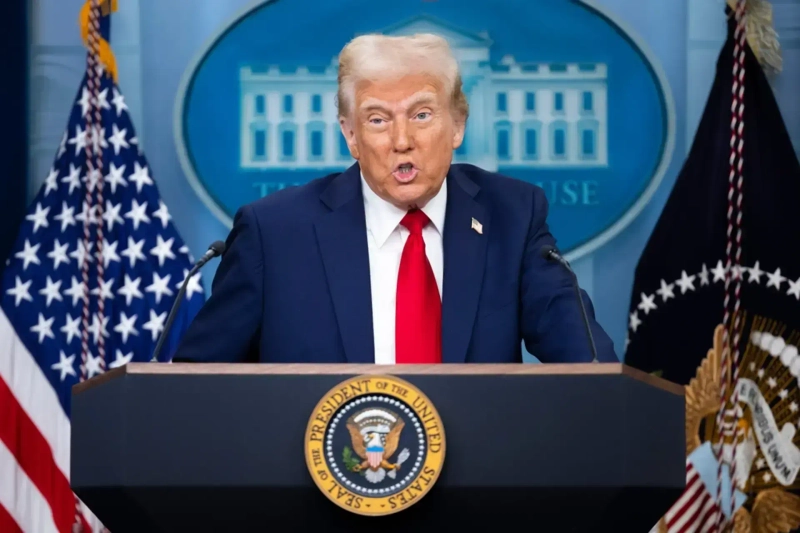
The U.S. government is emphasizing that it is unlikely to easily extend the mutual tariff grace period, which ends on the 8th. Until last week, there was talk of extending the period, but the attitude shifted 180 degrees following President Donald Trump’s stance that an extension is unnecessary. This is interpreted as a strategy to pressure the other party until the last moment by keeping the extension unclear to extract further concessions.
○"Tough Stance Means High Tariffs"
U.S. Treasury Secretary Scott Besant warned in a Bloomberg TV interview on the 30th that countries could "face high tariff rates" after July 9. He said, "Even countries negotiating in good faith, if they show a stubborn attitude and fail to reach the finish line, could revert to the high tariff rates announced on April 2," adding, "I hope this situation does not occur." This statement was a threat that even countries sincerely cooperating in negotiations could be subjected to high tariffs.
The Trump administration has repeatedly communicated this week that they expect major negotiations to conclude before the deadline. White House spokesperson Caroline Levitt stated at a press conference that President Trump would meet with the trade negotiation team this week to announce tariff rates. Secretary Besant mentioned in the interview, "A series of deals will be finalized."
Notably, Secretary Besant’s remarks are seen as targeting countries like Japan, which have seen no progress after seven rounds of negotiations, particularly in the automotive sector. President Trump stated on social media, "I want to show how complacent countries around the world have become toward the United States," adding he would "send a letter to Japan."
He claimed, "I have great respect for Japan, but they suffer from a serious rice shortage while refusing to accept American rice." While Japan has requested exemption from auto tariffs, President Trump remains firm in demanding that Japan import American cars. However, it appears that Japan is unlikely to make concessions in negotiations ahead of the House of Councillors election on July 20.
○India to Increase LNG Imports
India, for which President Trump said a deal would soon be announced, agreed to lower tariffs on thousands of items. The Financial Times (FT) reported that in order to reduce its trade surplus, India agreed to import more liquefied natural gas (LNG) from the U.S. India is also striving to protect its agriculture and dairy sectors, which are crucial to small farmers. FT explained that the issue is particularly sensitive for Hindus, given the taboo surrounding dairy produced from cows fed with cattle-derived feed.
The European Union (EU) is also rushing to wrap up the final stages of negotiations with the U.S. Maroš Šefčovič, the EU Commissioner for Trade and Economic Security, announced that the working-level team departed for Washington on the 30th and that he, too, planned to travel to Washington on the 1st. Commissioner Šefčovič explained that the plan was to conduct final negotiations with the U.S. over two days, July 2–3. However, unlike Canada, the EU stated it did not intend to include the Digital Markets Act (DMA) and Digital Services Act (DSA) in the negotiation topics.
○PhRMA: "Korean Drug Prices Are Too Low"
While President Trump continues to make unilateral remarks to secure negotiating dominance, American businesses are actively filing their grievances. The Pharmaceutical Research and Manufacturers of America (PhRMA), the main lobby group for the U.S. pharmaceutical industry, submitted a letter to the United States Trade Representative (USTR) on the 27th of last month, urging that trade negotiations be used as leverage to address unfair pharmaceutical policies and practices by foreign governments.
The association identified South Korea, Australia, Canada, Japan, the United Kingdom, and the EU as countries where such issues are serious. They criticized the Korean Health Insurance Authority for suppressing drug prices below fair market value. The U.S. government is currently investigating how imports of semiconductors, timber, copper, and pharmaceuticals affect national security. After collecting input from industries, the Trump administration added home appliances like refrigerators and washing machines to the list of goods subject to the 50% steel tariff.
It is known that the draft negotiating document previously sent to the Korean government contained rather embarrassing content directly reflecting industry complaints. For example, it reportedly claimed, "Korean workers’ average income is lower than that of the U.S., so they have a competitive edge over American companies, which could be a basis for imposing tariffs."
However, as negotiations progress, such unreasonable items are expected to be naturally excluded. A senior government official said, "Finding areas where mutual interests can be pursued quickly and resolving uncertainty early will benefit both sides."
Washington = Lee Sang-eun, Correspondent selee@hankyung.com

Korea Economic Daily
hankyung@bloomingbit.ioThe Korea Economic Daily Global is a digital media where latest news on Korean companies, industries, and financial markets.