

"'Mutual Tariff 30~35%' Trump Threatens... 'Japan Even Feels Insulted' [Lee Sang-eun's Washington Now]"
Summary
- President Trump reportedly threatened that he could impose higher mutual tariffs on Japan than the existing rate of 24%.
- Japan is showing differences in positions on trade issues such as car market opening and rice imports, causing difficulties in negotiation.
- Warnings have been issued that, without tangible results in tariff negotiations, high tariffs may be imposed, which is expected to directly impact the investment environment in Japan and South Korea.
Trump Criticizes 'Other Countries Are Ill-mannered'
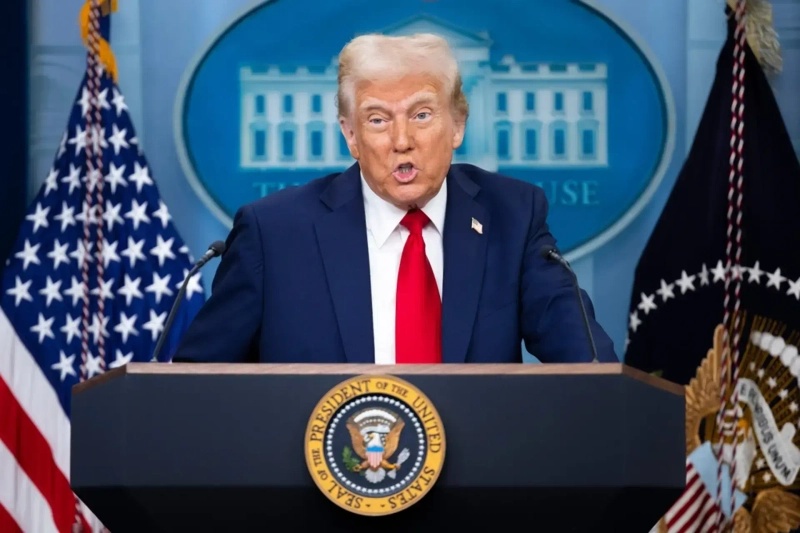
President Donald Trump once again publicly declared that he has no intention of deferring mutual tariffs. He also threatened that higher tariff rates could be imposed on Japan compared to the announcement made last April.
On the 1st (local time), President Trump made these remarks to reporters aboard a plane on the way back from visiting a temporary detention facility for illegal immigrants in Florida, known as 'Alligator Alcatraz.' He especially emphasized, "I've been dealing with Japan, but I'm not sure if a deal will be reached. I'm doubtful about it." President Trump's general assessment is that "Japan is very competent, but very selfish." He added, "I love Japan and really like the new Prime Minister (Prime Minister Ishiba), but it's really difficult to negotiate because they've deceived us for 30~40 years."
For two consecutive days, he pointed out the rice issue. He said, "Japan does not import (American) rice. Despite desperately needing rice, they still refuse to take it." He also added, "They export millions of cars (to the U.S.), but over the past decade, we haven't sold them even a single car." He continued, "We tell them that we’re sorry but that we cannot do that," and asserted, "They have been very unfair—those days are over." Even the day before, he used the rude expression 'spoiled' on SNS criticizing countries that act 'spoiled' to the United States and pushed for the speedy conclusion of tariff negotiations. He pointed out Japan, stating, "Despite lacking rice, they’re not importing ours."
He said, "We'll tell them to pay 30%, 35%, or whichever tariff rate we decide," explaining, "Because our trade deficit with Japan is so large, and that's very unfair to the American people." The mutual tariff rate on Japan announced by President Trump on April 2 was 24%, but now he says it could be raised. The mutual tariff rate announced on April 2 is a figure arbitrarily calculated by the U.S. based on the size of the trade deficit with Japan, under the misguided assumption that 'the U.S. trade deficit is due to tariff and non-tariff barriers.'
The Trump administration is continuing maximum pressure on countries to wrap up negotiations before the mutual tariff deferral expires on the 8th. In particular, Japan is repeatedly being targeted and mentioned. The perception that Japan—once considered a relatively easy negotiation counterpart—is holding out by demanding removal of auto tariffs is seen as the background. With the House of Councillors election coming up on the 20th, Japan is in no position to easily promise opening its rice market, among other sectors.
Scott Besant, the U.S. Secretary of the Treasury, who mentioned extending the mutual tariff deferral last week, this week aligned with President Trump in stating that negotiations will be settled in a 'flurry' by the 8th. He warned, "Even if negotiations are in good faith, countries that don't reach the finish line can face high tariffs." His reference to "stubborn attitude" may have been aimed at Japan, which has gone through seven rounds of talks without concrete progress.
A U.S. official in Washington commented, "I've heard that the Japanese negotiators are feeling even insulted because the U.S. is making demands that can't be accepted." President Trump maintains his position that, as Japan sells many cars in the U.S., Japan should also buy American cars. He overlooks the fact that large, gas-guzzling American vehicles do not appeal to the Japanese domestic market. Despite Nippon Steel undertaking a massive $14 billion investment to acquire U.S. Steel, including granting golden shares to the U.S. government, President Trump only takes credit for the deal and maintains the stance that that's unrelated to the tariff negotiations.
Negotiations with South Korea are also underway, but progress has been slower compared to Japan due to the government transition process. Since the new negotiation team visited Washington, D.C. for the first time only last week, it's realistically difficult for South Korea to achieve concrete negotiating outcomes by the 8th. However, as the negotiation issues with the U.S. are similar to Japan's, Japan's difficulties also attract keen attention in South Korea.
Previously, the Trump administration imposed differentiated mutual tariffs on 57 economic entities (56 countries + the European Union), including South Korea and Japan, on April 9, but decided to grant a 90-day deferral (excluding China) just 13 hours later. The mutual tariff deferral for China is valid until August 12.
Washington = Lee Sang-eun, correspondent selee@hankyung.com

Korea Economic Daily
hankyung@bloomingbit.ioThe Korea Economic Daily Global is a digital media where latest news on Korean companies, industries, and financial markets.