

Trump's Daring Stance: 'No Need to Give Money'—An Unexpected Windfall for Samsung and SK [Lee Sang-eun's Washington Now]
Summary
- The U.S. Senate passed a bill expanding the semiconductor tax credit from 25% to 35%, signaling a positive outlook for major semiconductor companies such as Samsung Electronics and SK Hynix.
- With the continuation of $3.9 billion in subsidies and $7.5 billion in loans under the existing CHIPS Act, the investment environment in the U.S. for related companies will improve.
- Meanwhile, tax credits related to electric vehicles and other renewable energy were drastically reduced, which will negatively impact Hyundai Motor Company, battery firms, and others.
U.S. Maintains CHIPS Act
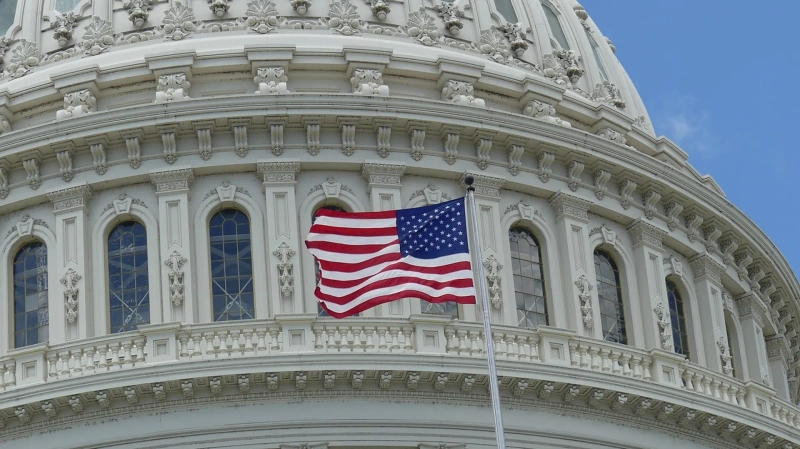
On the 1st (local time), the U.S. Senate passed the 'Donald Trump Tax Act,' which includes provisions to increase the semiconductor tax credit rate from 25% to 35%. President Donald Trump had called for abolishing the semiconductor tax credit, but it ended up being expanded.
The Senate passed the Trump Tax Act, also known as the 'One Big Beautiful Bill' (OBBBA), by vote. With the votes split 50-50, Vice President JD Vance, who also serves as President of the Senate, cast the tie-breaking vote in favor. Among the 53 Republican senators, three opposed the bill citing concerns over increasing national debt.
The bill not only retains key provisions of the CHIPS Act aimed at promoting U.S. investment by semiconductor companies but also expands tax credits for facility and equipment investments. Despite being originally a policy of former President Joe Biden, the measure was deemed necessary.
○ CHIPS Act Benefits Maintained
According to the bill passed by the Senate, semiconductor companies can receive a 35% tax credit for investments in facilities and equipment in the U.S. This is a significant increase from the previous 25% tax credit provided by the CHIPS Act. The share of tax credits is even higher than the initial Senate Finance Committee draft (30%). Accordingly, this is expected to positively impact the performance of affected companies. Eligible are facilities that began operations after the end of 2022 and break ground by the end of 2026.
President Trump had previously claimed, "We can attract investment through tariffs, even without giving money to wealthy semiconductor companies." However, the Senate also decided to maintain subsidies and loan benefits for semiconductor plant construction.
The CHIPS Act includes $39 billion in subsidies and $75 billion in loans. Major semiconductor and equipment companies such as Samsung Electronics, SK Hynix, Intel, TSMC, and Micron are making U.S. investments and continuing their projects based on these incentives.
○ Drastic Reduction in IRA Benefits
The Inflation Reduction Act (IRA), which promotes investments in renewable energy and the transition to electric vehicles, has been significantly scaled back. A tax credit that provided up to $7,500 for purchasing or leasing a new EV and up to $4,000 for buying a used one will be maintained only until the end of September. Previously, these benefits were to last until 2032, but now the EV market is expected to take a substantial hit with their removal.
While the House had maintained the benefits until the end of this year, the Senate shortened the period by three months. JPMorgan Chase predicted that eliminating EV support will cause about $1.2 billion in damages for Tesla. Companies such as Hyundai Motor Company, domestic battery manufacturers, and related parts suppliers who made large investments in the U.S. with hopes for EV market expansion are also expected to face adverse effects.
It has essentially become difficult to benefit from investments in wind and solar power. The Senate Finance Committee's draft originally granted benefits to projects that began operations before 2026, but this was eased to 'projects that start construction before 2026.' However, the industry assesses that actual project execution has become much more difficult, with, for example, taxes being imposed if Chinese-made components are used. This is a negative for businesses like Hanwha Qcells.
Support for the advanced manufacturing production credit (AMPC), affecting investments and financial statements of domestic battery companies such as LG Energy Solution and SK On, has been retained. While the House passed a version of the bill that would end the tax credits a year earlier than previously scheduled (by 2032), the Senate removed this provision, restoring the original timeline.
○ Three Republicans Defect…To Be Reconsidered in the House
The bill also includes provisions to permanently extend the tax cuts and jobs act (TCJA) introduced during the first Trump administration, to pay $1,000 into a 'Trump Account' for children born during Trump's term, and to cut Medicaid, the federal health program for low-income Americans.
Of 53 Republican Senators, 50 supported the bill. Senator Rand Paul (Kentucky) opposed it due to concerns over raising the debt ceiling by $5 trillion, while Senator Thom Tillis (North Carolina) and Senator Susan Collins (Maine) opposed it for the negative local impact of Medicaid cuts.
Senator Lisa Murkowski (Alaska), once expected to oppose the bill, ultimately supported it, which proved decisive. With 100 Senators split evenly at 50-50, Vice President JD Vance (serving as President of the Senate) exercised the tiebreaker authority to lead its narrow passage.
Since the bill has been amended, it must be passed again in the House in its current form and signed by the President before it can be enacted. House Speaker Mike Johnson and House Republicans expressed significant dissatisfaction with the Senate's changes, but additional amendments would require the Senate's approval again, making this unlikely. President Trump is urging lawmakers to finalize the bill by July 5, before U.S. Independence Day.
Washington = Lee Sang-eun, Correspondent selee@hankyung.com

Korea Economic Daily
hankyung@bloomingbit.ioThe Korea Economic Daily Global is a digital media where latest news on Korean companies, industries, and financial markets.