

Central Bank Chiefs: "Stablecoins Must Be Regulated"… Lee Chang-yong Warns of "Concerns Over Capital Regulation Evasion"
Summary
- Lee Chang-yong, Governor of the Bank of Korea, stated that issuing stablecoins could weaken regulatory controls on capital liquidity management and make it difficult to manage the money supply.
- Central bank governors from various countries expressed concerns that stablecoins could undermine monetary policy capabilities and weaken monetary sovereignty.
- While mentioning the necessity for regulation, Governor Lee also left open the possibility of regulatory easing, saying that plans can be recalibrated to meet new demand.
ECB Annual Monetary Policy Forum
Governor Lee: "If issued without regulation, controlling money supply will become difficult"
Powell & Lagarde: "Verification is necessary"
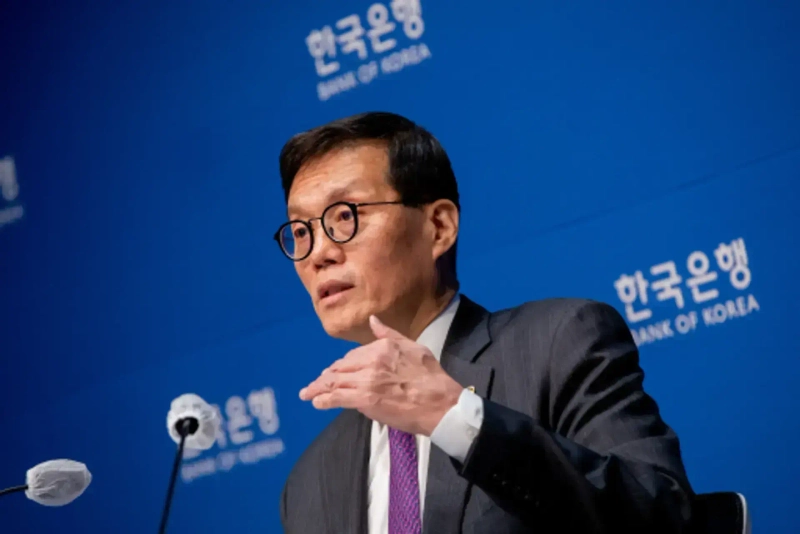
Lee Chang-yong, Governor of the Bank of Korea, voiced concerns that allowing the issuance of Korean won stablecoins without regulation could weaken capital liquidity management controls and make it difficult to manage the money supply.
Speaking on the 1st (local time) at the annual monetary policy forum of the European Central Bank (ECB) in Sintra, Portugal, Governor Lee was asked about his position on stablecoin regulation and responded, "This issue goes beyond the Bank of Korea's authority and should be discussed with the government."
In attendance at the forum were Governor Lee, Jerome Powell (Chair of the Federal Reserve), Christine Lagarde (President of the ECB), Kazuo Ueda (Governor of the Bank of Japan), and Andrew Bailey (Governor of the Bank of England).
At the event, Governor Lee stated, "After the passage of the Genius Act (a stablecoin regulatory law) in the U.S., there are now requests to allow non-bank institutions to issue Korean won stablecoins." He explained, "(The industry claims) that blockchain technology enables KYC and abnormal transaction detection, but I can't be fully certain it can be done perfectly." In an interview with CNBC that day, Governor Lee also warned that if private funds flow in due to the issuance of Korean won stablecoins, it could become very difficult to control the money supply.
Governor Lee’s remarks are consistent with his longstanding position: while not opposing issuance of Korean won stablecoins per se, they should first be permitted only by institutions that can be subject to regulation, such as banks. However, referring to the demands of fintech companies and others, he added, "As new demand has emerged, there is a need to recalibrate our plans," opening up the possibility of regulatory easing.
Central bank chiefs from other countries also generally expressed concern over the proliferation of stablecoins at the forum. President Lagarde pointed out that "there is a high possibility currency could be privatized, which is not good for the public interest. Stablecoins could undermine the ability to conduct monetary policy and unintentionally weaken monetary sovereignty." Governor Bailey said, "It is necessary to verify whether stablecoins can fulfill trust and nominal value preservation as a currency."
On the same day, Governor Lee also emphasized the need for structural reform. He said, "The potential growth rate has fallen from the 3% range to below 2%, yet people still hope for high growth around 3%." He stressed that "although there is mounting pressure for monetary policy to stimulate the economy, what is really needed is structural reform." Regarding the U.S. tariffs, he remarked, "If we do not respond with retaliatory tariffs, this could become a deflationary factor. The problem is the worsening growth rate rather than inflation."
Jinkyu Kang josep@hankyung.com

Korea Economic Daily
hankyung@bloomingbit.ioThe Korea Economic Daily Global is a digital media where latest news on Korean companies, industries, and financial markets.