

Will it become the 'next IonQ'? Korean 'Seohak Ants' can't sleep amid Circle investment frenzy
Summary
- Korean retail investors are enthusiastically investing in 'Circle,' the largest U.S. stablecoin company, holding 1.9% of total market capitalization.
- The recent passage of the U.S. stablecoin bill and efforts to establish a trust bank have acted as catalysts for the stock's rise.
- However, investment banks such as JPMorgan and Goldman Sachs warned of excessive expectations following a short-term surge and the possibility of a correction of over 50%.
Stock price jumps over 500% within a month of listing
Korean retail investors hold 2% of total market capitalization
"Stablecoin bill passage acts as stock catalyst"
U.S. investment banks: "Short-term overshooting may lead to correction"
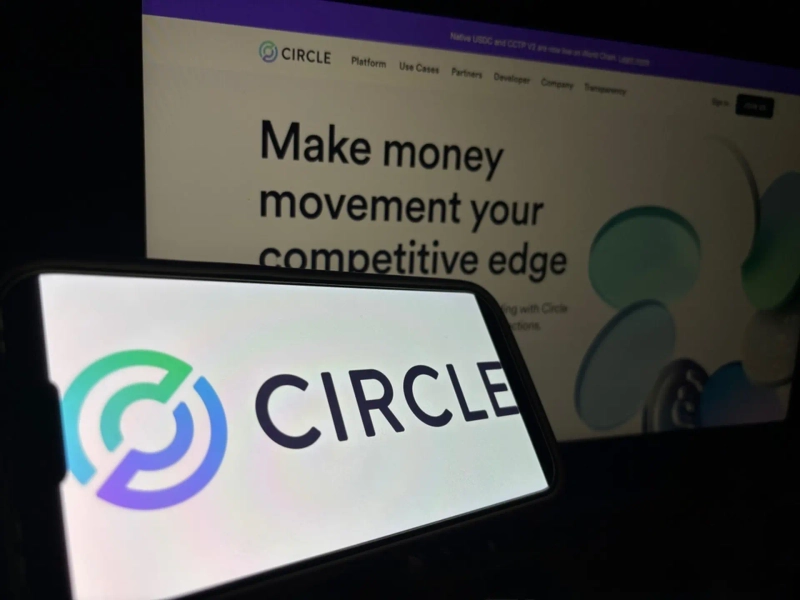
'Circle' (CRCL·Circle Internet Financial), the largest stablecoin firm in the United States, is attracting strong investment sentiment from Korean retail investors. Although it has not yet been a month since its listing, the investment amount from Koreans is rising rapidly, fueling talks that it could become similar to 'IonQ,' which kept Korean investors up at night.
According to the Korea Securities Depository on the 3rd, since Circle was listed on the New York Stock Exchange on the 5th of last month, Korean retail investors have net purchased $669.17 million (about ₩906.8 billion), ranking 1st among the most bought stocks during this period. This surpassed 'Direxion Daily TSLA Bull 2X Shares' (about ₩667.4 billion), a product tracking double the daily return of Tesla.
Interest in the stablecoin business among Korean investors also led to increased buying in Coinbase (about ₩197.4 billion, 3rd place), a virtual asset exchange.
Currently, Korean investors hold a total of about ₩954.3 billion worth of Circle, accounting for 1.9% of Circle’s total market cap (about ₩51 trillion). This proportion is rapidly increasing, similar to IonQ, where Koreans own 25% of the total market capitalization.
Circle is the issuer of the stablecoin 'USDC.' Launched in 2018, it ranks second in stablecoin market cap after Tether (USDT). USDC virtually splits the stablecoin market with Tether, but as Tether is a private company, investment demand is shifting toward Circle.
Circle closed at $192.53 the previous day, after being listed at an IPO price of $31 on the 5th of last month, resulting in a surge of over 519% in just one month. After soaring 168% on the first day, the price peaked at $298.99 (about ₩400,000) intraday on the 23rd, up as much as 864.48%.
Unlike other virtual assets, stablecoins aim for stability by being pegged to specific assets such as the U.S. dollar, Treasury bonds, or gold, while also offering the convenience of crypto payments. For example, U.S. dollar stablecoins are usually pegged at a 1:1 ratio with the dollar. This is in contrast to regular cryptocurrencies like Bitcoin, which are highly volatile due to their lack of fixed-asset backing.
Stablecoin-related stocks have surged recently following the U.S. Senate's passage of a regulatory bill on stablecoins, the 'Genius Act.' The bill requires stablecoin issuers to hold reserves in cash or short-term Treasuries and undergo external audits to disclose their holdings. In general, regulatory bills indicate that new technologies are entering the institutional framework.
Circle’s stock price got an additional boost from news of establishing a digital asset trust bank. Circle submitted an application to the U.S. Office of the Comptroller of the Currency (OCC) for the establishment of 'First National Digital Currency Bank.' The OCC, under the U.S. Department of the Treasury, oversees the establishment and operation of federally chartered banks.
Circle plans to manage the issuance, distribution, and reserve management of the stablecoin USDC through its trust bank, providing digital asset custody and settlement infrastructure for institutional clients. This is seen as a strategic move to systematically run its digital asset business centered around stablecoins within the framework of institutional finance.
The market sees significance in that, if Circle obtains trust bank approval, it could secure the status of a national financial institution directly connected to the U.S. Federal Reserve (Fed). Especially, as the Genius Act and other stablecoin regulations become more fully established, Circle is expected to gain a significant edge in regulatory compliance and trustworthiness over Tether.
However, the sharp short-term rise in the stock price has become a concern for Korean investors. Some argue that upcoming policy changes and new variables such as central bank digital currencies (CBDCs) led by the central bank are not fully reflected in the current price. Comparisons are also being made with IonQ, which has not posted a single profit since its 2021 listing and suffered a steep decline early this year.
JPMorgan stated, "While Circle enjoys an early-mover advantage in the USDC stablecoin market, its current market cap is excessively high," and set a price target of $80, 58% below the current $192.
Goldman Sachs also said, "Circle is trading at about 60 times its projected adjusted net income for the next 5–8 quarters, reflecting overly optimistic expectations," and noted that a correction of over 50% is not out of the question. Goldman Sachs set its price target at $83, similar to JPMorgan’s estimate.
Jungdong Noh, Hankyung.com journalist dong2@hankyung.com

Korea Economic Daily
hankyung@bloomingbit.ioThe Korea Economic Daily Global is a digital media where latest news on Korean companies, industries, and financial markets.