

Foreign Exchange Reserves Rise to $410 Billion, Returning to Previous Level Amid Dollar Weakness
Summary
- At the end of last month, South Korea’s foreign exchange reserves increased to $410.2 billion due to the weaker dollar.
- While securities decreased, deposits and IMF Special Drawing Rights rose significantly.
- South Korea’s foreign exchange reserves remain 10th in the world, but the gap with Hong Kong has widened.
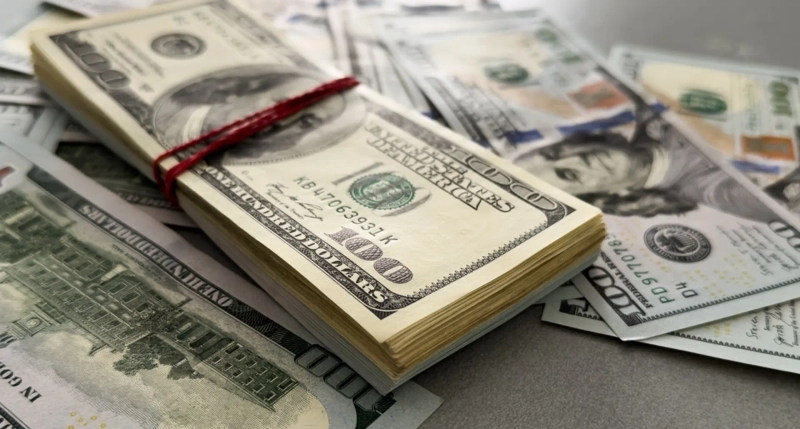
South Korea's foreign exchange reserves returned to the $410 billion level at the end of last month. This increase—by more than $5 billion—is attributed to the weakening of the US dollar.
According to foreign exchange reserve statistics released by the Bank of Korea on the 3rd, as of the end of June, South Korea’s foreign exchange reserves recorded $410.2 billion (about ₩557 trillion), up $5.61 billion from the previous month. At the end of May ($404.6 billion), reserves had dropped to the lowest level in about five years, but then rebounded.
A Bank of Korea official explained, “This was due to an increase in the dollar-converted value of non-dollar foreign assets resulting from the weaker US dollar, as well as higher investment returns.”
The US dollar depreciated by about 1.9% (based on the US dollar index) in June. As a result, the dollar-converted amounts of euro, yen, and other non-dollar foreign assets increased, contributing to the rise in reserves.
By asset category, securities such as government and corporate bonds ($358.5 billion) decreased by $1.47 billion, but deposits ($26.54 billion) and IMF Special Drawing Rights (SDR, $15.89 billion) increased by $6.86 billion and $210 million, respectively.
As for gold, since it is recorded at purchase price and not at current market value, it was maintained at $4.79 billion, same as the previous month. The held gold amount is about 104 tons.
As of the end of May, South Korea’s foreign exchange reserves ranked 10th in the world at $404.6 billion. After dropping from 9th at the end of March to 10th, the ranking has remained unchanged. However, the gap widened as Hong Kong’s foreign exchange reserves increased by $22.3 billion to $431 billion. A Bank of Korea official explained, “Hong Kong operates a fixed exchange rate system, so when the dollar weakens, they buy dollars to maintain the peg. Many such interventions in May caused a significant rise in their reserves.”
China ($3.2853 trillion) ranked first, followed by Japan ($1.2981 trillion), Switzerland ($980.8 billion), India ($691.3 billion), Russia ($680.4 billion), Taiwan ($592.9 billion), Saudi Arabia ($458.7 billion), and Germany ($456.4 billion).
By Jin-gyu Kang, josep@hankyung.com

Korea Economic Daily
hankyung@bloomingbit.ioThe Korea Economic Daily Global is a digital media where latest news on Korean companies, industries, and financial markets.