

U.S. Imposes 40% Tariffs on Transshipped Vietnamese Goods ... Targeting 'Chinese Origin Washing'
Summary
- The U.S. announced that it would impose a 40% high tariff on transshipped goods routed via Vietnam.
- The tariff rate for Vietnamese goods was reduced from 46% to 20%, but the move targets Chinese products seeking to 'wash' their origin.
- Korean firms such as Samsung and LG are relieved by the tariff reduction, but uncertainty over transshipment classification and high tariff application remains.
Second Trade Agreement After the United Kingdom
Targeting Products Routed Through Vietnam
Aiming to Block China’s 'Circumvented Exports'
Korean Companies Breathe a Sigh of Relief
Vietnam Tariffs Cut from 46% to 20%
"Worst Case Avoided, But Uncertainty Remains"
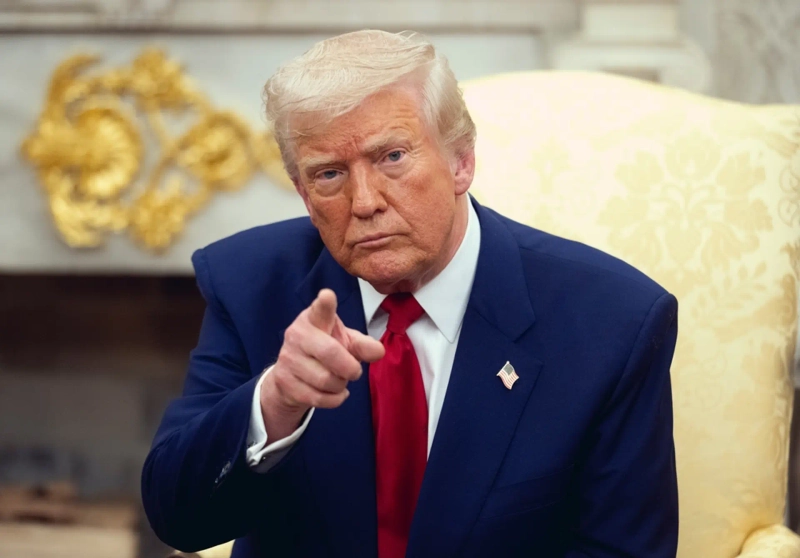
Donald Trump, President of the United States, concluded trade negotiations with Vietnam and agreed to lower mutual tariffs to 20%. Korean IT and electronics companies such as Samsung, which have multiple manufacturing plants in Vietnam, breathed a sigh of relief.
Blocking China’s 'Origin Washing'
On the 2nd (local time), President Trump announced on his Truth Social account, “I have completed a call with the respected Secretary-General of the Communist Party of Vietnam” and expressed pleasure in “declaring close cooperation between the two countries.” President Trump stated that all Vietnamese goods imported into the United States would be subject to a 20% tariff, and that transshipped goods (those exported to the U.S. via Vietnam from third countries) would be subject to a 40% tariff.
However, the United States will export domestic products to the Vietnamese market with 'zero tariffs.' President Trump described Vietnam’s full market opening to the U.S. as “an unprecedented measure” and expected that “SUVs and large engine vehicles will be excellent additions to various product lineups within Vietnam.”
In April, the Trump administration had set the mutual tariff rate with Vietnam at 46%, but the new agreement drastically reduces this to 20%. However, the 40% tariff on transshipped goods is viewed as targeting Chinese products entering the U.S. via Vietnam. China has used Vietnam as a route for ‘origin washing’—exporting to the U.S. to avoid high American tariffs—and this agreement seeks to cut off that channel.
The trade deal with Vietnam marks the second concluded by the Trump administration, following the UK. The draft of the United States–Vietnam Joint Statement includes a memorandum of understanding (MOU) in which Vietnam will procure 50 aircraft from Boeing of the United States for $8 billion (about ₩11 trillion) and will purchase $2.9 billion (about ₩3.9 trillion) of U.S. agricultural products.
However, Korean trade authorities face the task of securing more advantageous terms by referring to Vietnam’s negotiation standards before the mutual tariff suspension deadline set for the 8th. Politico commented, “The agreement between the United States and Vietnam is highly significant for other Asian countries currently negotiating with the U.S.” and pointed out that “it is unlikely that other Asian nations will accept terms less favorable than the U.S.–Vietnam deal.”
Domestic Firms Concerned Over 'High Tariff Application' to Transshipped Goods
Domestic manufacturers and exporters responded that the tariff deal between the U.S. and Vietnam provides some relief. Vietnam is a key production base for Korean companies such as Samsung and LG.
Samsung Electronics produces about half its total smartphone volume in Vietnam, with a significant portion exported to the United States. Last year, Samsung Display generated ₩81,655.3 billion in revenue from Vietnam, much of which was reportedly shipped to the U.S. LG also uses Vietnam as a core production base.
Nevertheless, the burden on companies remains high. Although the tariff rate is now 20%, it is still 3 to 5 times higher than the actual rate before Trump took office (4~7%). In particular, the application of a 40% tariff to transshipped goods adds further uncertainty, as Korean companies supply intermediate goods such as semiconductors to Vietnam, raising the possibility that their products could be classified as transshipped.
Dong-Hyun Kim / Ui-Myung Park 3code@hankyung.com

Korea Economic Daily
hankyung@bloomingbit.ioThe Korea Economic Daily Global is a digital media where latest news on Korean companies, industries, and financial markets.