

Trump tax cuts bill passes the House... Signing ceremony to be held on the 4th [Sangeun Lee’s Washington Now]
Summary
- The 'One Big Beautiful Bill' containing President Trump's core policy agenda has passed the House and will be enacted after the signing ceremony on the 4th.
- The bill reportedly includes permanent extension of the Tax Cuts and Jobs Act (TCJA) and expansion of the 35% semiconductor tax credit, incorporating provisions favorable to businesses and investors.
- Conversely, the tax credits for electric vehicles and renewable energy are being scaled back, which is expected to negatively impact investment and performance in those industries.
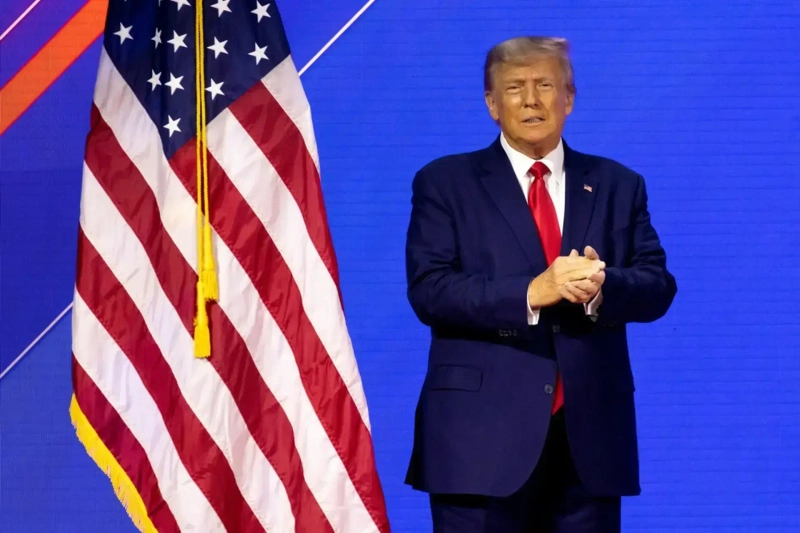
The 'One Big Beautiful Bill Act (OBBBA),' which contains the core policy agenda for President Donald Trump's second term, passed the US House of Representatives again on the 3rd (local time). As a result, this bill, which has passed both the House and Senate, will be officially implemented after President Trump's signature on the 4th.
On this day, the House passed the OBBBA (reflecting amendments from the Senate) with 218 votes in favor and 214 against. Among 220 Republican members, Representatives Thomas Massie (Kentucky) and Brian Fitzpatrick (Pennsylvania) voted against, joining the Democratic Party (212 members). President Trump is scheduled to hold a signing ceremony at the White House at 5 p.m. on the 4th.
The process of passing through the House was not smooth. Members of the 'Freedom Caucus', the Republican fiscal hawks, expressed dissatisfaction due to the large increase in debt and the limited scope of Medicaid (low-income health insurance) cuts. In contrast, moderate Republicans voiced concerns over the impact of Medicaid cuts on their constituents.
It took over 12 hours, from the night of the 1st until the early morning of the 2nd, just for the House Rules Committee to craft the 'rule' for putting the bill to a full House vote, finally passing in committee with a narrow margin (7 in favor, 6 against).
Passing the rule in the House floor vote proved even more challenging. During the 'procedural vote' held on the night of the 2nd, every Democrat opposed, while five Republicans voted against and eight abstained. However, after six hours of voting until about 3:30 a.m., the procedural vote was approved with 219 in favor and 213 against, as President Trump, Speaker Mike Johnson, and Republican leadership worked to persuade dissenters.
During discussion, Democratic House Leader Hakeem Jeffries (New York) gave a lengthy speech opposing the bill, significantly delaying the final vote. His filibuster lasted 8 hours and 45 minutes, surpassing the previous record set by then-Republican Floor Leader Kevin McCarthy (8 hours, 32 minutes) in 2022.
The bill, which finally cleared Congress that day, included a permanent extension of the Tax Cuts and Jobs Act (TCJA) — first enacted during Trump’s first term in 2017 and set to expire at the end of this year. Besides lowering individual income tax rates and the top corporate tax rate, as stipulated by TCJA, it incorporates Trump’s 2023 campaign pledges such as tax exemptions for tips and overtime pay.
Other key elements include major promises such as funding for border wall and detention center construction to block and deport illegal immigrants, as well as a 'Golden Dome' national defense expansion to defend the U.S. mainland from ballistic missiles from adversarial states.
The federal debt ceiling will be raised by $5 trillion. This is intended to reduce the possibility of needing to compromise with Democrats over the debt ceiling during Trump's term — a cause for concern among Republican fiscal hawks. Senator Rand Paul (Republican, Kentucky) voted against, arguing that raising the ceiling essentially commits to a comparable increase in debt, despite Trump’s pressure.
Major Medicaid cuts and other offsetting measures to curb spending increases continued to spark controversy until the very end. Originally, President Trump pledged not to touch Medicare or Medicaid, but that promise faded quietly; there was significant resistance, even within the GOP, from those saying constituents would be hurt and that Trump broke his word. Still, with this major legislation barely clearing the finish line and containing Trump’s entire policy agenda, leadership and MAGA supporters applied strong pressure to secure votes.
There are also numerous provisions affecting Korean companies. Semiconductor companies will receive a 35% tax credit for facility and equipment investments made in the US — a significant increase over the current 25% under the CHIPS Act and even greater than the Senate Finance Committee’s draft (30%). This is expected to positively impact the performance of eligible firms, applicable to facilities operational after the end of 2022 and under construction by the end of 2026. Subsidies and loan benefits for factory construction will also remain in place.
The CHIPS Act includes $39 billion in subsidies and $75 billion in loan support. Major semiconductor and related equipment firms — including Samsung Electronics, SK Hynix, Intel, TSMC, and Micron — are investing in the US based on these incentives.
Provisions related to the Inflation Reduction Act (IRA) — designed to boost clean energy investment and electric vehicle (EV) transition — are being scaled back. The tax credit program to support up to $7,500 for new EV purchases or leases and $4,000 for used EVs will be extended only through the end of September. The original benefit, set to run through 2032, is being cut, jeopardizing the EV sector.
The House had passed an extension through the end of this year, but the Senate reduced that by three months, and the final version reflected this change. Auto manufacturers like Hyundai Motor Company and battery and component suppliers that invested heavily in US EV expansion now face negative impact. Tougher criteria for wind and solar investment credits will also affect those industries.
The Advanced Manufacturing Production Credit (AMPC), crucial for Korean battery companies like LG Energy Solution and SK On, remains intact. While the House passed a bill trimming the phase-out to 2031 (from 2032), the Senate removed this provision, restoring the original benefit, and the House subsequently agreed to the unchanged schedule.
Washington, Sangeun Lee – selee@hankyung.com

Korea Economic Daily
hankyung@bloomingbit.ioThe Korea Economic Daily Global is a digital media where latest news on Korean companies, industries, and financial markets.