

UN Is Serious About IT Tokenomics…"Seize the Stablecoin Market"
Summary
- There have recently been active discussions regarding legislation on stablecoin regulation and issuance in both the US and Korea.
- Major stablecoin projects, leading companies, and international organizations like the UN are actively working to expand the related ecosystem.
- As key domestic and international institutions and enterprises strengthen adoption of blockchain technology, including tokenomics and RWA tokens, new opportunities are opening up for investors.
US Senate Passes Stablecoin Regulatory Bill
Korean National Assembly Proposes Bill Allowing Issuance
Former Blockchain Investment Firm Executive Appointed as Presidential Advisor
United Nations Development Programme Discusses Implementation Plans With SK
Domestic Platform Developer EIOP
Collaboration With London Stock Exchange and Paraguay
Ministry of Science and ICT to Hold Blockchain Conference Tomorrow
Mr. A, who runs a large coffee shop in a prime location along Haeundae Boulevard in Busan, wondered whether he could use the shop’s exterior glass windows for digital signage advertising during non-business hours, from 8 PM to 10 AM. For example, he could display Samsung’s latest Galaxy S25 or Hyundai Motor Company’s new Palisade SUV during the early morning hours. The advertisements would be broadcast using blockchain technology, and advertising revenue would be paid in tokens.
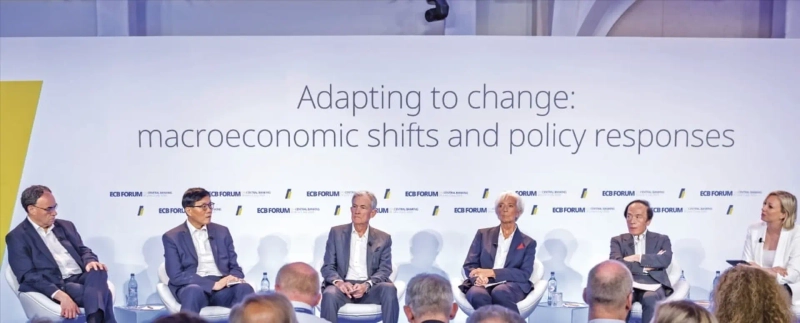
This is an example of tokenomics based on real-world asset tokens (RWA). Stablecoins—a hot topic among leading IT companies like Naver, Kakao, and Dunamu—are also a type of token. Last month, the US Senate passed the Genius Act, a stablecoin regulatory bill linked to the US dollar. In Korea, the Digital Asset Basic Act, which allows the issuance of won-based stablecoins, has been proposed. Promoting stablecoins was also a campaign promise of President Lee Jae-myung. Appointing former Hashed Open Research CEO Kim Yong-bum as Chief Presidential Policy Advisor underlined this commitment. Central banks in various countries have also become increasingly active. On the 1st, Chang Yong Rhee, Governor of the Bank of Korea, met with Jerome Powell, Chair of the US Fed, Christine Lagarde, President of the European Central Bank (ECB), and others in Portugal to discuss measures regarding stablecoins.
◇Leading Stablecoin Companies Listed on US Stock Exchange
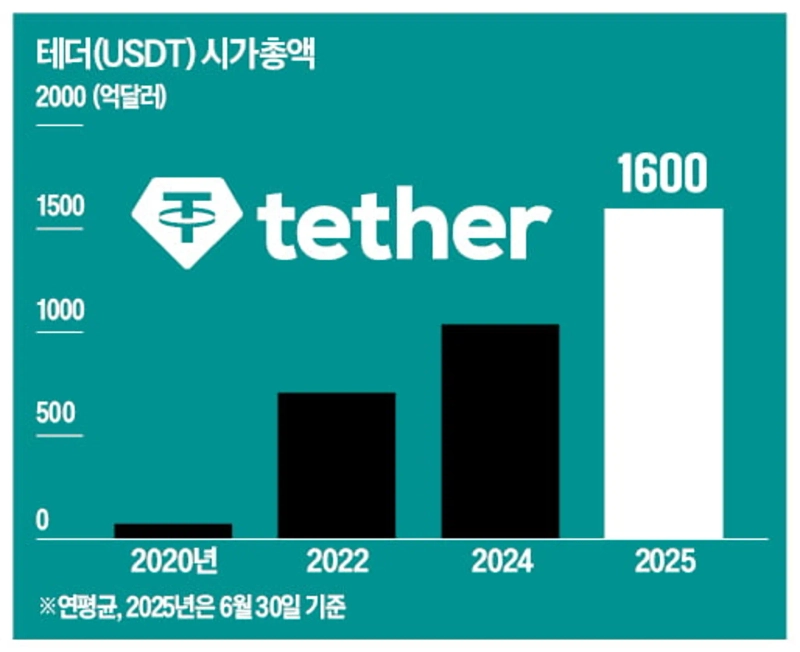
The representative dollar-linked stablecoin, Tether (USDT), saw its average annual market cap soar from about $450,000 in 2015 to $7.3 billion in 2020. As of June 30, 2025, it had swollen to about $160 billion. Circle, the issuer of stablecoin USDC, became the first in the industry to get listed on the New York Stock Exchange last month. Stablecoins generally fall into three categories: △ Linked to the value of the dollar like Tether or Circle △ Linked to cryptocurrencies like Bitcoin △ Value generated based on mathematical algorithms.
International organizations have been taking the lead in adopting stablecoins for several years. In September 2020, the United Nations World Food Programme (WFP) established the Building Blocks system, a humanitarian aid program using stablecoins. The following January, the first Building Blocks project began at a Syrian refugee camp. In June of the same year, stablecoins were given as emergency relief to refugees of the Ukraine war. As of 2022, WFP had provided stablecoins to around 1 million people in 15 countries.
The United Nations Development Programme (UNDP) is also proactive. It was reported that since 2019, Marcos Athias Neto, Assistant Secretary-General of the UNDP, has discussed stablecoin adoption plans with SK Group. Jin Seong-han, CEO of EIOP, the first domestic blockchain-based stablecoin platform development company, oversaw this project. Jin served at SK Telecom for over 25 years, leading ESG (Environmental, Social, and Governance) management and R&D. He also forged new partnerships between SK Telecom, various NGOs, and countries such as Estonia. Jin also led the founding of AIRI, an AI research institute established by Naver, Samsung, LG Electronics, KT, Hyundai Motor Company, and others. As a part of the "PayPal Mafia" and a professional investor, Chuck Ng, founder of Eureka Therapeutics, was recruited by Jin as EIOP’s Global Chief Strategy Officer (CSO).
◇The UN is 'All In' on Tokenomics
EIOP prides itself on technology that delivers speed and security. By building its own mainnet with a Proof of Authority (PoA) system, it can generate one block every 0.303 seconds. This is about 40 times faster than Ethereum (12–15 seconds) and on par with the ultra-fast blockchain platform Solana (0.3–0.4 seconds). EIOP explains that its optimized block engine and streamlined consensus mechanism have maximized parallel processing speed between nodes. The faster the block generation (transaction processing) speed, the easier it is to link with IoT sensor data. For example, companies wanting to use the emissions trading system could install sensors throughout their factories and generate revenue via this platform. This is also advantageous when linked with central bank digital currencies (CBDC).
EIOP and blockchain wallet startup IoTrust are working with the London Stock Exchange to discuss stablecoinizing cooperative funds worth trillions of won in Paraguay. EIOP will participate in the Sustainable Development Goals (SDG) blockchain hackathon hosted online by the UNDP this August. They will compete in stablecoin platform architecture design, RWA tokenization, and more in line with UNDP projects. Jin commented, "If we issue stablecoins linked to the value of the won, we can expand the 'Buy Korea' base and increase won liquidity more than ever before by boosting demand for government bonds," adding, "We aim to realize sustainable tokenomics."
The Ministry of Science and ICT will hold the first regular 2025 meeting of the blockchain demand-supply consultative body ABLE at Seoul Yongsan Dragon City on the 9th. An official from the Ministry said, "With stablecoins gaining momentum after the launch of the second Trump administration in the US and the European Union (EU) implementing MICA, the first comprehensive digital asset regulatory bill, the global landscape is changing. We will discuss strategies to strengthen the competitiveness of the domestic blockchain industry."
Reporter Haeseong Lee ihs@hankyung.com

Korea Economic Daily
hankyung@bloomingbit.ioThe Korea Economic Daily Global is a digital media where latest news on Korean companies, industries, and financial markets.