

US-EU 15% Tariff: Are Pharmaceuticals Included or Excluded? Diverging Views from Both Sides
Summary
- It was reported that the United States and the EU have diverging positions regarding whether pharmaceutical tariffs will be applied.
- Pharmaceuticals are the largest export category from the EU to the US, and the imposition of a 15% tariff could deliver a significant blow to the pharmaceutical industry and the broader economy.
- Analysts have pointed out that if pharmaceutical tariffs exceed 15%, the trade truce itself could be threatened.
EU Commission President: "Pharmaceuticals Also Included in the 15% Tariff Agreement"
Trump Hints: "The Pharmaceutical Industry is Unrelated to This Deal"
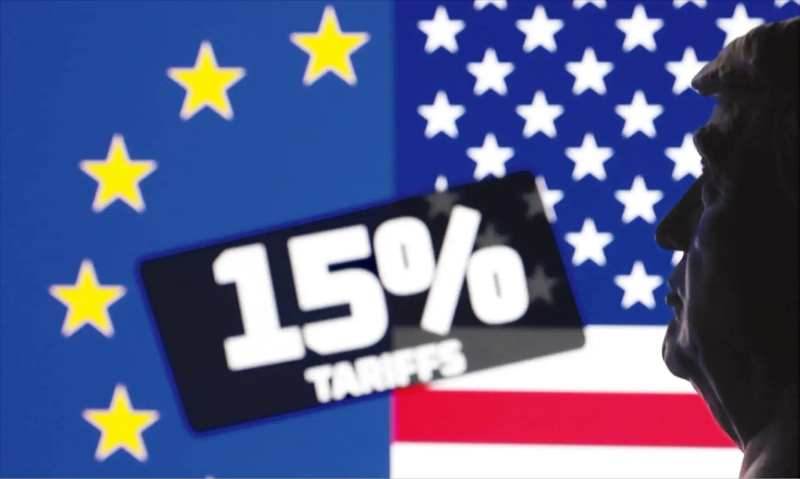
There are numerous questions regarding the details of the US-EU (European Union) trade agreement, but the greatest source of confusion arises from the starkly different announcements made by both sides concerning pharmaceutical tariffs. President Ursula von der Leyen of the European Commission stated, "Europe will be excluded from the pharmaceutical tariffs to be announced in the future," whereas US President Donald Trump implied that the pharmaceutical industry is 'unrelated to this deal.'
The pharmaceutical sector is the EU’s largest export item to the US and is a major concern for the EU, set to become a benchmark for tariffs on exports by global pharmaceutical companies to the US.
According to foreign media reports on the 29th (local time), President von der Leyen explained that the agreed tariff rate is "all-encompassing" but Europe will be excluded from pharmaceutical tariffs set to be announced soon.
She also said, "We have been allocated 15% on pharmaceuticals. Any future decision by the US President, and how global pharmaceutical issues are handled, is a separate matter."
However, President Donald Trump, while announcing "consistent" tariffs on "automobiles and everything else" at a press conference, also implied that future pharmaceutical tariffs to be released "are not related to this deal."
Earlier this month, President Trump mentioned that tariffs on pharmaceuticals imported into the United States would be announced soon and could reach up to 200%. The Trump Administration stated that the results of Section 232 of the Trade Expansion Act, investigating the impact of pharmaceutical imports on national security, would be released in August.
Pharmaceutical companies are demanding clear terms from the US-EU agreement regarding pharmaceutical tariffs. Analysts have warned there is a risk the entire agreement could collapse if tariffs are imposed on specific sectors.
Even if pharmaceutical tariffs remain at 15%, analysts expect it will adversely affect Europe’s pharmaceutical industry and the EU’s broader economy, since pharmaceuticals account for the largest proportion of EU exports to the US.
Analysts from Wolfe Research stated, "Last year alone, the EU's pharmaceutical exports to the US amounted to about $120 billion (₩167 trillion)." According to Reuters, analysts estimate that the total annual cost to the pharmaceutical industry from a 15% tariff could increase by $13 billion to $19 billion.
In a report, analysts from Eurasia Group noted that "if tariffs on pharmaceuticals unexpectedly exceed 15%, the trade truce itself could be threatened."
Philips CEO Roy Jakobs, in an interview with CNBC, said, "We have been urgently requesting tariff exemptions from the US, the EU, and China." He added, "No mention of tariff exemptions is included in the deals announced so far, so further discussions will be needed."
Contributing journalist: Kim Jung-ah kja@hankyung.com

Korea Economic Daily
hankyung@bloomingbit.ioThe Korea Economic Daily Global is a digital media where latest news on Korean companies, industries, and financial markets.