

Bank of Korea Faces Dilemma After Hawkish FOMC… Short-term Treasury Yields Rise
Summary
- With the US Federal Reserve (Fed) holding rates steady, the Korea-US rate gap remains at 2 percentage points.
- The Bank of Korea is expected to set next month’s policy rate under pressure from concerns over the exchange rate and capital outflows.
- In the Seoul bond market, short-term Treasury yields rose, whereas long-term yields fell.
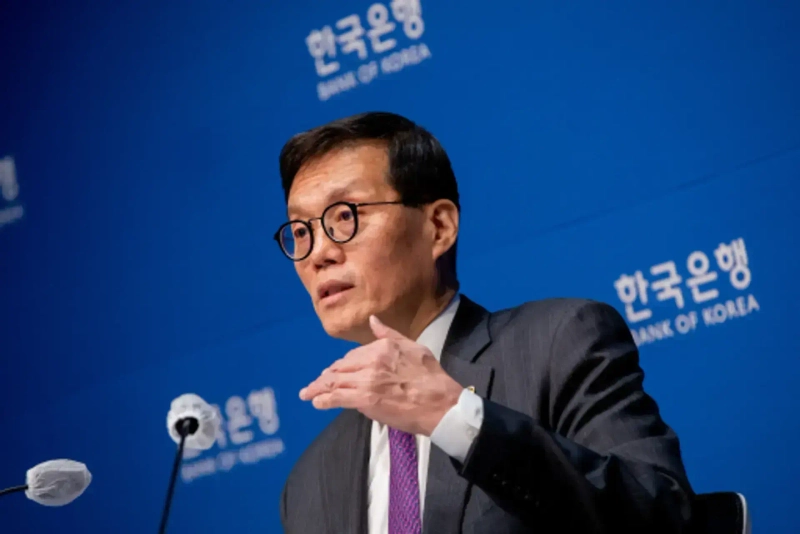
The US central bank (Fed) kept its policy rate unchanged on the 30th (local time), creating a dilemma for the Bank of Korea, which is due to set its own rate next month. Although rates were held steady in July, there is growing pressure to lower them this time. However, significant concerns are being raised that a further widening of the Korea-US interest rate gap could fuel fears of capital outflows.
With the Fed’s decision, the Korea-US benchmark rate gap has remained at about 2 percentage points. This is the highest level in history, seen over the past 13 months from July 2023 to August 2024. Recently, since the Bank of Korea cut rates at the end of May, the 2 percentage point gap has persisted for two months.
Initially, the Bank of Korea expected that a rate cut might come from the US, despite the likelihood of the Fed also holding rates. Narrowing the rate gap could ease concerns over exchange rates and foreign capital outflows—key variables for the Bank of Korea’s rate decisions. BOK Governor Chang Yong Rhee stated at a press briefing on the 10th, "I don’t believe we should mechanically prevent the (interest rate) gap from exceeding a certain level," but added, "Given our situation, the rate gap is a burden, so it would be preferable if the US lowered rates first."
Among Monetary Policy Board members, there were direct concerns over the rate gap. According to recently released board minutes, one member said, "We should maintain the domestic-foreign interest rate gap at a manageable level so that it does not act as a hurdle for forex supply and demand, such as capital outflows."
With the US holding rates, the Bank of Korea now faces next month’s rate decision burdened by concerns about exchange rates and capital outflows. The Bank of Korea sees a need for a rate cut. Consumer price inflation is stabilizing near its 2% target, and a large supplementary budget has been implemented to support the economy, but this year's economic growth rate at the 1% range is still uncertain.
Another variable is the trend of housing prices—the largest factor behind July's rate hold. Since the June 27 lending regulation, new household loan applications in the banking sector have dropped nearly 60%. However, record-high apartment prices continue in some Seoul metropolitan areas, making it hard to judge the effectiveness of these measures yet.
The impact of the recently concluded tariff negotiations with the US is also under close scrutiny. Korea faces higher tariffs, but avoided the worst by securing a 15% rate similar to other countries. Depending on how this affects exports, growth forecasts may also change. Sangdae Yoo, Deputy Governor of the Bank of Korea, stated at a market review meeting, "As major countries like the US and China proceed with trade negotiations, we will closely monitor how changes in global trade conditions impact all sectors of the domestic economy as well as the financial and forex markets."
In the Seoul bond market on this day, the yield on three-year Treasury bonds closed at 2.460% per annum, up 0.006% points from the previous day. One-year and two-year bonds each rose 0.002% points and 0.009% points, respectively. In contrast, five-year and ten-year yields fell 0.010% points and 0.012% points, respectively.
Reporter Kang Jinkyu josep@hankyung.com

Korea Economic Daily
hankyung@bloomingbit.ioThe Korea Economic Daily Global is a digital media where latest news on Korean companies, industries, and financial markets.