

Korea Meets Trump, Skipping Besant... Agreement Concluded in 40 Minutes with No Changes to Investment Amount
Summary
- The US-Korea tariff negotiations were concluded in 40 minutes thanks to President Trump’s swift decision-making.
- Unlike negotiations with Japan and the EU, the existing agreement was accepted without changing the investment amount.
- Deputy Prime Minister Koo Yun-cheol assessed that the shipbuilding cooperation project contributed greatly to the successful conclusion of the trade negotiations.
The Urgent US-Korea Tariff Negotiations: What Sparked the Rapid Progress?
Korean Negotiation Team Coordinating Relay Talks with the US
Yeo Han-gu Met with Lutnick 10 Times
Kim Jung-kwan Traveled Between Scotland and Washington
Dramatic Progress Triggered by Trump's Surprise SNS Post
Japan Pressured for Amount Revisions with a Pen
Negotiations with Korea Proceeded Briefly and Smoothly
"The Shipbuilding Project Contributed Greatly"
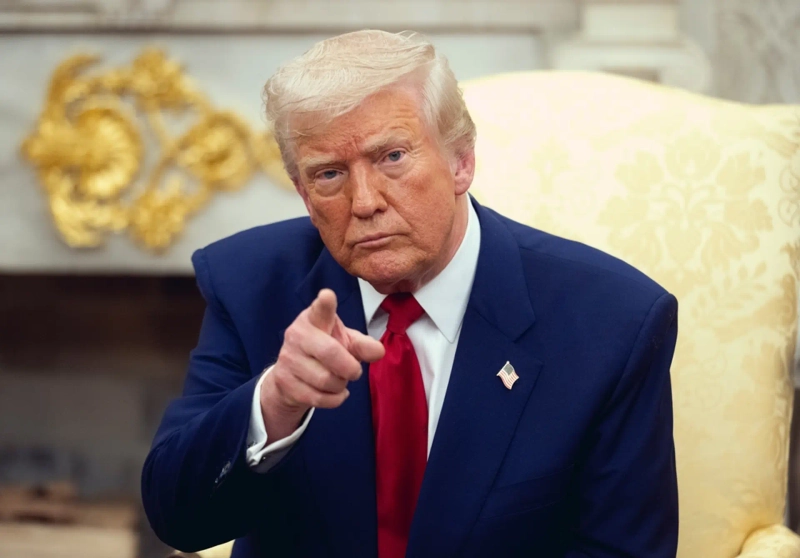
The background for the rapid acceleration of the US-Korea tariff negotiations on the 30th (local time) was former US President Donald Trump’s swift decision-making. Initially, Korea was cornered as Japan and the European Union (EU) reached an agreement to lower reciprocal and automobile tariffs to 15%. The planned 'US-Korea 2+2 Finance and Trade Ministers' Negotiation', which Deputy Prime Minister and Minister of Economy and Finance Koo Yun-cheol was to attend, was canceled on the 24th. This left Minister of Trade, Industry and Energy Kim Jung-kwan and Deputy Minister for Trade Yeo Han-gu to lead the discussions with US Secretary of Commerce Howard Lutnick. Later, Deputy Prime Minister Koo joined, along with Hanwha Group Vice Chairman Kim Dong-kwan, Samsung Electronics Chairman Lee Jae-yong, and Hyundai Motor Group Chairman Chung Eui-sun, giving the negotiations added momentum.
Announcement of the Meeting via SNS
However, even after lunch that day, an immediate conclusion seemed unlikely, as the US-Korea finance and trade 2+2 negotiations were scheduled for 9:45 a.m. the following day. It was expected that a meeting with Treasury Secretary Scott Besant would be required before meeting with President Trump.
Deputy Prime Minister Koo, Minister Kim, and Deputy Minister Yeo met with Secretary Lutnick and US Trade Representative (USTR) Jamison Greer at 11 a.m. for about an hour. Since June 22, Deputy Minister Yeo had been in Washington, D.C., handling negotiation operations, meeting Secretary Lutnick nearly 10 times. Minister Kim had also met Lutnick at least four times in Washington, D.C., New York, and Scotland. There were innumerable discussions about the 'landing zone' to be included in the final agreement. Although a positive atmosphere was fostered under the slogan 'Make American Shipbuilding Great Again' (MASGA), as Secretary Lutnick said, “President Trump is the one at the wheel,” and it was clear things would not be finalized without the key decision maker. Even on the Korean side, since Deputy Prime Minister Koo was set to meet Secretary Besant the following day, few anticipated a sudden breakthrough.
The rapid progression occurred at 3:52 p.m. President Trump posted on his Truth Social account that he would be meeting the Korean negotiation team. He made the post eight minutes before attending the 'Make Healthcare Technology Great Again' event (at 4 p.m.) and then moved to the East Room of the White House. Upon hearing this, Deputy Prime Minister Koo and others rushed to the White House, arriving at 4:30 p.m. Koo said, “I had no idea the meeting with President Trump would actually happen so suddenly today. When President Trump uploaded (the meeting plan) to Twitter, I realized it was now becoming a reality.”

"The Shipbuilding Cooperation Project Made the Greatest Contribution"
The healthcare technology event ended at 5:14 p.m., but President Trump lingered to greet participants. Thus, the meeting with the Korean negotiation team seemed to start no earlier than about 5:30 p.m. Deputy Prime Minister Koo and others who had been waiting could not recall the precise length of the meeting, estimating only “30–40 minutes.”
The negotiations proceeded smoothly. Present alongside President Trump were Secretary Besant, Secretary Lutnick, Secretary Rubio, Representative Greer, and Deputy Chief of Staff Stephen Miller. Whereas President Trump had previously demanded sudden changes to investment details or benefit figures from Japan and the EU, he did not do so with South Korea.
This was thanks to the Korean negotiation team’s prior rounds of proposals and counterproposals with Secretary Lutnick, which had formed a substantial consensus: $35 billion in investments and $10 billion in energy purchases. Deputy Prime Minister Koo and Deputy Minister Yeo said, “It wasn’t as if President Trump simply gave a blanket OK,” while also confirming, “President Trump did not arbitrarily make any pen corrections.” Koo particularly assessed the shipbuilding cooperation project as having “contributed the most” to the conclusion of the trade deal. However, this is not the end. President Trump said, “The additional investment amount will be announced when President Lee Jae-myung visits the White House for a bilateral summit within the next two weeks.” In effect, this means the 'real negotiations' on details are just beginning.
Washington = Lee Sang-eun / Park Shin-young, Correspondents selee@hankyung.com

Korea Economic Daily
hankyung@bloomingbit.ioThe Korea Economic Daily Global is a digital media where latest news on Korean companies, industries, and financial markets.