

PiCK
Trump Manipulates the World with Tariffs...Nations 'Surrender' [Washington Now by Sang-Eun Lee]
Summary
- It was reported that, due to President Trump's tariff policies, major countries around the world accepted high tariff rates without retaliation.
- With tariffs employed as a political tool, the U.S. gained clear advantages in trade deals, while the established order of free trade weakened.
- In the short term, U.S. economic indicators have looked positive; however, markets still hold concerns about declining trust and possible long-term contraction of consumption brought on by tariffs.
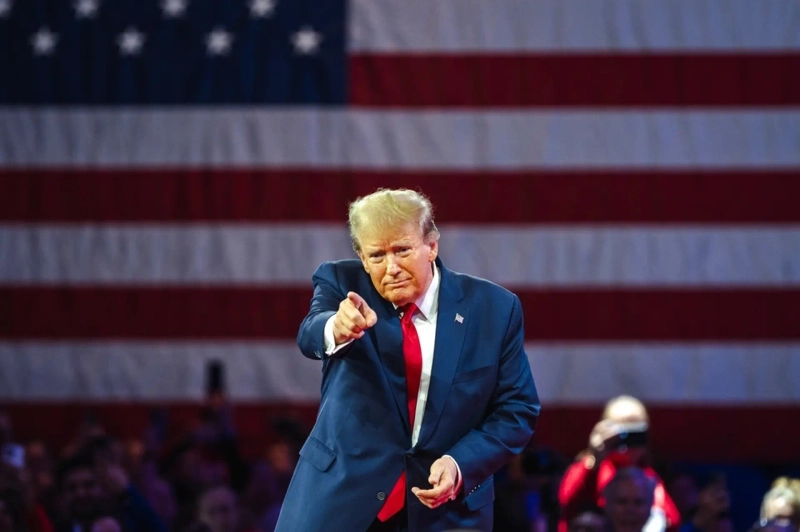
“This (tariff) measure is an economic revolution, and we will win. Hold on; it won't be easy, but the outcome will be historic.” (Donald Trump, President of the United States, Truth Social post on April 5)
President Trump claimed initial victory in the tariff war that began on the 31st (local time) after he once again notified reciprocal tariffs to various countries. On April 2, 'Liberation Day,' President Trump presented a tariff table listing even the McDonald Islands—where penguins live—to advocate for America's reconstruction, leaving the world in a state of bewilderment. Stock prices, bond prices, and the dollar dropped sharply all at once. There were a series of analyses suggesting that a 'Trump premium' should be added to the U.S. Treasury yield (Rf), which is used as the risk-free rate in asset valuation.
○ The World Accepts 'Trump Tariffs'
Now, four months later, President Trump has clearly gained the upper hand in this tariff war. Contrary to initial concerns, a vicious cycle in which tariffs sparked retaliatory tariffs, and retaliatory tariffs led to even higher tariffs, did not materialize. When President Trump notified China of steep tariffs as high as 145%, he retreated slightly when China responded with rare earth export controls. With the strongest rival, China, no longer disputing a 20% higher tariff rate (the fentanyl tariff) compared to other countries, the tariff war between the two countries has settled into a prolonged truce.
Other countries have not even dared to mention the possibility of retaliatory tariffs. The European Union (EU) and Canada spoke of retaliation; in reality, however, they stopped at accepting the tariffs imposed by the United States.
Now, a 10% or 15% tariff is even considered 'good news.' Just a few months ago, this was unimaginable. Olivier Blanchard, former Chief Economist of the International Monetary Fund (IMF), commented in a post on SNS on the 27th, “I don't know for what reason the EU seems ready to accept 15%,” adding, “Is the EU so weak that this is considered the best they can do?”
Institutions like the World Trade Organization (WTO) lost their effectiveness in an instant. The free trade agreements (FTAs) the U.S. had signed with many countries, including South Korea, have become worthless. Normally, the U.S. government would face a flood of lawsuits. However, there are few countries or companies bold enough to take such legal action against President Trump. One Washington, D.C. lawyer remarked, “It’s never difficult to file a lawsuit against the government in the United States, but these are extraordinary times.”
○ Tariffs as a Political Weapon
On the 30th (local time), the White House posted a photo on its Instagram account of President Trump signing a Korea-U.S. trade deal at the White House. The photo's caption read, “Glad to announce that the United States has reached a complete and comprehensive trade agreement with the Republic of Korea.” (White House Instagram account. Resale and DB prohibited) 2025.7.31/News1
On the 30th (local time), the White House posted a photo on its Instagram account of President Trump signing a Korea-U.S. trade deal at the White House. The photo's caption read, “Glad to announce that the United States has reached a complete and comprehensive trade agreement with the Republic of Korea.” (White House Instagram account. Resale and DB prohibited) 2025.7.31/News1
Furthermore, President Trump succeeded in weaponizing tariffs politically. He imposed a 50% tariff while demanding a pardon for Brazil's former president Jair Bolsonaro and threatened to impose high tariffs to intervene in the war between Thailand and Cambodia.
When Russia did not readily agree to a ceasefire proposal with Ukraine, he threatened to impose tariffs. In the past, such a move would have incited opposition, being viewed as interference or lacking legal grounds, both abroad and in the U.S.; now, no one objects. Except for the publicly resistant Brazil, most other countries essentially declared their 'surrender.'
Though he was criticized as someone who “always backs down (TACO),” President Trump showed that an appropriately-timed TACO could be strategically advantageous. By lowering tariffs if his demands were met, he involved other nations in negotiations, even with unreasonable demands. Fundamentally, this was possible because the United States enjoyed strong military and economic power.
The economic costs initially predicted, such as inflation and economic slowdown, have yet to fully materialize. This puts the Fed, which bases its monetary policy decisions on inflation caused by tariffs, in a difficult position. The inflation rate (year-on-year) was 2.7% last month—higher, but less than feared. Second-quarter GDP grew by 3.0% (year-on-year), well above market expectations.
Of course, there is still unease in the market that the full effects of the tariff war have yet to surface. Some analysts argue the suppressive effect on price increases is due only to Trump's pressure, and eventually this will dampen consumption and weigh on the U.S. economy.
There is also skepticism as to whether, as President Trump claims, forcing allied nations to make massive investments in the U.S. will truly revive manufacturing. While they may make a show of compliance to please President Trump in the short term, ultimately, the economic calculus will determine whether to invest.
The greatest cost to the U.S. is the erosion of global trust in the country. America did get what it wanted through disruptive tactics, but the attitude of ‘take the sweet, spit out the bitter’ has planted fears in allies that the U.S. is no longer trustworthy or reliable. The EU has started considering joining the Comprehensive and Progressive Agreement for Trans-Pacific Partnership (CPTPP). In regions such as South America, Southeast Asia, and Africa, China's influence is now growing stronger.
Washington = Sang-Eun Lee, Correspondent selee@hankyung.com

Korea Economic Daily
hankyung@bloomingbit.ioThe Korea Economic Daily Global is a digital media where latest news on Korean companies, industries, and financial markets.