

"After Their 'Split,' Musk Donates to Trump Super PAC... Fills KRW 240 Billion Worth"
Summary
- Super PAC Maga of President Trump raised $177 million in the first half of this year, significantly surpassing Democratic Super PACs in cash holdings.
- High-profile business leaders and the cryptocurrency industry made large donations, and this is seen as closely related to President Trump’s pro-crypto policy direction.
- While GOP Super PACs secured an early advantage in fundraising, NBC notes that more money doesn’t necessarily guarantee election victory.
GOP Super PAC far outpaces Democrats in funds held
Securing war chest for next year’s midterm elections
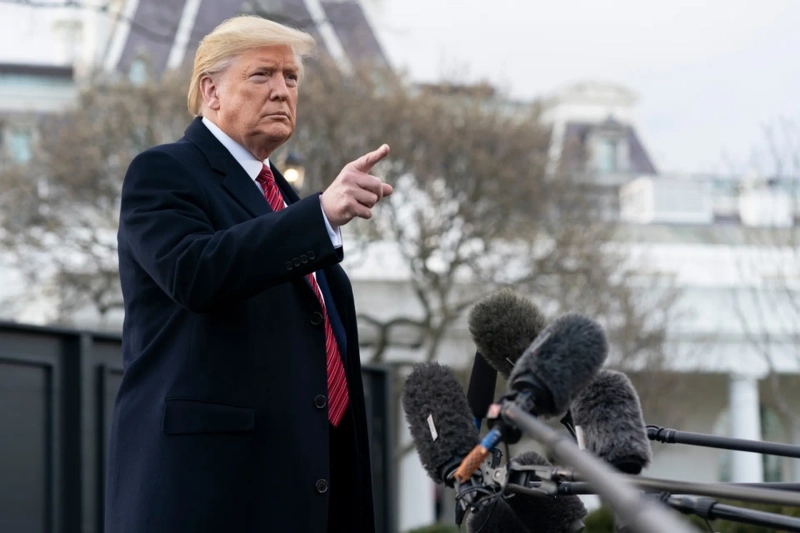
Former President Donald Trump’s Super PAC (super PAC, or Special Political Action Committee) raised $177 million (about ₩2.46 trillion) in the first half of this year, according to reports from the Financial Times (FT) and others on the 2nd (local time). As President Trump and the Republican Party moved quickly to amass a large cash war chest ahead of next year’s midterms, analysts say they currently hold a significant financial lead over the Democrats.
Documents filed with the U.S. Federal Election Commission (FEC) show that Trump’s Super PAC, Maga Inc, raised $177 million in the first half of the year, with cash on hand reaching $196 million (about ₩2.72 trillion). A Super PAC is a political fundraising organization that can receive unlimited contributions from individuals or corporations.
Maga’s major donors included prominent business leaders and investors. Billionaire investor Jeff Yass, known for his stake in TikTok, donated $16 million to Maga. Notably, he contributed $15 million on March 6, the day President Trump hinted at possibly extending the deadline for divesting TikTok’s U.S. operations.
Elon Musk, CEO of Tesla, donated $5 million on June 27. This was during a period when he and Trump were publicly at odds, drawing particular attention. Just days later, Musk announced the launch of a new political party.
Major funds also flowed in from cryptocurrency companies. The crypto sector donated a total of $41 million (about ₩57 billion) to Maga, accounting for roughly 20% of all contributions. Foris Dax, operator of the Crypto.com exchange, gave $10 million, while Tools for Humanity, developer of Worldcoin, contributed $5 million. Marc Andreessen and Ben Horowitz, co-founders of venture capital firm Andreessen Horowitz, donated $3 million.
The large donations from the crypto industry to Maga appear closely tied to President Trump’s pro-cryptocurrency policy stance. President Trump described crypto as something that "will drive explosive economic growth and help expand the dominance of the U.S. dollar," and during his second term’s launch, pushed for policies to promote cryptocurrency—such as signing executive orders to stockpile strategic crypto assets and calling for legislative easing of government regulations. Just last month, after the House passed cryptocurrency bills such as the Genius Act (incorporating stablecoins into the regulatory framework), the total global market cap of cryptocurrencies topped $4 trillion for the first time.
By contrast, FT reports that Future Forward, the Democratic Super PAC that raised hundreds of millions in donations during last year’s presidential race, now has just $2,826 in cash.
Super PACs supporting next year’s midterms for the GOP are also reported to have raised significantly more than their Democratic counterparts. According to NBC, the Senate Leadership Fund and House Leadership Fund, which are Republican leadership-affiliated Super PACs, raised $59.2 million (about ₩82.2 billion) in the first half of the year. The Senate Majority PAC and House Majority PAC, affiliated with the Democratic leadership, brought in $38.6 million (about ₩53.6 billion) over the same period.
As of June 30, Republican Super PACs held $62 million (about ₩86 billion) cash, far more than the Democrats’ $35.8 million (about ₩49.7 billion). While the GOP holds an early advantage in PAC fundraising, NBC cautions that this doesn’t guarantee a campaign advantage. At the candidate level, Democratic nominees have in recent years tended to raise more money on average than their Republican rivals, much of which is used for campaign activities such as TV advertising.
Hye-won Ahn, Hankyung.com reporter anhw@hankyung.com

Korea Economic Daily
hankyung@bloomingbit.ioThe Korea Economic Daily Global is a digital media where latest news on Korean companies, industries, and financial markets.