

Summary
- The European Union (EU) reported that the U.S. is expected to formalize a 15% tariff on EU exports and announce an executive order this week to apply a rate below 15% to certain aircraft components.
- The U.S. president has imposed 25% tariffs on automobiles and auto parts and 50% tariffs on steel and aluminum, and announced plans to soon target pharmaceuticals and semiconductors.
- The EU stated that it is working toward an additional agreement to export a certain amount of steel and aluminum to the U.S. at lower rates.
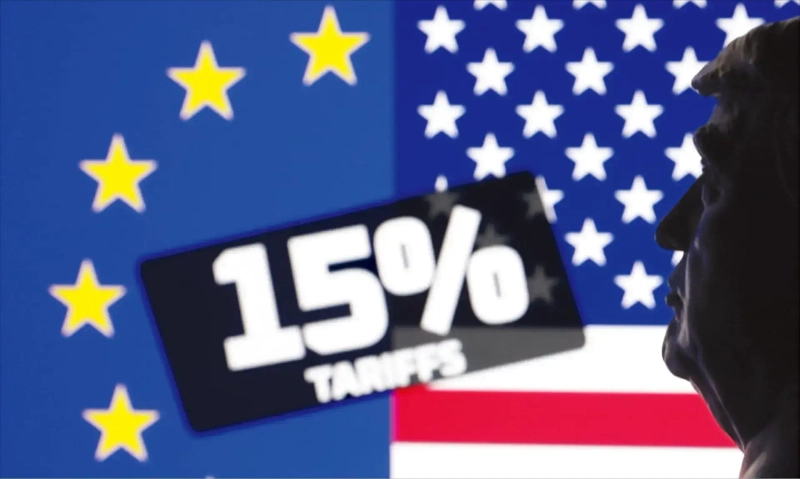
The European Union (EU) expects that the Trump administration will formalize a 15% tariff on automobiles and other EU exports this week and announce an executive order applying a rate lower than 15% to certain aircraft components.
According to a Bloomberg report citing sources on the 4th (local time), the EU expects U.S. President Donald Trump to announce executive measures this week to reduce tariffs on automobiles and to grant tax exemptions for generic medicines and aircraft components.
Sources indicated that President Trump and Ursula von der Leyen, President of the European Commission, will issue a joint statement reflecting the terms agreed upon at the end of last month. The legal form of this measure will reportedly be determined by the U.S.
Under the conditions agreed with the U.S., the 27 EU member states will be subject to a 15% U.S. tariff on most exports. Officials from both sides stated that this rate would also apply to automobiles and, in the future, to all sector-specific measures targeting pharmaceuticals and semiconductors.
According to the executive order announced by the White House last week, the universal tariff will be applied as a cap for the EU, while for other trading partners, a base rate will be added to the existing Most Favored Nation tariffs. For countries like South Korea, which have signed an FTA with the U.S., the tariff rate agreed upon in trade negotiations will be final.
However, as the order only mentions reciprocal tariffs, it does not specify how exemptions or sector-specific tariffs will apply to trading partners.
In addition to universal tariffs, the U.S. president imposed a 25% tariff on automobiles and automotive parts, and a tariff of up to 50% on steel and aluminum. There was also a threat to soon target pharmaceuticals and semiconductors.
Bloomberg previously reported that both sides will continue negotiations on exemptions for other items, such as wine and spirits, as well as items eligible for duty-free agreements.
The EU is also working toward an additional agreement allowing a certain amount of steel and aluminum to be exported to the U.S. at lower rates than the current 50% tariff. As of the end of last year, the EU exported 3.89 million tons of steel to the U.S., of which 3.3 million tons were exported under a duty-free quota. South Korea exported 2.63 million tons to the U.S. duty-free quota last year.
These negotiations are being held in parallel with discussions to prevent steel imports from third countries—which face export difficulties to the U.S.—from being redirected to the EU.
South Korea's steel exports to Europe have decreased since last year due to the introduction of the Carbon Border Adjustment Mechanism (CBAM) and strengthened protectionism. Nevertheless, it remains the second largest market after Southeast Asia.
Contributed by Jung-A Kim, Guest Reporter kja@hankyung.com

Korea Economic Daily
hankyung@bloomingbit.ioThe Korea Economic Daily Global is a digital media where latest news on Korean companies, industries, and financial markets.