

[Reporter's Note] An Inconsistent and Ineffective Virtual Asset ETF Policy
Summary
- Although the financial authorities are promoting Bitcoin spot ETFs, confusion has arisen as the inclusion of virtual asset-related companies into ETFs is blocked.
- South Korean virtual asset ETF product regulations are being criticized as lacking both consistency and effectiveness.
- Due to unclear regulations, domestic investor funds are being transferred overseas.
ETF Promotion, Stock Investment Regulation
"Administrative guidance persists even as market changes rapidly"
Reporter Sooji Na, Securities Department
"Which tune should we be dancing to?"
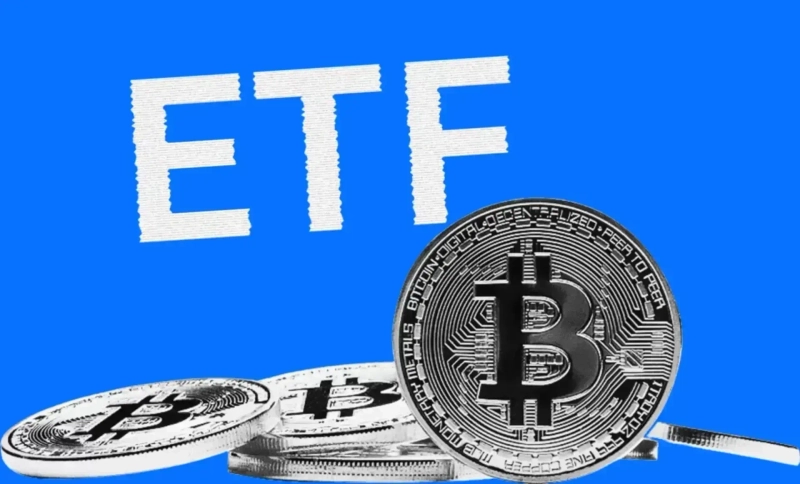
An ETF (Exchange Traded Fund) manager at an asset management company said, "While the financial authorities are rushing to launch Bitcoin spot ETFs, at the same time, they are blocking the free inclusion of virtual asset-related stocks in ETF products," voicing their frustration. Even though these products all bet on the growth of the virtual asset market, the authorities are handing out completely contradictory messages, causing significant confusion.
Recently, the financial authorities have begun collecting opinions from asset management companies in order to launch Bitcoin spot ETFs. This follows the increasing discussion, especially within political circles, since the end of last year, about permitting Bitcoin spot ETFs. Asset managers have accordingly formed task forces and are examining how to structure underlying assets and strategies for operation.
While financial authorities' stance toward virtual asset ETFs may appear to have shifted, a closer look tells a different story. Recently, the authorities warned some managers not to excessively include virtual asset investment companies, such as Coinbase and Circle, in their ETFs. Following these warnings, one manager sold off all holdings of Circle, which had previously accounted for the largest portion of its ETF portfolio. The burden of investor dissatisfaction—who had found the large Circle allocation attractive—was borne entirely by the managers.
Launching new ETFs that invest in virtual asset-related companies also faces many obstacles. Words such as 'virtual asset' or 'coin' are not allowed in ETF names. One asset management company CEO commented, "Since the emergency measures on virtual currency-related matters were announced by the authorities in 2017, there have been no concrete new guidelines, and we have no choice but to follow the old ones," adding, "The market is changing every day, yet the regulations are stuck eight years in the past."
There has also been criticism that prioritizing spot ETFs is misguided. In the United States, where virtual asset-related financial products are more developed, ETFs investing in virtual asset-related companies appeared first, followed by futures ETFs, and then spot ETFs. The ETF market opened first to products investing in companies with institutional backing, while the introduction of spot virtual asset investments requiring new regulatory frameworks was approached more cautiously. In contrast, South Korea focuses heavily on spot virtual asset ETF discussions, while products tied to futures or companies are being overlooked.
Amid these confusing regulations, domestic investors' funds are flowing abroad. The amount invested by domestic investors in Strategy, the listed company holding the most Bitcoin in the world, has reached $1,613,790,000 (about ₩2,235 billion). If the authorities' main intent for virtual asset regulation is investor protection, then it is achieving neither consistency nor effectiveness.

Korea Economic Daily
hankyung@bloomingbit.ioThe Korea Economic Daily Global is a digital media where latest news on Korean companies, industries, and financial markets.