

PiCK
U.S. begins full enforcement of reciprocal tariffs... Foreshadowing major upheaval in global trade order
Summary
- With the U.S. fully implementing reciprocal tariffs, tariffs on key export products such as automobiles and semiconductors are expected to expand.
- South Korea announced it reached an agreement with the U.S. to apply a 15% tariff rate to automobiles, semiconductors, and more through negotiations.
- The strengthened protectionism of the U.S. could negatively impact investment contraction, global supply chain restructuring, and slow economic growth, as well as create inflation risk.
Additional tariffs announced on semiconductors and pharmaceuticals following automobiles and steel... South Korea fears export blow
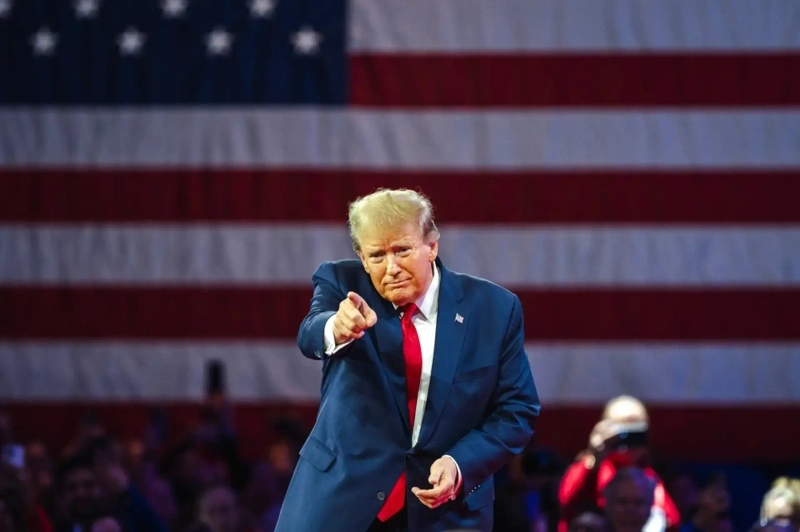
U.S. President Donald Trump’s reciprocal tariffs imposed on various countries will take full effect at 12:01 a.m. (U.S. Eastern Time) on the 7th. Major changes are unavoidable for the overall flow of the global trade order, which had been oriented toward a tariff-free free trade system.
Right after being inaugurated on January 20, President Trump pushed forward the high-tariff policy he had pledged. His first targets were Mexico and Canada, the United States’ first and second largest trading partners sharing borders to the south and north, and China, America’s top strategic competitor.
On April 2, citing the need to resolve trade imbalances, he threw a 'bombshell' called reciprocal tariffs: a base tariff of 10% applied to 57 economic entities, with country-specific tariffs (+α) added on top. He also unilaterally announced that for other economic entities, only the 10% base tariff would be imposed.
For South Korea, the KORUS FTA, which had effectively enjoyed zero tariffs, was in effect nullified overnight. Korea was notified of a reciprocal tariff rate of 25%, composed of a 10% base tariff plus a 15% country-specific tariff.
When China, notified of a 34% tariff rate, strongly pushed back, the Trump administration abruptly stepped back, announcing that reciprocal tariffs on other economies except China would be deferred for 90 days and negotiations would be held individually to finalize tariffs.
Subsequently, the United Kingdom (reciprocal tariff rate 10%), Vietnam (20%), the Philippines (19%), Indonesia (19%), Japan (15%), the EU (15%), and South Korea (15%) all completed trade agreements with the U.S.
South Korea, on the 30th of last month, agreed to lower its tariff rate from the initial 25% to 15%, matching Japan and the EU. The itemized tariff rate for Korean automobiles exported to the U.S. will also be set at 15%, identical to Japan and the EU, and semiconductors were ensured 'most-favored-nation' treatment.
In return, a $200 billion fund was established to invest in the U.S., and a $150 billion shipbuilding fund was arranged to support the States. Korea also agreed to import $100 billion worth of U.S. LNG and other energy products. But Korea blocked any further opening of its rice and beef markets for U.S. imports.
President Trump is optimistic that the tariff drive will spur investment in the U.S. from around the world, revitalize U.S. manufacturing, create jobs, and help reduce the trade deficit.
On the 30th of last month, he told reporters at the White House, "(Through these tariff negotiations,) I am literally raising trillions of dollars for the country."
However, there have been constant warnings that Trump's tariff policy is sowing the seeds for negative side effects.
The NYT, on the 31st of last month, warned that the new tariffs "will raise the risk of price increases for American companies and consumers, as the taxes (tariffs) are imposed on importers."
The business daily The Wall Street Journal (WSJ) pointed out, "U.S. companies have so far absorbed the increased costs from tariffs, but some will soon pass them on to consumers."
More broadly, U.S. protectionism could lead to increased global uncertainty, weakened investment worldwide, reconfiguration of supply chains, and have a negative impact on global economic growth.
The Peterson Institute for International Economics (PIIE) forecast in a recent report, "Depending on how countries respond, tariffs can significantly lower economic growth rates in the U.S. and globally, and increase inflation in a number of countries."
Eunji Cha, Hankyung.com journalist chachacha@hankyung.com

Korea Economic Daily
hankyung@bloomingbit.ioThe Korea Economic Daily Global is a digital media where latest news on Korean companies, industries, and financial markets.