

U.S. Tariffs to Be Implemented Soon…Semiconductor Tariffs Expected to Reach 15%
Summary
- It was reported that the semiconductor tariffs to be officially implemented by the Trump Administration starting on the 7th are highly likely to be set at 15%.
- Following the U.S.-Korea trade agreement, policy uncertainty over tariffs has eased, and the stable outlook for semiconductor demand is attributed to expanding AI investments in the U.S.
- While Korean and Taiwanese firms overwhelmingly dominate market share, raising tariffs could also burden the U.S. itself, so the rates may not be as high as expected.
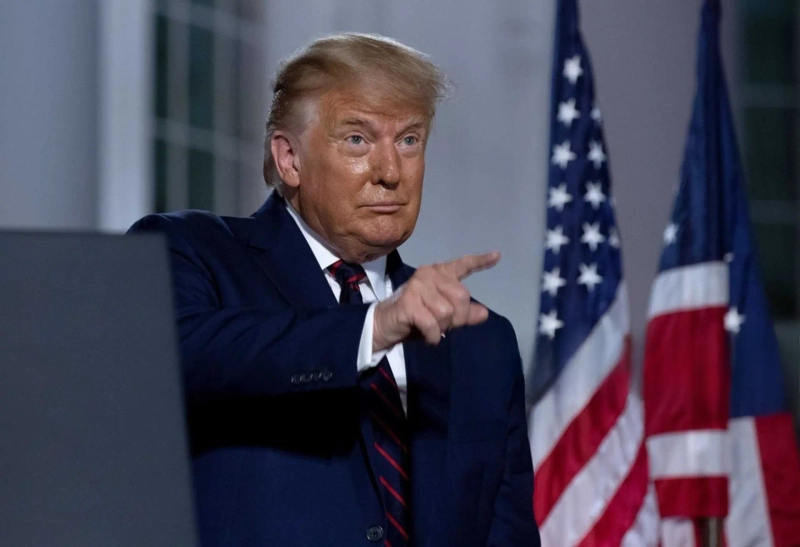
As the reciprocal tariffs imposed by Donald Trump, President of the United States, on countries worldwide are about to take effect, attention is focused on the tariffs for items such as semiconductors, which will be announced next week. Industry insiders predict that the tariff rate on semiconductors will be around 15%.
According to the industry on the 6th, the Trump Administration will officially begin implementing reciprocal tariffs against various countries at 12:01 a.m. on the 7th (Eastern Time). This marks the full-scale launch of President Trump's “restructuring” initiative aimed at refocusing industrial structures away from China and reducing the trade deficit.
South Korea agreed to invest $3,500 in the U.S. in exchange for reducing reciprocal tariffs from the existing 25% down to 15%. For automobiles, the country’s key export item, the tariff was also adjusted down to 15%. In terms of semiconductors, it is known that the U.S. agreed to treat South Korea at a level no more disadvantageous than other countries.
For this reason, it is expected that semiconductor tariffs will also be set around 15%. The European Union (EU) is also reported to have agreed to a 15% tariff on semiconductors. Although tariffs by item are not structured by country, considering the negotiations with the EU, it is likely to be set at 15%.
Baek Gil-hyun, a research fellow at Yuanta Securities, said in a report on the 1st, "Although the semiconductor tariff rate hasn’t been finalized yet, this U.S.-Korea trade deal is positive as it reduces policy uncertainty," adding, "The final tariff agreement in August is also expected to apply a semiconductor tariff rate at around 15%."
Competition in artificial intelligence (AI) between the U.S. and China also supports expectations that semiconductor tariffs will not be too high. If a high tariff rate is applied while U.S. big tech companies are making massive investments to build AI data centers, the cost burden will inevitably increase.
Even assuming tariff policy uncertainty persists, the demand for AI-related semiconductors in the second half of this year is expected to remain stable. If demand holds steady despite high tariffs, the only outcome will be increased costs.
Kyung Hee-kwon, a research fellow at the Korea Institute for Industrial Economics & Trade, commented, "Semiconductor tariffs will also impact products like smartphones and computer servers, but even if demand for consumer devices such as mobile phones may drop, demand for computing products will likely increase due to astronomical AI investments," adding, "If semiconductor tariffs are set high under these circumstances, it could heavily burden the U.S. national strategy, so the tariffs may not be as high as expected."
In particular, Korean and Taiwanese companies have an overwhelming market share in semiconductors, and it is difficult to find alternative producers.
Samsung Electronics is accelerating the construction of its foundry plant in Taylor, Texas while signing an AI chip supply contract with Tesla. SK Hynix is also pushing ahead with plans to build a semiconductor packaging production facility in West Lafayette, Indiana. However, neither company has memory production facilities in the U.S.
In an interview with CNBC on the 5th (local time), President Trump said regarding semiconductor tariffs, "We will announce the specific tariff rates next week," and added, "We also plan to announce a separate category for semiconductors, and we want them to be produced in the United States."
According to the Korea International Trade Association, Korea’s annual semiconductor exports to the U.S. last year amounted to $10.6 billion. The share of U.S.-bound semiconductor exports was 7.5%, lower than China (32.5%), Hong Kong (18.4%), Taiwan (15.2%), and Vietnam (12.7%).
Kim Dae-young, reporter, Hankyung.com kdy@hankyung.com

Korea Economic Daily
hankyung@bloomingbit.ioThe Korea Economic Daily Global is a digital media where latest news on Korean companies, industries, and financial markets.