

Apple to Invest an Additional $100 Billion in the U.S.; Trump Says, "Apple Is Coming Back"
Summary
- Apple announced a plan for an additional investment of $100 billion in the U.S.
- It was reported that Apple's stock price surged by 5.09% following the news of expanded U.S. supply chain and manufacturing collaborations.
- There are warnings that the company's profitability may weaken if supply chain adjustments move forward.
Apple has announced a large-scale investment plan in the U.S., aligning with the Trump administration’s emphasis on relocating supply chains to America. Until now, Apple has produced major products and components at production bases in China, India, Vietnam, and other parts of Asia, but recent tariff pressure from President Trump appears to have prompted this decision.
On the 6th (local time), Apple announced it plans to invest an additional $100 billion (about ₩140 trillion) in the United States. Previously in February, the company stated, "We plan to spend and invest more than $500 billion in the U.S. over the next four years," and this latest plan marks an increase in their investment scale. In a press release issued on the same day, Apple explained that this is "a move to significantly accelerate the pace of Apple’s investment in the U.S."
The additional announcement included the 'U.S. Manufacturing Program (AMP)' aiming to bring Apple’s supply chain and advanced manufacturing back to America. Through this, the company will increase investment across the country and encourage global companies to further expand the production of key components in the U.S. Tim Cook, Apple’s CEO, said, "We are proud to launch the new U.S. Manufacturing Program," and added, "This plan includes new and expanded collaborations with 10 companies across the United States."
Together with 10 partner companies—including Samsung Electronics, semiconductor equipment company Applied Materials, photonics and laser technology company Coherent (Texas), glass manufacturer Corning (Kentucky), and TSMC, the world’s largest foundry company (Arizona)—Apple is set to start production across the U.S. The company also explained that expansion of data centers for Apple Intelligence is underway in North Carolina, Iowa, and Oregon. Through these initiatives, Apple will support 450,000 supply chain jobs within the country and directly hire an additional 20,000 people.
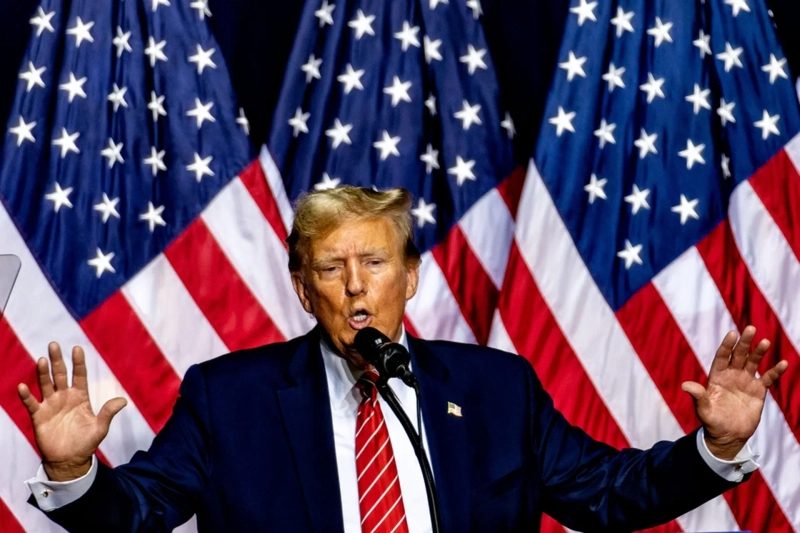
President Trump, who has long called for Apple to produce in the U.S., was reportedly satisfied with Apple’s decision, according to foreign media. Bloomberg evaluated, "It is a major victory not only for President Trump but also for CEO Tim Cook, who sought to avoid high tariffs." Earlier this year, President Trump warned that Apple would face tariffs of at least 25% if it failed to relocate its iPhone manufacturing base from overseas to the U.S. After Apple’s investment plan was announced, President Trump said, "Cook is coming back. It means Apple is returning to the U.S.," praising Apple’s decision.
He also promised zero tariffs for domestic manufacturing by using Apple as an example: "The good news for companies like Apple is that if you are manufacturing in the U.S., or have made a definite commitment to do so, there will be no tariffs."
However, there are warnings that adjusting Apple’s supply chain could weaken its profitability. The Financial Times (FT) analyzed that "The U.S. has not built smartphones on a meaningful scale for over a decade and lacks the manufacturing technology to assemble sophisticated devices like the iPhone," concluding that "the high profit margins maintained by a supply chain deeply rooted in Asia are likely to decline."
Following the news of Apple’s additional investment, Apple shares on NASDAQ surged by 5.09% to close at $213.25, a jump from the previous day.
Han Kyungjae, hankyung@hankyung.com

Korea Economic Daily
hankyung@bloomingbit.ioThe Korea Economic Daily Global is a digital media where latest news on Korean companies, industries, and financial markets.