

Trump: "Putin, meeting soon"...Directly engaging in ceasefire negotiations
Summary
- President Trump announced that he is promoting a trilateral summit soon with Russian President Putin and Ukrainian President Zelensky.
- President Trump said he will continue to pursue secondary sanctions on Russia, including a 25% additional tariff on Russian oil.
- It was reported that even if the summit succeeds, the outcome of ceasefire negotiations remains uncertain, and there are concerns over Russia's ongoing attacks.
Critical Juncture for End of Russia-Ukraine War?
First U.S.-Russia Summit in Four Years Draws Attention
Possibility of Trilateral Talks with Zelensky
Uncertainty Remains Over Ceasefire Agreement
Trump Continues Second Sanctions on Russia
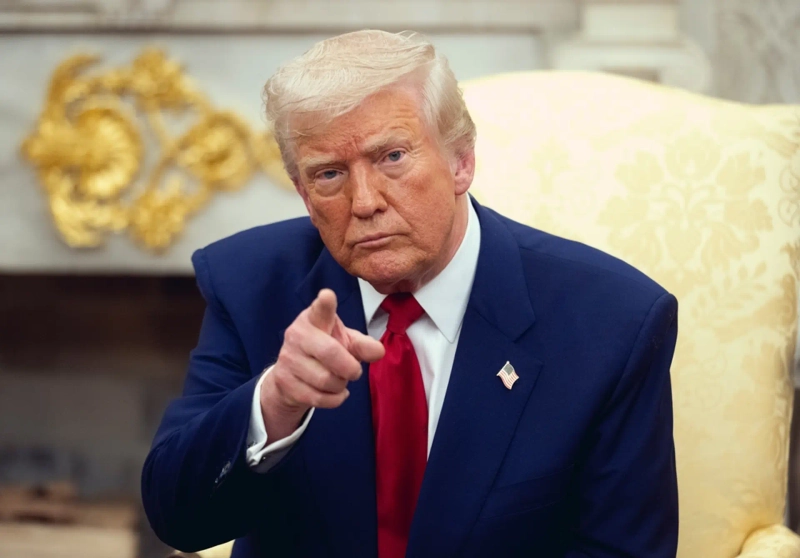
President Donald Trump of the United States announced that he may soon meet with the leaders of Russia and Ukraine. Attention is focused on whether the prolonged Russia-Ukraine war, which has lasted more than 3 years and 5 months, is approaching a turning point.
On the 6th (local time), at an event at the White House announcing Apple's investment plans in the U.S., President Trump was asked by reporters when he would meet the leaders of Russia and Ukraine and replied, "There is a strong possibility that the summit could be held very soon."
Since returning to the White House this January, President Trump has spoken by phone several times with President Vladimir Putin of Russia but has not yet held a face-to-face summit. Should a meeting between the two presidents take place, it would mark the first U.S.-Russia summit in four years.
The New York Times (NYT) reported that, citing sources, President Trump could meet President Putin as early as next week, followed by a trilateral summit with Ukrainian President Volodymyr Zelensky.
In a statement on social media, President Trump said that Middle East envoy Steve Witkoff met with President Putin in Russia that day and described the meeting as "highly productive with significant progress made." President Zelensky, who spoke with President Trump the same day, commented, "It seems Russia is now somewhat more willing to consider a ceasefire."
Previously, President Trump resumed U.S. military assistance to Ukraine and raised pressure on Russia by leveraging secondary sanctions against Russian trading partners. However, President Putin responded by intensifying attacks on Ukraine.
On this day, President Trump dispatched Envoy Witkoff to Russia and simultaneously initiated sanction procedures. By executive order, he announced a 25% tariff (secondary tariff) would be imposed on Indian imports of Russian oil in three weeks. He also revealed the possibility of introducing similar tariffs on China, another major importer of Russian energy.
With increased U.S. pressure, it is believed that Russia agreed to a summit just two days before the U.S.-set 'ceasefire deadline' (August 8). Yuri Ushakov, a Kremlin aide who participated in the meeting between President Putin and Envoy Witkoff, told Russian media, "They discussed the war in Ukraine and the prospects for strategic cooperation between the U.S. and Russia," and added, "They had a very constructive and useful conversation."
Nevertheless, even if a summit is realized, it remains uncertain whether it will lead to ceasefire negotiations. Concerns are being raised that President Putin might use this summit to evade the threat of secondary sanctions, delay a ceasefire agreement, and continue attacks on Ukraine.
President Trump, in preparation, continues to operate diplomatic channels and maintains firm sanctions on Russia. NBC News reported that the U.S. government plans to maintain secondary sanctions on Russia even if a U.S.-Russia summit is held.
By Myung-Hyun Han wise@hankyung.com

Korea Economic Daily
hankyung@bloomingbit.ioThe Korea Economic Daily Global is a digital media where latest news on Korean companies, industries, and financial markets.