

President Lee and Trump Likely to Hold Their First Summit on the 25th
Summary
- President Lee Jae-myung and U.S. President Donald Trump have announced a high likelihood of holding their first summit in Washington, D.C.
- At this summit, the main agendas are expected to include coordination of the details of the tariff agreement, adjustment of USFK roles, and increased defense budget as part of alliance modernization.
- President Trump is demanding that allies increase defense spending up to 5% of GDP, and the outcome of the South Korea-U.S. summit could impact the expansion of defense industry and advanced weapon investments.
If realized, only 82 days since President Lee's inauguration… Expected to discuss follow-ups on tariffs and security
Issues such as USFK roles and increased defense budget
Modernization of the alliance is the main agenda
Korea-Vietnam Summit to be held on the 11th
Presidential Office: 'Consultation on Future Strategic Sectors'
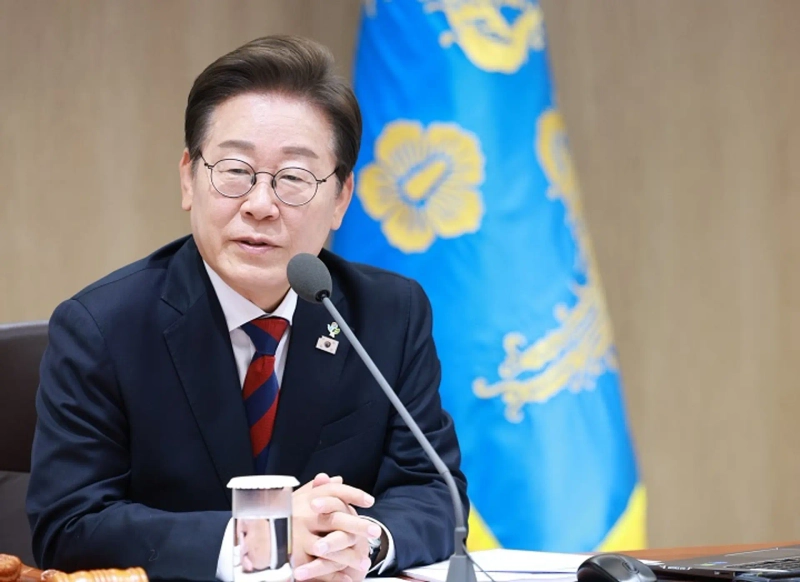
President Lee Jae-myung and U.S. President Donald Trump are highly likely to hold their first summit on the 25th in Washington, D.C. If the summit takes place as planned, it will be the 82nd day since President Lee's inauguration. The two leaders are expected to coordinate the details of the tariff agreement reached at the end of last month and discuss security matters, including the adjustment of USFK roles and an increase in the national defense budget.
According to government and diplomatic sources on the 7th, President Lee is considering visiting the United States around the 24th to hold a summit with President Trump at the White House on the 25th. The two countries have been coordinating the timing and agenda of the summit through diplomatic channels since finalizing the tariff agreement on May 31. During his visit, President Lee is also expected to visit Arlington National Cemetery near Washington, D.C. An official from the Presidential Office said, "Based on a shared understanding of the need to promptly hold a summit, the two countries are maintaining close communication over the schedule and other details."
The leaders initially agreed to meet "as soon as possible" in their first phone call on June 6, just two days after President Lee took office, but they could not meet earlier due to growing instability in international affairs, among other factors. The push for a bilateral summit only gained momentum after the tariff negotiations wrapped up late last month. At the time, President Trump posted on social media that they would meet "within two weeks," but the actual summit was postponed to accommodate both leaders' schedules.
It is expected that the two leaders will use the talks to reaffirm the strength of the South Korea-U.S. alliance and stress the need for trilateral cooperation with Japan. Minister of Foreign Affairs Cho Hyun recently visited the United States to meet with U.S. Secretary of State Marco Rubio and also stopped in Japan to have talks with Japanese Foreign Minister Iwaya Takeshi. Diplomatic sources say that Minister Cho, while coordinating the summit agenda, likely discussed trilateral cooperation with Minister Iwaya.
Closely related, the U.S. side's most pressing issue, the 'modernization of the alliance,' which had been postponed due to tariff negotiations, is expected to be the main focus of the summit. There is even a possibility a joint statement could be issued depending on the outcome. The Trump administration is seeking to adjust the role of USFK as part of a strategy to check China's growing military influence in the Indo-Pacific region. Historically, the USFK's mission has focused on deterring North Korea, but now the aim is to realign its role toward deterring China's "attempts to change the status quo by force" in places such as the Taiwan Strait.
A senior government official recently remarked, "Various factors such as shifts in international affairs, technological changes, and China's expanded strategic role could lead to changes in the mission and character of USFK." This acknowledges the possibility that the U.S. plan could become a reality.
Accordingly, the South Korea-U.S. summit is also expected to address measures to boost defense R&D and increase the purchase of advanced weaponry, in line with raising Korea's national defense budget. President Trump is demanding that key allies increase their defense budgets up to 5% of their GDP. Currently, Korea allocates about 2.3% of its GDP for defense. Kim Jung-seop, Senior Research Fellow at the Sejong Institute, noted, "It's important to reaffirm the prioritization of the South Korea-U.S. alliance and united response to China's attempts to alter the status quo, while taking demands for increased defense spending as an opportunity for self-reliance."
Meanwhile, President Lee will hold a summit with To Lam, General Secretary of the Communist Party of Vietnam, who is making a state visit to South Korea from the 10th to the 13th. Kang Yoo-jung, spokesperson for the Presidential Office, stated, "Beyond politics and security, and trade and investment, we plan to hold in-depth consultations on national infrastructure such as nuclear power plants, high-speed rail, smart cities, as well as science and technology and talent development in future strategic sectors."
Reporter Han Jae-young jyhan@hankyung.com

Korea Economic Daily
hankyung@bloomingbit.ioThe Korea Economic Daily Global is a digital media where latest news on Korean companies, industries, and financial markets.