

'Interest-paying stablecoins'…What will the National Assembly choose? [Lin’s Administration & Law]
Summary
- An Do-geol’s bill explicitly prohibits interest payments, while Kim Eun-hye’s bill does not have a specific ban, allowing stablecoins the potential to evolve into income-generating financial products.
- Regarding the handling of stablecoins from abroad, An Do-geol’s bill emphasizes assessment of transaction eligibility, whereas Kim Eun-hye’s bill includes a special provision that recognizes such coins as domestic stablecoins if registered with the Financial Services Commission.
- Technical and legal discussions regarding stablecoin platforms and smart contracts need to happen in parallel, as these are important considerations for investors and relevant businesses.
An Do-geol’s bill, explicit prohibition of interest payments
Kim Eun-hye’s bill, includes special provisions for foreign coins
Discussion on platforms and smart contracts should also proceed in parallel
Hankyung Law&Biz’s 'Law Street' column provides practical legal knowledge for corporations and individuals. Expert attorneys cover a variety of legal issues such as taxation, inheritance, labor, fair trade, M&A, finance, and also provide analysis of key rulings.
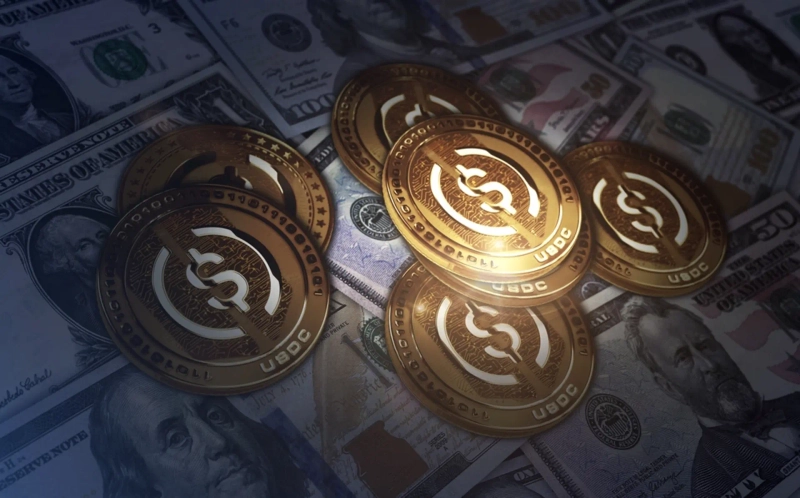
On July 28, two domestic stablecoin-related bills were introduced: the “Act on Issuance and Distribution of Value-Stabilized Digital Assets (An Do-geol’s bill)” and the “Act on Payment Innovation Using Value-Stable Digital Assets (Kim Eun-hye’s bill).” These bills are meaningful in that they propose a comprehensive regulatory framework for domestic stablecoins, marking a significant advancement that shows a consensus has been formed regarding the issuance of KRW-denominated stablecoins.
Both bills present common directions in areas such as issuer authorization, reserve asset management, and user protection. However, they differ in several core provisions.
The dilemma between stability and innovation: whether to allow interest payments
The biggest difference between the two bills is their stance on allowing interest payments for holding stablecoins. An Do-geol’s bill restricts the role of stablecoins to payment tools and explicitly prohibits interest payments. By contrast, Kim Eun-hye’s bill has no provision specifically prohibiting interest payments, thereby leaving possible room for stablecoins to evolve into income-generating financial products in the future.
This distinction is very important for companies preparing stablecoin-related businesses domestically. Whether certain business models—like DeFi (Decentralized Finance) services based on interest, or reward payment models—can be offered will depend on which bill is ultimately passed.
The handling of foreign stablecoins is also key
The bills take different positions on how foreign stablecoins may be handled in Korea. Under An Do-geol’s bill, a virtual asset service provider (VASP) must assess the eligibility of foreign stablecoins for transaction support on its own. In contrast, Kim Eun-hye’s bill includes a special provision that recognizes foreign-issued stablecoins as domestic if they meet certain requirements and are registered with the Financial Services Commission.
These provisions are key considerations for companies eyeing entry into global markets. In the U.S., the GENIUS Act allows the distribution of stablecoins from a country if its regulatory system is recognized as ‘comparable’ to the U.S. The standard set by Korean law could, therefore, be a prerequisite for U.S. market entry.
Which platform for issuance?
Stablecoins are issued and distributed through complex technical systems on blockchains. Currently, foreign stablecoins are issued and circulated based on overseas blockchain networks such as Ethereum and Solana.
Platform selection for issuing and distributing KRW-backed stablecoins is a crucial issue related to usage purpose, liquidity, security, and more. Therefore, discussions about which network to use should also take place in parallel.
Institutional development of smart contracts is also necessary
Blockchain networks such as Ethereum operate based on smart contracts. A smart contract refers to a programmable agreement on a blockchain that automatically executes when certain conditions are met.
Smart contracts provide clear advantages such as automation and improved efficiency of contract performance, but they also inherently involve potential legal dispute risks. However, so far, there is a lack of clear legal guidance regarding the validity, liability, and dispute resolution procedures for smart contracts. Considering their advantages, their use in blockchain-based fields is expected to increase even further, making in-depth discussion on this topic necessary.

Park Soon-young, Attorney at Law Firm Lin | After completing the 39th class of the Judicial Research & Training Institute (49th National Judicial Examination), Park has gained experience in general civil, criminal, and administrative litigation practice for many years. Since 2014, Park worked for 11 years as an in-house counsel at SK Planet, an ICT subsidiary of SK Group, building expertise in online platforms, electronic finance, fintech, personal information protection, M&A, and corporate advisory fields. From July 2025, Park will serve as a partner attorney at Law Firm Lin, handling electronic finance, fintech, digital assets, and related matters at the TMT & Information Security team.
<Hankyung Law&Biz contributor> Park Soon-young, Attorney at Law Firm Lin

Korea Economic Daily
hankyung@bloomingbit.ioThe Korea Economic Daily Global is a digital media where latest news on Korean companies, industries, and financial markets.