

Was it another 'betrayal' by Trump? After Japan, Taiwan faces controversy over tariff calculation
Summary
- There are concerns raised as the Taiwanese industry predicts that production costs are expected to rise by over 10% due to the tariff increase.
- It was belatedly revealed that the 20% reciprocal tariff applied to Taiwan is added on top of the original tariff, amplifying confusion among industry and political circles.
- Experts warned that this could lead to the weakening of Taiwan's price competitiveness and make the relocation of manufacturing outside Taiwan a reality.
Taiwanese industry: "Production costs up 10%"
Worries over weakened price competitiveness and 'China Plus One' moves
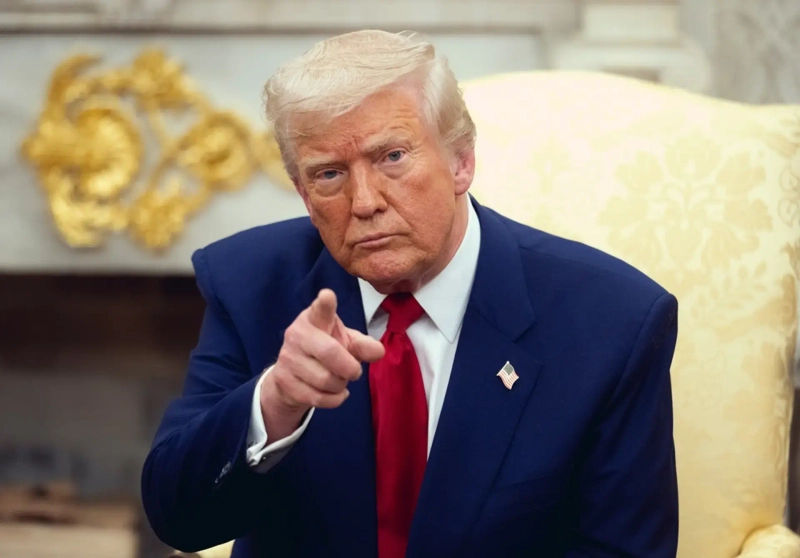
Controversy over the interpretation of the reciprocal tariff rates imposed by United States President Donald Trump is spreading in Taiwan after having gained attention in Japan. While the 20% reciprocal tariff for Taiwan came into effect on the 7th, it was only recently revealed that the actual imposition structure is not a 'flat 20% rate,' but rather 20% added to the existing tariff.
According to United Daily News on the 11th, the Office of Trade Negotiations, Executive Yuan, Taiwan (OTN) explained on the afternoon of the 8th that "Taiwan’s reciprocal tariff is 20% added to the existing Most Favored Nation tariff rate," and that "for machine tools, the total is 24.7%, with the previous rate being 4.7% plus an additional 20%."
The Bureau of Foreign Trade, Ministry of Economic Affairs and the OTN claimed they had disclosed this calculation method since April, but opposition and some ruling party lawmakers criticized the government for insufficient external communication. People First Party Chairperson Huang Kuo-chang called the government’s announcement 'opaque,' and Kuomintang (KMT) lawmakers noted, "Accurate information was not provided to the public." Some Democratic Progressive Party (DPP) lawmakers also strongly criticized, saying, "What the public wants is not prior notice, but an accurate current status," labeling it an 'external publicity crisis.'
Taiwanese industry fears that this tariff hike will result in production costs for traditional industrial products rising over 10% compared to Korea and Japan. Concerns are that weakened price competitiveness could lead to orders shifting to competitors like Korea, Japan, and Singapore, along with negative ripple effects such as higher unemployment rates. An expert diagnosed, "With this round of tariffs, the tariff gap between Taiwan and Japan in the agricultural and industrial sectors has widened to 15~27%, making price competition virtually impossible for Taiwan," adding, "There is a growing concern about 'China Plus One' as a result of U.S. policy."
As the controversy spreads, Taiwan's Legislative Yuan’s Foreign and National Defense Committee plans to call the Foreign Minister, deputy heads of relevant ministries, and the Deputy Chief Negotiator of the Executive Yuan OTN on the 14th to report on the impact of U.S.-Taiwan reciprocal tariffs and changes in the international situation.
Previously, Japan also agreed to a 15% reciprocal tariff with the United States, but controversy broke out as it became clear only later that the '15% tariff' imposed by the U.S. was not a uniform rate, but an additional charge on existing tariffs.
Reporter: Lee Hye-in hey@hankyung.com

Korea Economic Daily
hankyung@bloomingbit.ioThe Korea Economic Daily Global is a digital media where latest news on Korean companies, industries, and financial markets.