

Capital Market Institute: "Korea, the only advanced country without short-term government bonds... a stumbling block for stablecoins"
Summary
- Kim Pil-kyu, senior research fellow at the Korea Capital Market Institute, stated that issuing short-term government bonds, which serve as reserve assets, is necessary for the introduction of a Korean won stablecoin.
- He pointed out that currently, Korea lacks short-term marketable government bonds, so without institutional improvement, the conditions for issuing a Korean won stablecoin are insufficient.
- The introduction of short-term government bonds could have a positive impact on the financial market and price discovery for financial products, emphasizing the importance of establishing a management system that reflects market demand.
An analysis suggests that issuing short-term government bonds, which serve as reserve assets, is essential for the introduction of a Korean won stablecoin.
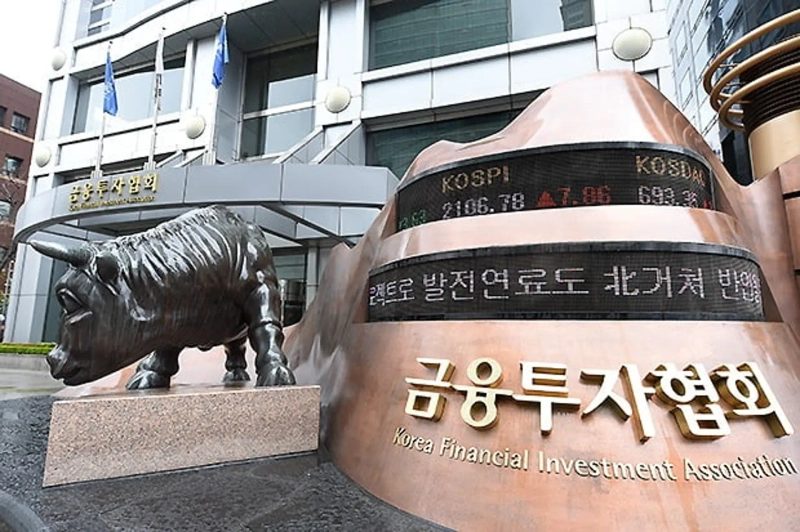
Kim Pil-kyu, senior research fellow at the Korea Capital Market Institute, stated at the 'Korea Capital Market Institute Issue Briefing' held at the Korea Financial Investment Association on the 11th, "Without institutional improvement, the conditions for issuing a Korean won stablecoin are insufficient."
Currently, as part of global digital economy efforts to increase the use of the Korean won and protect monetary sovereignty, the need for introducing a Korean won stablecoin is being highlighted. Citing the U.S. case, Mr. Kim explained, "Stablecoin issuers of the U.S. dollar hold most of their reserves in short-term government bonds," adding, "Government bonds with maturities of less than one year are a settlement tool that can ensure both stability and liquidity."
Korea is the only country among those with developed government bond markets that has no short-term marketable government bonds. Mr. Kim pointed out, "According to the National Finance Act, the approval standard for government bond issuance by the National Assembly is based on the total issuance amount. If short-term government bonds are repeatedly refinanced, it may appear that the debt has sharply increased," and suggested, "The approval standard should be changed to net increase or balance."
He further predicted that the introduction of short-term government bonds would have a positive ripple effect on both public finances and the financial markets. He said, "Short-term government bonds fill temporary capital shortages and raise funds at lower interest rates than long-term bonds, and by enhancing the completeness of the yield curve, they provide the foundation for pricing various financial products such as derivatives, loans, and bonds."
However, he noted that introducing short-term bonds could shorten the issuance cycle and increase the administrative burden for managing balances and identifying demand. Mr. Kim added, "A system that reflects market demand should be established for issuance and management."
Reporter Park Joo-yeon grumpy_cat@hankyung.com

Korea Economic Daily
hankyung@bloomingbit.ioThe Korea Economic Daily Global is a digital media where latest news on Korean companies, industries, and financial markets.