

Like Japan…Controversy in Taiwan Over Interpretation of US Tariff Rates
Summary
- It was reported that the 20% reciprocal tariff applied to Taiwan is actually added to existing tariffs, causing confusion for the government and companies.
- Due to this tariff increase, production costs for Taiwan's traditional industries will rise more than 10% compared to South Korea and Japan, raising concerns about weakened price competitiveness and orders shifting elsewhere.
- An expert observed that US policy has widened the tariff gap between Taiwan and Japan, heightening fears of 'de-Taiwanization.'
Not 20% Applied, But 'Existing Tariff + 20%'
Government and Companies Caught Off Guard as News Breaks Late
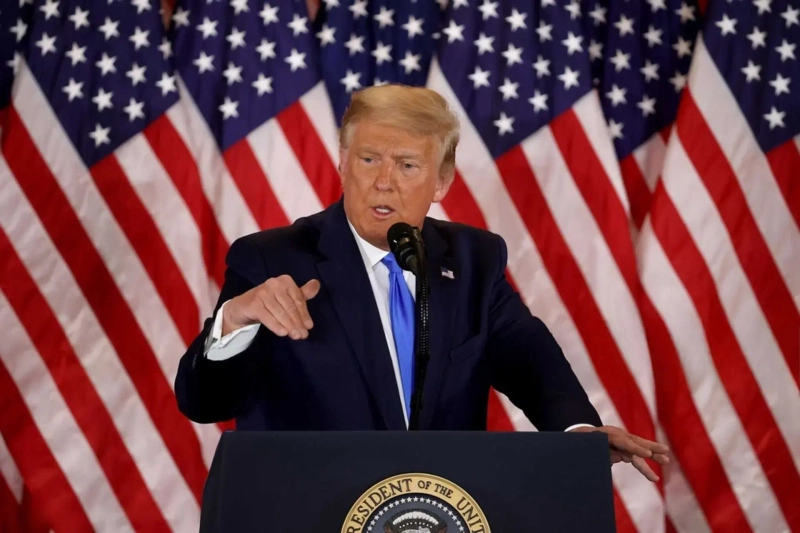
Controversy is spreading in Taiwan, following Japan, over the interpretation of the reciprocal tariff rate imposed by the Donald Trump United States administration. As the 20% reciprocal tariff applied to Taiwan took effect on the 7th, it was only later revealed that the actual method is not a 'single 20% rate', but a structure where 20% is added to the existing tariff.
According to United Daily News on the 11th, the Office of Trade Negotiations, Executive Yuan, Taiwan (OTN) explained, "Taiwan's reciprocal tariff is the sum of the existing Most Favored Nation (MFN) rate and an additional 20%." For example, "For machine tools, the total is 24.7% by adding 20% to the existing 4.7%."
The Bureau of Foreign Trade, Ministry of Economic Affairs, Taiwan and OTN claimed they had disclosed this method since April, but opposition and some ruling party lawmakers criticized the government for insufficient external explanation. Huang Kuo-chang, chairman of the Taiwan People's Party, described the government announcement as 'in the dark,' while a Kuomintang (KMT) lawmaker pointed out, "Accurate information was not provided to the public." Some Democratic Progressive Party (DPP) lawmakers also strongly criticized, saying, "What citizens want is not whether there was an advance announcement, but an accurate current status," calling it a 'crisis in external communication.'
Taiwan's industry is concerned that this tariff increase will raise production costs for traditional industrial products by more than 10% compared to South Korea and Japan. This is expected to lead to weaker price competitiveness, shifting orders to competitors like South Korea, Japan, and Singapore, and could have negative ripple effects such as rising unemployment. An expert analyzed, "This tariff imposition has widened the tariff gap between Taiwan and Japan by 15 to 27 percentage points, effectively reducing Taiwan's price competitiveness," adding, "Concerns about 'de-Taiwanization' due to US policy are growing."
As the controversy grows, the Foreign and National Defense Committee, Legislative Yuan, Taiwan, plans to summon the Minister of Foreign Affairs and deputy heads of related ministries on the 14th to report on the impact of the US-Taiwan reciprocal tariff and international situation changes.
Reporter Lee Hye-in hey@hankyung.com

Korea Economic Daily
hankyung@bloomingbit.ioThe Korea Economic Daily Global is a digital media where latest news on Korean companies, industries, and financial markets.