

"US Tariffs: Going Forward, Two-Thirds of the Burden Will Be Absorbed by Consumers Instead of Suppliers"
Summary
- Goldman Sachs predicted that about 67% of the tariff burden will ultimately be absorbed by consumers.
- It was stated that due to tariff hikes, inflation will inevitably increase in the second half of the year.
- Additional tariff increases by the Trump administration are expected to exert upward pressure on the consumer prices of high-import items.
Goldman Sachs: "Inflation Rise Unavoidable in the Second Half of the Year"
Foreign Exporters That Absorbed 14% Expected to Increase to 25%
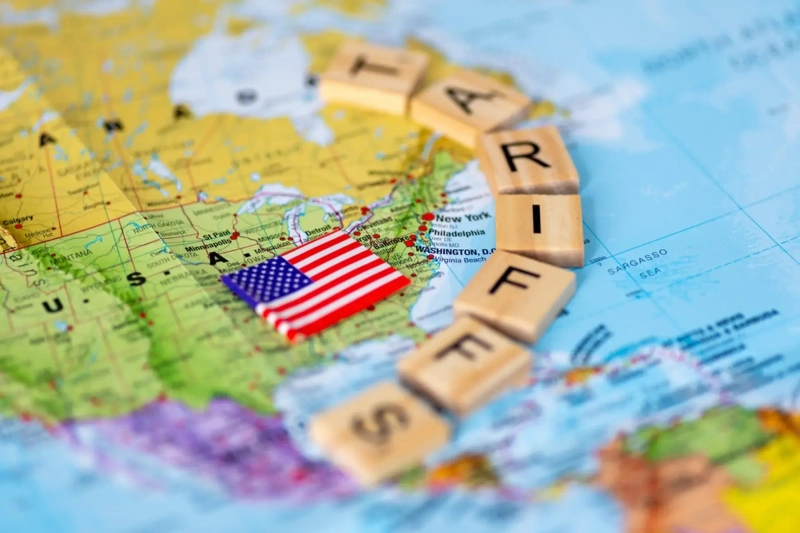
U.S. importers have thus far absorbed most of the costs from Donald Trump's tariffs, but this burden is expected to increasingly be passed on to consumers going forward.
According to a survey from Goldman Sachs cited by Bloomberg on the 11th (local time), U.S. consumers absorbed about 22% of tariff costs through June, while American companies absorbed about 64%. However, if previous imposition patterns continue, the absorption rate by companies is projected to gradually drop to 10%, and the consumer share of tariff costs is estimated to rise to as much as 67%.
Goldman Sachs nevertheless noted that the impact on companies is mixed. Some have been hit harder by tariffs, but certain U.S. domestic manufacturers, protected from import competition such as steel subjected to 50% tariffs, have begun increasing prices and reaping profits.
Meanwhile, it was estimated that foreign exporters absorbed about 14% of tariff costs through June. The absorption rate by foreign exporters is projected to rise to 25%. The estimate suggests that if import prices of tariffed goods fall, foreign exporters could take an even bigger hit.
Goldman Sachs ultimately expects inflation to rise over the rest of the year. Based on the assumption that the base inflation rate excluding tariffs will be 2.4%, Goldman Sachs forecasts the core Personal Consumption Expenditure (PCE) inflation rate in December to reach 3.2% year-over-year.
Meanwhile, on the 12th of this week, the July Consumer Price Index (CPI), Producer Price Index (PPI), and retail sales data—key inflation indicators—will be released. Bloomberg’s survey of economists showed expectations for a slight increase in inflation in July.
Economists predicted that the core Consumer Price Index (CPI), which excludes volatile food and energy costs, likely rose 0.3% in July. The core CPI in June rose 0.2% from the previous month. The drop in gasoline prices helped curb the pace of inflation.
Tariff increases by the Trump administration have already begun to put upward pressure on consumer prices for high-import items such as furniture and leisure goods since June. Economists expect that increased tariffs on imports will eventually impact consumer prices.
Guest reporter Kim Jeong-ah kja@hankyung.com

Korea Economic Daily
hankyung@bloomingbit.ioThe Korea Economic Daily Global is a digital media where latest news on Korean companies, industries, and financial markets.