

Trump's 'Federal Reserve Shake-up'...A Concern for Central Banks Worldwide
Summary
- "Attempts by President Trump to undermine the independence of the Fed have raised concerns that this could damage the inflation management capacities of central banks worldwide."
- "It was noted that if the Fed caves to political pressure and the status of U.S. Treasury Bonds becomes unstable, this could cause chaos in financial markets."
- "There are warnings that stronger political control over central banks around the globe could increase inflationary pressures and market instability."
"Could Threaten Countries' Inflation Management as a Dangerous Precedent"
"Instability of U.S. Treasury Bonds May Lead to Market Turbulence"
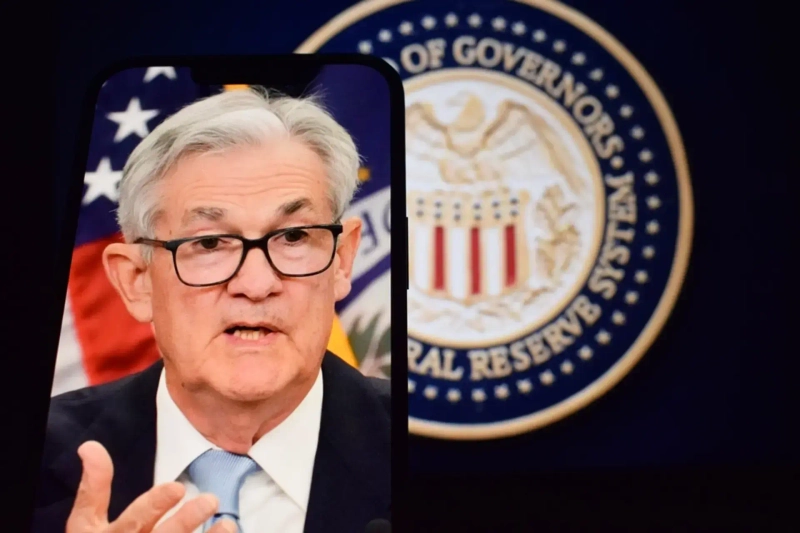
Central bank governors around the world, witnessing the Federal Reserve Board—which had long prided itself on strong independence—being shaken by President Trump, are concerned about the shockwaves from undermining central bank independence.
President Trump has persistently attacked Jerome Powell, the Fed Chair, to reshape the Fed to his own taste and force rate cuts. He is also currently attempting to oust Lisa Cook, one of the Fed's seven governors.
There are concerns that, if the Fed succumbs to this pressure, it could set a dangerous precedent for central banks worldwide, including those in Europe and Japan.
According to Reuters interviews on the 25th (local time) with world central bank governors attending the Jackson Hole meeting in Wyoming, they see political pressure on central banks as undermining their ability to address inflation and threatening economic stability.
They also said that if the Fed yields to political interference and the status of U.S. Treasury Bonds—the lifeblood of the global financial system—becomes unstable, investors will demand a higher premium on Treasuries (=bond prices fall), making major financial market turmoil likely.
Some central banks in other countries have already advised banks and other lenders to take caution regarding their exposure to the U.S. dollar, anticipating the impact of destabilized independence at the U.S. central bank. This is based on an outlook that the dollar would weaken if the Fed's ability to control inflation erodes.
Olli Rehn, a policy board member of the European Central Bank, who is from Finland, said, "Political attacks on the Fed are having an impact across Europe and the rest of the world."
More fundamentally, if the Fed yields to political pressure, it would mark the end of the Fed's independence enjoyed since at least 40 years ago, when then-chair Paul Volcker tamed high inflation.
Since Volcker, most central banks around the world have adopted a model of political independence focused solely on their mandates. Most have kept target inflation around 2%.
Joachim Nagel, President of Deutsche Bundesbank and also a member of the ECB governing council, said, "It is essential to reaffirm that central bank independence is a prerequisite for price stability and must never be taken for granted."
So far, markets have not seriously doubted the Fed's independence even after Trump's attacks. U.S. stocks remain strong, and there has not been a sharp jump in Treasury yields or inflation expectations suggesting the Fed's credibility is at risk.
President Trump can nominate a new Fed Chair when Jerome Powell's term ends in May. However, markets see him as seeking to remove more members to secure a majority who will implement his desired rate policy.
The Fed's process for setting rates—where heads of the 12 regional reserve banks take turns voting—is intended to serve as a check and keep the Fed independent of Washington's influence, but it remains uncertain whether Trump will avoid attacking the regional banks as well.
Ultimately, Trump's moves are likely to prompt governments around the world, especially those with populist leanings, to assert more control over their central banks.
This could result in higher inflation and greater market instability globally.
Maurice Obstfeld, senior fellow at the Peterson Institute for International Economics and former chief economist at the International Monetary Fund, said, "A government manipulating the Federal Reserve would set a very bad example for other governments." He pointed out that what has happened even in the U.S.—long seen as a bulwark of institutional checks, balances, and the rule of law—could just as easily occur elsewhere.
By Jungah Kim, contributing reporter kja@hankyung.com

Korea Economic Daily
hankyung@bloomingbit.ioThe Korea Economic Daily Global is a digital media where latest news on Korean companies, industries, and financial markets.