

Trump: "Additional Tariffs on Semiconductors + Restrictions on Export of Advanced Chips If Digital Tax Is Implemented"
Summary
- President Trump warned that countries implementing the digital tax could face additional tariffs on semiconductors and restrictions on exports of advanced technology.
- Such measures would heighten tariff uncertainty against trading partners and are likely to impact global tech companies and export markets.
- Although South Korea has not yet enacted related legislation, it is necessary to pay attention to potential changes in policy direction in response to global trends and US warnings.
"Discriminating Against American Technology While Exempting Chinese Companies"
Digital tax is implemented in countries such as the UK, France, and other EU nations; South Korea is still pre-legislation
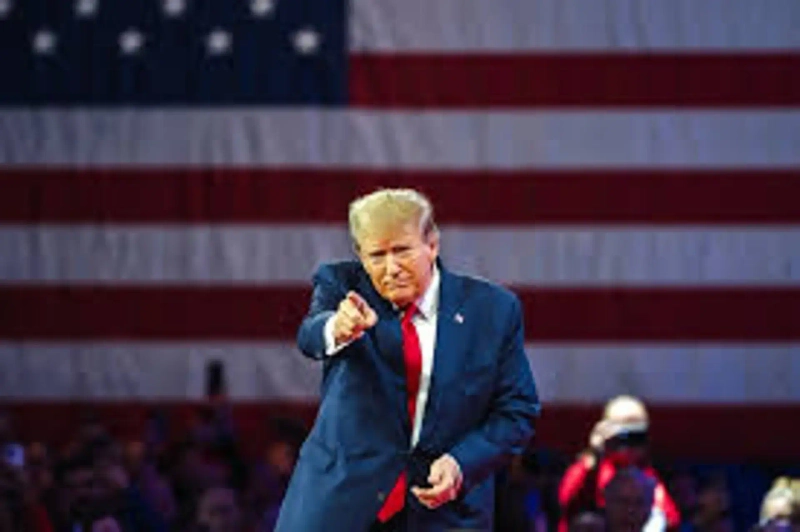
President Donald Trump of the United States threatened to impose new tariffs and export restrictions on advanced technology and semiconductors in countries where the digital services tax is implemented.
On the night of the 25th local time, President Trump wrote on his social media that digital taxes or digital service-related legislation were "designed to harm or discriminate against American technology." In contrast, he claimed that "giant Chinese tech firms are given a complete exemption."
He further stressed, without mentioning any specific country, "This must end immediately." President Trump declared, "Unless these discriminatory measures are eliminated, as President of the United States, I will impose substantial additional tariffs on exports to the US from those countries and enforce restrictions on the export of our highly protected technologies and chips."
Currently, digital taxes are primarily being implemented in European Union (EU) countries. In South Korea, discussions have been ongoing about introducing charges with digital tax characteristics through the online platform law, but the situation remains fluid.
Trump's attack on digital taxes has once again heightened uncertainty regarding tariffs against America's trading partners. Earlier this month, after imposing country-specific tariffs on dozens of partner nations, President Trump again proclaimed plans to impose new tariffs on various imported goods. Just last week, he announced new tariffs would be imposed on imported furniture.
Trump's warning came only a week after the United States and the European Union (EU) issued a joint statement agreeing to "eliminate unjust trade barriers" and "not impose tariffs on electronic transmissions."
However, the EU has separately reiterated that it has never promised to change EU digital regulations. The EU stated, "We have made it clear to the United States that changing digital regulations, namely the Digital Markets Act and the Digital Services Act, is not on the table."
In early July, Canada canceled its planned digital tax following President Trump's threat to suspend trade negotiations if the digital tax was not repealed prior to its implementation.
However, countries such as the United Kingdom and France continue to impose digital taxes on revenues arising from search engines, social media services, and online marketplaces.
The digital tax is a levy imposed on revenue generated by technology companies from targeted online advertising, streaming, and data sales to users in specific countries. It is a tax regime designed to supplement the existing corporate tax model—which is based on physical presence—to more accurately capture revenue earned by tech companies in those areas.
In 2019, France was the first to introduce the digital services tax. France imposed a 3% tax on targeted advertising and other digital service revenues for companies with global annual sales of more than €750,000,000 (about ₩1,220,000,000,000) and sales within France exceeding €25,000,000 (₩40,600,000,000). Subsequently, countries like Italy, Austria, Spain, and the United Kingdom have also implemented digital taxes.
After taking office this year, President Trump ordered the resumption of so-called Section 301 investigations against countries that imposed digital services taxes during his first term, and subsequently resumed investigations into other countries implementing the digital services tax.
President Trump also instructed the US Treasury to notify the Organisation for Economic Co-operation and Development (OECD) that all prior US commitments regarding digital tax negotiations are not binding.
Jung-A Kim, Contributing Reporter kja@hankyung.com

Korea Economic Daily
hankyung@bloomingbit.ioThe Korea Economic Daily Global is a digital media where latest news on Korean companies, industries, and financial markets.