

What Does the Future Hold for Korea's Digital Asset Industry? [Pacific Future Finance]
Summary
- It was reported that Korea's digital asset industry faces low predictability due to the absence of concrete regulatory proposals.
- The U.S. White House, through its 166-page digital asset regulatory report, presented a clear policy direction and recommendations.
- Korean businesses are experiencing significant investment burdens and risks due to the uncertain regulatory environment, highlighting the urgent need for clear policy direction.
No Concrete Regulatory Proposals in Korea...Zero Predictability
The U.S. White House Publishes a 166-Page Report on Digital Asset Regulations
"A Predictable Digital Business Environment Must Be Established"
HanKyung Law & Biz's 'Law Street' column provides practical legal knowledge to businesses and individuals. Expert attorneys cover legal issues in a variety of areas such as taxation, inheritance, labor, fair trade, M&A, and finance, and also provide analysis of major judgments.

Not even three months have passed since the launch of the People’s Sovereignty Government, and yet unfamiliar scenes often catch the eye. True to his background as an administrator, the President travels nationwide, listening to and addressing petitions, and the new administration’s confidence is evident as it exposes various government meetings—including the senior aides meeting—to the media. Perhaps that is why expectations were high for what vision and direction the new government would present for the digital asset industry and how swiftly it would push forward with its policies.
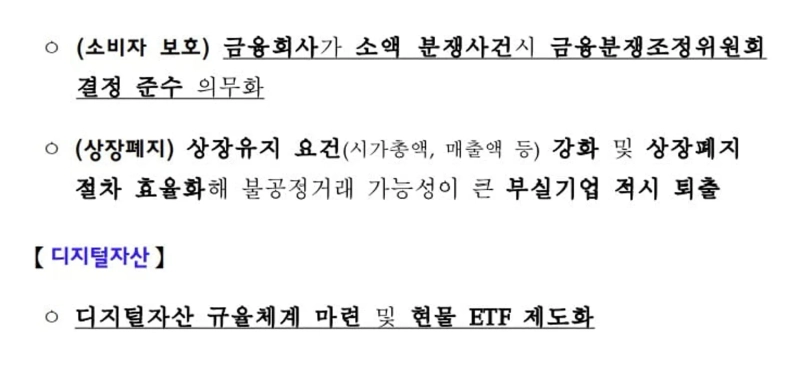
On August 22, the government finally released a report titled “New Government Economic Growth Strategy.” Spanning 68 pages and consisting of detailed sections on technology-driven growth, inclusive growth, fair growth, and reinforcement of sustainable growth, the report contained the term “digital asset” only once: “Establishment of a regulatory framework for digital assets and institutionalization of spot ETFs.” The message is unequivocal, yet there was no background explanation or elaboration of objectives, leaving me staring blankly at this brief phrase.
Stagnant Domestic Financial Firms...Feeling Their Way Through Uncertainty
A company is eliminated the moment it grows complacent with reality. That is why not only fiercely growth-seeking businesses but even those simply wishing to survive strive to anticipate market changes and secure their position in a shifting environment. Concretely, a business aiming to launch a new venture next year must draft business plans and budgets in the latter half of this year to implement the new venture the following year. In the first half of 2025, everyone is talking about the issuance and use of stablecoins. However, in reality even major banks under the four financial holdings, as well as fintech companies like Naver, Kakao, and Toss—along with leading domestic card and securities companies—are left utterly at a loss as to where and how to begin preparing.
Consider the following. If a bank issues stablecoins, can the bank hold the coins it has issued in custody itself? Can it provide loans using the issued stablecoins as collateral? Do electronic financial companies wishing to handle issued stablecoins have to file a separate report as virtual asset service providers? Although stablecoins are said to resemble prepaid electronic payment means, will the regulation prohibiting self-issued coin transactions, as stipulated by the Virtual Asset User Protection Act but not currently applied to prepaid payment means, apply to stablecoins?
If buying virtual assets with credit cards is currently restricted under the Specialized Credit Finance Business Act, would this be revised if stablecoins become institutionalized? Will the government permit only domestic issuance of KRW-backed stablecoins, or will it also allow the domestic issuance of foreign-currency stablecoins? There are so many questions circulating in the market that cannot even all be listed here, and for now there appears to be nowhere to obtain clear answers or even ask the questions. Korean companies are fumbling through an uncertain regulatory environment, weighing various scenarios as they prepare for new businesses, and the burden and risk involved are regrettable.
U.S. Reduces Uncertainty for Businesses
What about the situation in the U.S., where a new government came on somewhat earlier than ours? As is well known, the Trump administration, which declared its ambition to nurture the digital asset industry as a strategic sector for the U.S., signed an executive order for the institutionalization of digital assets on inauguration day, and finally, on July 31, released a concrete roadmap for the implementation of this executive order.
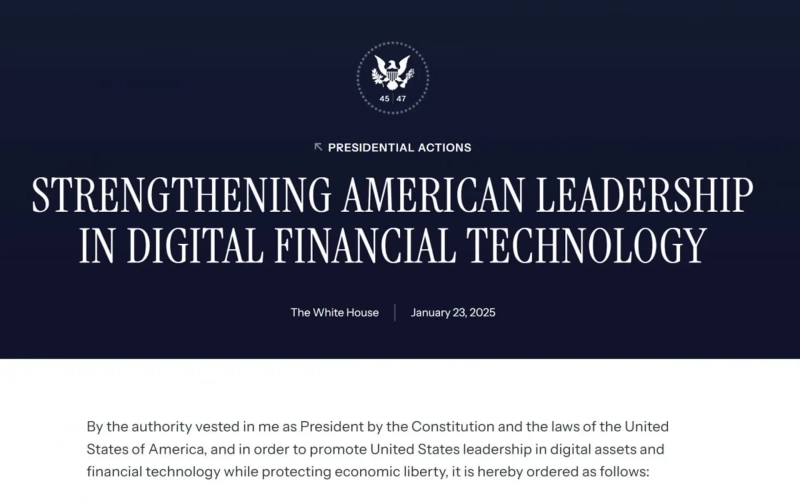
Prepared in the name of the U.S. White House President's Working Group on Financial Markets (PWG) and titled “Strengthening American Leadership in Digital Financial Technology,” the report spans as many as 166 pages. It thoroughly explains the digital asset ecosystem and market structure, presenting detailed challenges requiring institutional reform and offering recommendations across a broad spectrum. Its primary content falls into the categories of Banking and Digital Assets, Stablecoin and Payments, Countering Illicit Finance, and Taxation. Due to its scope, I'll focus here on the “Banking” section as an example.
The report refers to the regulatory approach of banking supervisors during the Biden administration as “Operation Choke Point 2.0,” stating that such policies must never be repeated, and explains that crypto technology offers new opportunities for banking businesses in payments, remittances, asset management, and more. It also recommends supervisory agencies refrain from using across-the-board “high risk” designations for crypto-related sectors in their guidelines for banks, emphasizing that technological change does not necessarily alter the risk profile of activities and that banks should be allowed to conduct safe and sound digital asset activities without prior regulatory approval.
After laying out the government’s position so clearly, the report presents the following recommendations: ① Provide best practice guidelines for banks’ digital asset custody; ② Provide guidance on the use of third parties for digital asset services; ③ Provide additional instructions regarding stablecoin reserve deposits; ④ Clarify whether banks may hold digital assets on their balance sheets and address safety and soundness concerns; ⑤ Allow banks to participate in digital asset-related experiments; ⑥ Prepare risk-based guidelines for asset tokenization, etc. In particular, with regard to capital regulations, the report points out that the existing BCBS capital and liquidity standards for virtual asset exposures (the “Basel Standards”) have been made excessively stringent and proposes that the U.S. should take the lead in calling for their international review to ensure true risk reflection.
'Predictability of the Business Environment' Is National Competitiveness
Having read this report, U.S. banks can clearly understand the administration’s position and anticipate the regulatory changes to come, allowing them to set out concrete plans for new businesses they wish to pursue. This kind of foreseeability is precisely what Korean companies also need. Even if policies have not yet been implemented in the form of specific regulations, the government’s duty is to present policy direction in advance and show where the industry should go. When companies invest in future industries in line with government-led directions, industries grow, and national competitiveness is secured.
Our government may—compared to the U.S.—pursue a more prudent and stable policy direction for digital assets, and that approach is valid in its own right. Yet I hope the government will clarify and make concrete, in broad outlines, whether its direction is nurturing or restricting; what roles financial institutions will be assigned within the digital asset market; and what services digital asset providers will be permitted to offer.
Kim Hyo-bong, Attorney at Bae, Kim & Lee LLC I
After working for over 10 years at the Financial Supervisory Service, focusing on digital finance and regulation/market practices in Korea’s digital asset industry, Kim Hyo-bong has built professional expertise in these areas. After completing the 41st Judicial Research and Training Institute, he worked on fund and trust system improvements and private fund dispute resolutions at the FSS, and since 2022 has focused on establishing virtual asset user protections and related subordinate regulations, as well as supporting the self-regulation of virtual asset listings on exchanges. A graduate of Yonsei University's College of Law, he completed the LL.M. program at Columbia Law School in the U.S. and earned a Professional M.B.A. from Sungkyunkwan University’s Graduate School of Business. This background gives him balanced insight into both domestic/international legal issues and practical business and financial markets. Since joining Bae, Kim & Lee LLC in 2024, he has provided wide-ranging digital finance legal advisory services, including virtual assets and STOs.
The BKL Future Finance Strategy Center (headed by Han Joon-sung), launched in May 2024, assembles top-tier experts in finance and IT to accelerate digital innovation in the financial sector and advance financial technology, focusing on virtual assets, electronic finance, regulatory compliance, and information protection.

Korea Economic Daily
hankyung@bloomingbit.ioThe Korea Economic Daily Global is a digital media where latest news on Korean companies, industries, and financial markets.