

Even administrative exam alumni "can't take it anymore"… Financial Services Commission staff in 'collective panic' [Shin Min-kyung's Yeouido Bulletin]
Summary
- The government and ruling party's announced reorganization plan for financial authorities will put the Financial Services Commission on a dissolution course, and personnel dispersion will make staff departures inevitable.
- Financial policy functions will be transferred to the Ministry of Economy and Finance, supervisory functions to the Financial Supervisory Commission, and the FSS and FCPA will be designated as public institutions, prompting internal backlash and concerns about reduced policy efficiency.
- Internal staff are seriously worried about losing the advantage of working in Seoul, personnel confusion, and weakening of the independence and neutrality of financial supervision.
[Shin Min-kyung's Yeouido Bulletin(14)]
Financial Services Commission on course for dissolution for the first time in 17 years
Staff dispersing… Sejong move seen as a "disaster"
Financial Supervisory Service also in collective panic
Separation of Financial Consumer Protection Agency·designation as a public institution
"Staff losses from FSC and FSS unavoidable"
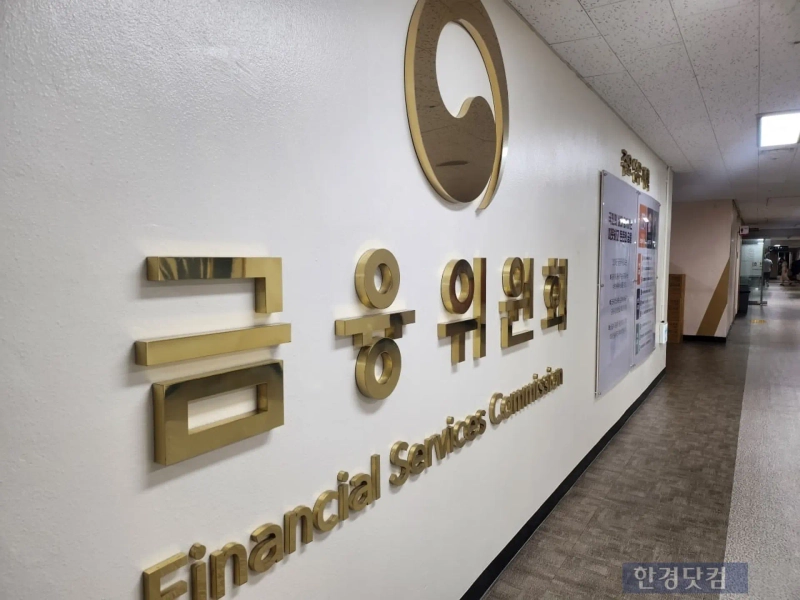
Government and ruling party announcements of a reorganization plan for financial authorities plunged Financial Services Commission and Financial Supervisory Service staff into a sombre mood on the 8th.
The government and ruling party decided to split the financial policy and supervisory functions into four bodies: the Ministry of Economy and Finance, a Financial Supervisory Commission, the Financial Supervisory Service (FSS), and a Financial Consumer Protection Agency (FCPA). Under this plan, the FSC as a ministry-level body would be dissolved and absorbed into the Ministry of Economy and Finance and the Financial Supervisory Commission. Only a portion of FSC civil servants would remain in Seoul; the majority would be moved to Sejong. Many FSS staff would also be transferred to the newly separated and established FCPA. The FSS would also be saddled with designation as a public institution.
Even administrative exam alumni "can't take it anymore"… FSC staff in 'collective panic'
The reorganization plan confirmed at the high-level party-government meeting on the 7th includes dissolving the FSC for the first time in 18 years and transferring the financial policy functions (including the Financial Intelligence Unit) that were a pillar of the FSC to the Ministry of Economy and Finance. The FSC would be renamed the 'Financial Supervisory Commission' and focus on supervisory functions. Under the Financial Supervisory Commission would be the existing FSS and the FCPA. The FSS and FCPA would be designated as public institutions.
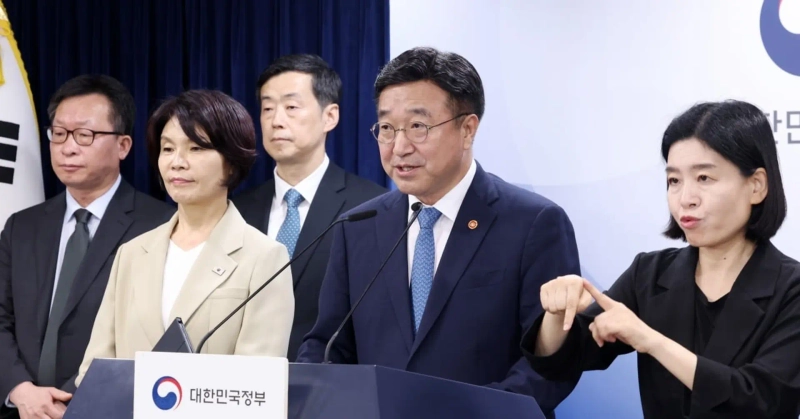
Yoon Ho-jung, Minister of the Interior and Safety, said at a briefing after the high-level party-government meeting, "Transferring domestic financial functions of the FSC to the Ministry of Economy and Finance is a measure to ensure consistency between domestic and international finance and to respond effectively to financial crises."
If laws such as the Government Organization Act containing these measures pass the National Assembly plenary session on the 25th, the FSC will hand over its domestic 'financial policy' and 'financial supervision' functions to the Ministry of Economy and Finance and the FSS respectively, and will be taken down.

The sudden notice of organizational dissolution left staff in a gloomy mood. Recently, with FSC Chairman Lee Eok-yeon being appointed alongside FSS Governor Lee Chan-jin, there had been hopes within the FSC that "surely they wouldn't dissolve it," but the restructuring cut could not be avoided. Staff said the sense of emptiness is greater because President Lee Jae-myung had publicly praised the FSC's achievements just before.
Above all, the heavy burden is that most personnel will have to move to Sejong due to incorporation into the Ministry of Economy and Finance. Among staff, complaints such as "Isn't this effectively a demotion?" have emerged. The FSC had been popular compared with powerful ministries like the MOEF and the Fair Trade Commission. Last year, the top two passers of the Grade 5 open competitive exam both chose the FSC, and the "Seoul office" advantage was a major factor.
Now that the benefit of working in Seoul is gone, an outflow of young talent is seen as inevitable. An FSC manager said, "This reorganization, which began with the need to reduce the MOEF's budgetary functions, has resulted in losses only for the financial authorities. Budgetary authority and ministerial posts will be newly created, and financial policy has moved to the MOEF," adding, "The internal atmosphere is sheer dismay."
Another manager complained, "There was not a single internal consultation regarding the reorganization, and even last week when the announcement schedule was finalized, an internal gag order of 'do not speak externally' was issued," adding, "We worked quietly with hope, but the result feels like being blindsided." He added, "Employees in their early 30s and 40s worry whether it's realistically possible to commute to Sejong and maintain family life," and "Those in their first two years after the civil service exam are already planning to go to law school or move to other ministries."
Ultimately, the scale of the Financial Supervisory Commission that remains in Seoul will be crucial. If the MOEF creates an Insurance Systems Division and the Financial Supervisory Commission creates an Insurance Supervision Division so that industry-specific departments are established, the number of FSC staff moving to the MOEF could be minimized. However, it is also likely that the Financial Supervisory Commission will leave only a minimum number of FSC personnel for administrative support. From the perspective of staff in departments confirmed to move to the MOEF, many feel it's more advantageous to move en masse to avoid being a "small minority" within a small intake, preserving internal standing.
Concerns were raised that policy efficiency and accountability could also be undermined. An FSC manager pointed out, "If laws and enforcement decrees are handled by the MOEF while supervisory regulations are handled by the Financial Supervisory Commission, although the system should be a single chain, the institutions will be split and will in practice work together on most tasks," adding, "If problems arise, people will say, 'This is an enforcement decree matter so it's the MOEF's responsibility' or 'This is a supervisory regulation matter so it's the Financial Supervisory Commission's responsibility,' leading to dispersed accountability." An FSC senior official also warned, "Under a dual system, it will be difficult to guarantee policy efficiency and accountability as we do now."
"Transferred to FCPA and designated as a public institution" FSS also stunned

FSS staff were also in a gloomy mood.
First, if the Financial Consumer Protection Office within the FSS is separated into the FCPA, some personnel will immediately change affiliation. The consumer affairs department, which handles complaints, had already been regarded as a particularly undesirable department within the FSS. Employees reassigned to the new agency would effectively continue the same work, so personnel dissatisfaction and morale decline are inevitable. Also, being designated as a public institution rather than a "special-purpose private-law corporation" will be a heavy burden. Government control through budget and personnel will become much stronger than before.
An FSS team leader said, "With the designation as a public institution becoming likely and talk of personnel exchanges between the MOEF and the Financial Supervisory Commission being raised, financial supervision will effectively be subordinated to economic policy," adding, "It's similar to the Bank of Korea's monetary policy being subordinated to MOEF economic policy. The FSS's raison d'être, based on neutrality and independence in financial supervision, could be shaken."
Regarding the separation of the consumer protection body, the team leader said, "Confusion over division of duties and responsibility is inevitable. It's a decision that ignores overseas failures and academic criticism," adding, "Talk of reintegration will come up again within a few years."
An FSS employee in their 30s said, "I joined looking at the title 'FSS' despite the relatively low pay compared with financial firms and related institutions, so I'm very disappointed," adding, "If assigned to the FCPA, I'll prepare to resign."
Internally, some interpret that one background to this discussion is the 'overreach and abuse of authority' controversy that arose during former Governor Lee Bok-hyun's tenure. An FSS team leader said, "There seemed to be calls to strengthen the oversight of civil servants over the FSS, which is a private organization," adding, "It wasn't just an organizational problem but an issue of a governor exerting strong influence; to fix that, independence should have been institutionally reinforced. Turning it into a management system centered on economic policy is contradictory, in my view."
From now on, the division of work and personnel exchanges between the newly established FCPA and the FSS will be contentious. An FSS team leader said, "If the FCPA is given supervisory powers equal to the FSS or if it only handles consumer complaints without independent inspection authority, the scope of transfers will be narrowed," adding, "The FCPA's remit could include not only complaints but also business conduct and supervision/inspection, so almost all staff are on edge. Internal strife and conflict could intensify, which is worrisome."
After yesterday's reorganization announcement, the anonymous workplace community Blind's FSS employee board was flooded with complaints. Staff posted heated reactions such as "Even designating it as a public institution is too much. The worst conclusion," "We should strike," and "I'll start looking for a job from tomorrow."
FSS Governor Lee Chan-jin said in an internal notice to employees that day, "The management tried its best to ensure that the supervisory system reorganization would be carried out reasonably, but the result is very regrettable," adding, "We will actively engage in parliamentary discussions and consultations with related institutions to carefully handle detailed matters such as the functions and roles of the FSS and the FCPA."
Shin Min-kyung, Hankyung.com reporter radio@hankyung.com

Korea Economic Daily
hankyung@bloomingbit.ioThe Korea Economic Daily Global is a digital media where latest news on Korean companies, industries, and financial markets.