

Venezuela's broken economy… Attempt to rebuild with 'UN-supported stablecoin'
Summary
- The United Nations Development Programme (UNDP) is reported to be promoting a project to provide stablecoins as relief funds for Venezuela's economic reconstruction.
- Dollar-pegged stablecoins, such as World Liberty Financial (WLFI), were listed on major domestic exchanges, drawing increased investor interest.
- Domestic and international institutions and companies are accelerating the adoption of stablecoins, and related legislation and safeguards are being discussed.
Issuance of stablecoins by various countries accelerates
Coins linked to the Trump family also land
WLFI 2 types listed on Upbit and Bithumb
UNDP to rebuild Venezuela's economy
Stablecoins to be given as relief funds
Global stablecoin trading $27 trillion
Discussions on won-denominated stablecoins accelerate
Government: "We will create strong safeguards"
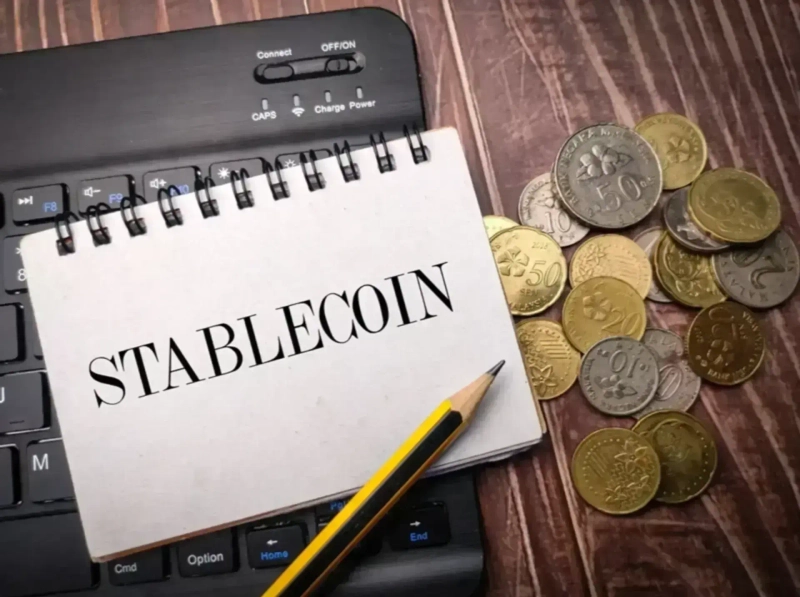
Investor interest is rising in coins (cryptocurrencies), the pinnacle of fintech. Two coins linked to the family of U.S. President Donald Trump were listed on the country's largest crypto exchanges, Upbit and Bithumb, on the 1st. They are World Liberty Financial (WLFI) and the dollar-pegged stablecoin 'WLFI USD1'. Unlike the unstable meme coin OfficialTrump, these coins have real value. WLFI ranked within the top 40 in global crypto market capitalization as soon as it was listed. WLFI USD1 also jumped into the top 60. As of last month, about 18,000 coins were being traded worldwide.
With the enactment of the Genius Act and other legislation that legalized dollar-based stablecoins in the United States, China, Japan, and the European Union (EU) are also accelerating preparations to issue stablecoins based on their own currencies. In South Korea, private companies and financial institutions are actively discussing the introduction of won-denominated stablecoins. Several related bills have been submitted to the National Assembly. Many view the introduction of won-denominated stablecoins, a campaign pledge of President Lee Jae-myung in the 21st presidential election, as a matter of timing and form rather than if it will happen. However, unlike the dollar, the yen, and other reserve or quasi-reserve currencies, demand is not clearly guaranteed, so opinions are divided on whether to adopt them.
◇Stablecoin trading volume surpasses card companies
In the absence of adequate domestic laws and regulations, stablecoins have already spread internationally, centered on international organizations. According to the fintech industry on the 8th, the United Nations Development Programme (UNDP) has exclusively selected Korean deep-tech company IAIOP as the 'SPO (Stablecoin Platform Operation)' operator for its blockchain financial infrastructure project in Venezuela. This is part of the UNDP's 'SDG Blockchain Accelerator' program. The core idea is to redesign Venezuela's public financial and administrative infrastructure with blockchain after decades of populism and other factors that have collapsed the national economy.
IAIOP and electronic wallet company IOTRUST will build stablecoin electronic wallets, payments, self-sovereign identity (SSI), and data pipelines by the end of the year. All processes will be made publicly verifiable through on-chain data. SSI originally allows individuals participating in a blockchain network to prove their identity via an electronic wallet. In this UN project, it will ensure that relief funds are delivered accurately to recipients without embezzlement or loss en route. Relief funds will be provided as dollar-pegged stablecoins instead of the national currency, which has become worthless due to extreme inflation. According to the UN, there are 8 million refugees from Venezuela as of this year.
The project involves UN agencies that have been active in Venezuela, including the UN Refugee Agency (UNHCR), the Food and Agriculture Organization (FAO), and the World Food Programme (WFP). Jin Seong-han, CEO of IAIOP, said, "We will establish a public-interest stablecoin ecosystem standard in Venezuela," and added, "We will work with the UN, international philanthropic organizations, global companies, and university research institutes to make stablecoins an accessible public-interest infrastructure."
According to the Committee for International Financial Cooperation (CIFC) under the Financial Services Commission, global stablecoin trading volume last year exceeded $27 trillion and transaction counts exceeded 1.25 billion. This is more than three times the Mastercard transaction amount of $8.014 trillion in fiscal year 2024 (Mirae Asset Securities analysis). Mastercard's transaction count for the same period was 159.424 billion. The average transaction amount per stablecoin transaction is about $21,600, while Mastercard's is about $50 per transaction. This indicates that international stablecoin trading is already active among large players.
◇"Coins are reorganizing finance's core functions"
On the 2nd, Daishin Securities released an issue report stating, "The stablecoin financial innovation theme links to broad investment across fintech, exchanges, payment companies, and traditional financial firms," and added, "Stablecoins are no longer auxiliary assets of cryptocurrencies but are establishing themselves as a new trust-based payment infrastructure." It emphasized, "Stablecoins effectively function as dollars within the DeFi economic sphere and are being used as the base currency for digital asset trading."
Domestic authorities and banks are also moving quickly. Huss Tabbart, the number-two executive at Circle, the issuer of the world's second-largest stablecoin USDC, who visited Korea last month, met with Lee Chang-yong, Governor of the Bank of Korea, Jin Ok-dong, Chairman of Shinhan Financial Group, and senior officials from KB, Woori, and Hana Bank. At a group event in Jeju Island at the end of last month, Chairman Jin said of stablecoins, "They are not just technology but a core driver that can reorganize finance's core functions and create new customer-centric value." Shinhan Financial Group was the first among domestic financial institutions in 2021 to develop overseas remittance technology based on stablecoins. Danal, the country's top mobile payment gateway (PG) provider, has begun technical and legal reviews for the introduction of a won-denominated stablecoin. Danal previously introduced the blockchain cryptocurrency Paycoin.
Lee Eok-yeom, nominee for the chair of the Financial Services Commission, said at a confirmation hearing before the National Assembly's Administration and Finance Committee on the 2nd, in response to a question asking, "If stablecoins destabilize the financial market, can the FSC exercise strong powers such as ordering issuance suspension or redemption?", "We are preparing safeguards."
Lee Hae-seong, reporter ihs@hankyung.com

Korea Economic Daily
hankyung@bloomingbit.ioThe Korea Economic Daily Global is a digital media where latest news on Korean companies, industries, and financial markets.