

PiCK
U.S. Supreme Court Agrees to 'Expedited Hearing' of Trump's Tariff Appeal
Summary
- The U.S. Supreme Court said it would expeditiously hear the Trump administration's appeal related to tariffs.
- Relatedly, small businesses reported that they face threats to their survival due to price increases and supply chain disruptions.
- If the tariffs are maintained, $750 billion to $1 trillion in tariff collections are expected, but their withdrawal could remove investment uncertainty and potentially boost growth.
Supreme Court Decides to Hear Trump's Tariff Appeal Expeditiously
Small Businesses "Threatened with Survival by Price Surges and Supply Chain Disruptions"
Repeated Losses in Lower Courts over Interpretation of IEEPA Authority
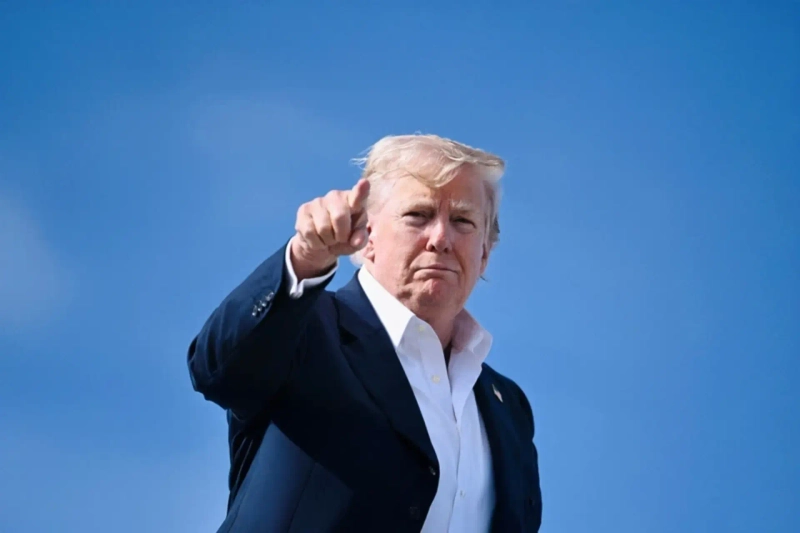
The U.S. Supreme Court on the 9th (local time) agreed to hear an appeal filed by the Donald Trump administration seeking to maintain broad global tariffs in an expedited manner. This makes it possible for a final ruling on the tariffs, a core economic policy of the Trump administration, to be issued within the year.
The Supreme Court said it would hear the matter in early November, and with that schedule a decision could come before the end of the year. This case becomes the first instance in which the Supreme Court will rule on the legality of a major policy pursued during President Trump's second term.
The Trump administration asked the Supreme Court for expedited review, saying the legal uncertainty was already having an adverse effect on the White House while trade negotiations are underway.
Wine importers and other small businesses that challenged the tariffs also demanded a swift conclusion. They told the Supreme Court that "they are suffering serious economic hardship due to price increases and supply chain disruptions caused by the tariffs," and that the pain threatens the survival of at least some of the businesses in that group.
President Trump has argued that the International Emergency Economic Powers Act (IEEPA), enacted in 1977, effectively gives him broad authority to impose a base tariff of 10% on virtually all countries. He has also claimed he could impose much higher tariff rates on countries that do not reach agreements with the U.S., and could levy additional tariffs on Canada, China, and Mexico.
However, several courts to date have found that the IEEPA does not grant the president the authority to take such measures. For example, a small wine importer that brings overseas wine into the U.S. for sale filed a lawsuit saying "the tariffs have caused prices to skyrocket and disrupted the supply chain, threatening the business's survival," and both the federal appeals court and the Court of International Trade (CIT) ruled in favor of that company. A toy company that imports educational toys from abroad also challenged the legality of the tariffs for similar reasons and won in the responsible federal district court. The Supreme Court said it would hear both of these cases.
Separately, a coalition of attorneys general from 12 Democratic states is also pursuing a lawsuit opposing the Trump tariffs.
Even while the lawsuits proceed, the Trump administration has continued to strike trade agreements with the European Union (EU), Indonesia, the Philippines, and Japan.
The Trump administration said that an adverse ruling for the president would have serious consequences. In the government's brief to the Supreme Court, Treasury Secretary Scott Besent said the administration expects to collect $750 billion to $1 trillion in tariffs by next summer, and that reversing the tariffs as a result of a court decision could be catastrophic.
Secretary Besent also added that the United States would face severe difficulties if it had to restore previously made agreements and require partners to reverse the purchases or investments they had promised in the United States. At the same time, some economists say that if the tariffs are withdrawn, the removal of investment uncertainty could boost economic growth.
New York=Park Shin-young, correspondent nyusos@hankyung.com

Korea Economic Daily
hankyung@bloomingbit.ioThe Korea Economic Daily Global is a digital media where latest news on Korean companies, industries, and financial markets.