

PiCK
Min Byung-deok · Kim Jae-seop · Lee Jun-seok "Rush to Institutionalize Wonsco and STO" [Eastpoint Seoul 2025]
Summary
- Both ruling and opposition politicians said the swift institutionalization of Wonsco and STO is directly linked to national competitiveness.
- Min Byung-deok explained that introducing Wonsco would contribute to expanding South Korea's global economic territory as an export-oriented country and to reducing currency hedging costs.
- Kim Jae-seop and Lee Jun-seok said that passing STO-related legislation and restructuring exchanges are core tasks to achieve both industry innovation and investor protection.
Min Byung-deok, Democratic Party of Korea lawmaker
Kim Jae-seop, People Power Party lawmaker
Lee Jun-seok, leader of the Reform New Party
Digital asset policy debate at 'Eastpoint'
"Digital asset institutionalization must be pursued quickly"
"Wonsco and STO are directly tied to national competitiveness"
"Investor protection and innovation are tasks that can coexist"
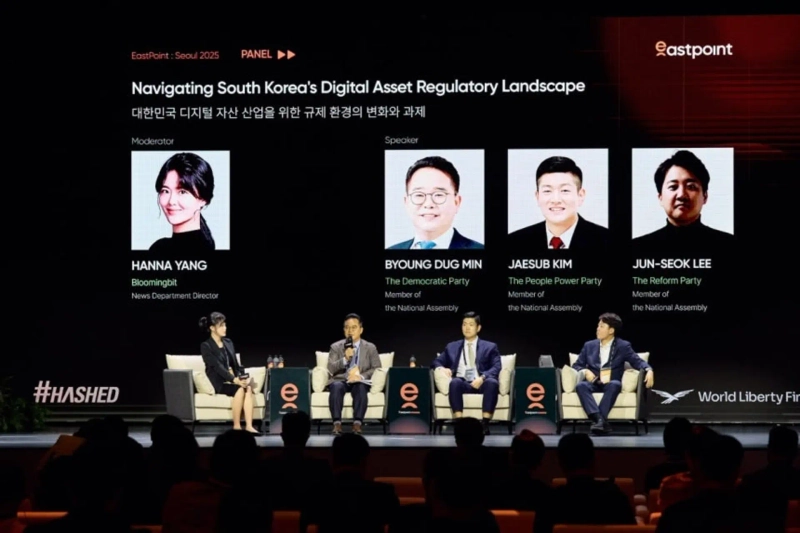
Both ruling and opposition parties agreed that institutionalization related to digital assets must be expedited. Politicians emphasized that the institutionalization of won stablecoins (Wonsco) and security tokens (STO) can no longer be delayed. They also viewed investor protection and industrial innovation not as opposing concepts but as tasks that must be pursued in parallel.
On the 22nd at the Grand Hyatt Seoul in Yongsan-gu, Seoul, at the global Web3 private conference 'Eastpoint Seoul 2025', Min Byung-deok of the Democratic Party of Korea, Kim Jae-seop of the People Power Party, and Lee Jun-seok of the Reform New Party stated this during the panel discussion 'Regulatory environment and tasks for South Korea's digital asset industry.'
Min Byung-deok: "Wonsco will expand Korea's global economic territory"
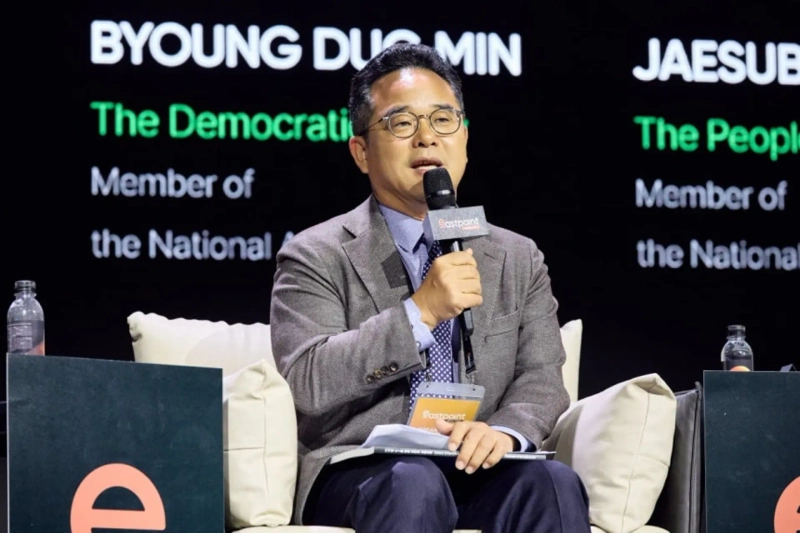
Min Byung-deok emphasized that the won stablecoin is more than a simple digital currency or technology and is directly linked to South Korea's global competitiveness.
"Since 2017, South Korea's blockchain industry has experienced a long dark period, but 2025 will be a new renaissance," he said, adding, "Wonsco is both a shield protecting Korea's economic sovereignty in a market dominated by dollar stablecoins and a weapon to expand our global economic territory."
He said, "As an export-driven country, Korea can expect reduced trade settlement fees and reduced currency hedging costs by using Wonsco," and added, "If Wonsco combines with K-Culture, K-Beauty, K-Medical, etc., accessibility for foreigners will improve, enabling further growth of Korean industries and significant synergy between finance and industry."
He went on to predict, "There is no disagreement between ruling and opposition on Wonsco, so I expect legislation to be possible within this year."
Kim Jae-seop: "STO institutionalization will inject vitality into financial markets"
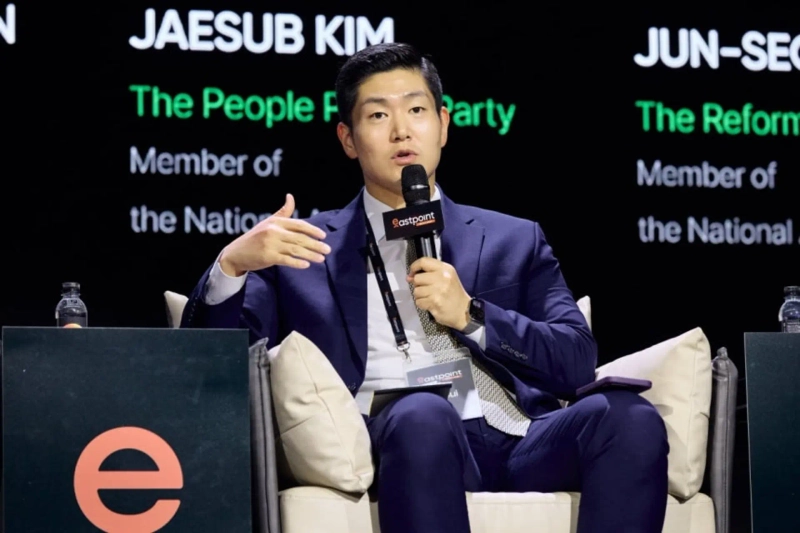
Kim Jae-seop stated that STO institutionalization should be pursued promptly. Kim introduced a 'token securities institutionalization bill' as a lead sponsor last year. He said, "Overseas, STOs are already spreading and are used for corporate liquidity and raising funds for new businesses," adding, "In a situation where investors cannot find suitable investments, STOs will open new investment opportunities for Korean investors and companies."
He continued, "This bill has been discussed since the 21st National Assembly but has been delayed," and stressed, "The industry criticizes, 'Why is it taking so long?' In the 22nd National Assembly, we will pass it as soon as possible, even in a day, to inject vitality into the entire financial market."
He also gave his opinion on stablecoins. Kim said, "The Donald Trump administration appears to have a strong will to protect and dominate dollar-based stablecoin sovereignty," and added, "Korea also needs faster institutionalization to protect monetary sovereignty. Investor protection is important, but I think we should first create an environment where businesses can move quickly and take the lead."
Lee Jun-seok: "Exchange structure reform and blockchain special zones are necessary"
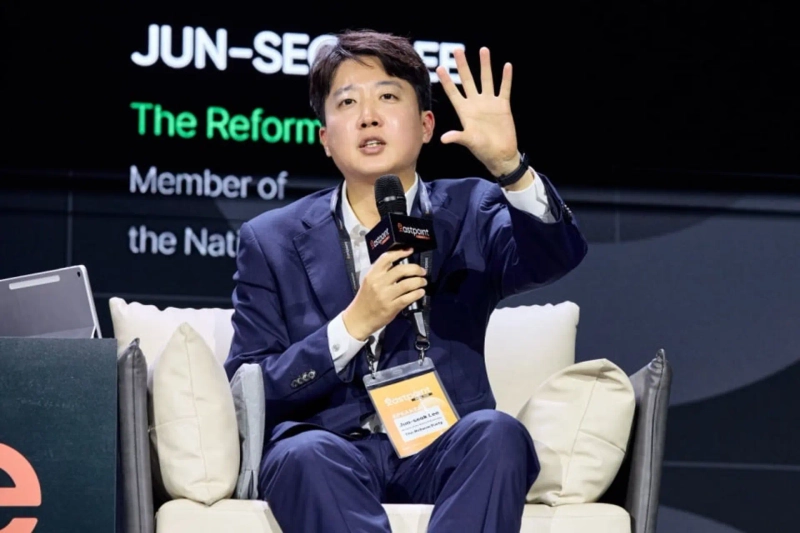
Lee Jun-seok argued for the need to reorganize the domestic virtual asset trading structure. He said, "Currently, individual exchanges lead listings, but it should be separated like the securities market's central exchange and broker system," adding, "Through structural separation of exchanges and securities firms, moral hazard can be prevented and the industry can grow transparently."
Regarding regulatory direction, he emphasized a clear separation between issuing entities and distribution entities. He said, "Issuance and distribution of stablecoins must be strictly separated, and there must be a management and supervision system between them," explaining, "This is an essential condition for investor protection."
He also said, "The center of finance developed alongside ports," and argued, "If Busan is designated as a blockchain special zone to minimize regulation and a unified exchange is built, we can secure global competitiveness." He added, "Korea has well-established asset management infrastructure such as real estate ledgering and registration systems, making it a favorable environment to implement STO business," and said, "Rather than limiting such systems to some startups or specific projects as a 'sandbox,' a proactive policy shift is needed to fully open them at the regional level."
"Investor protection and innovation are tasks that can coexist"
They agreed that investor protection and industry innovation in the digital asset industry are not opposing concepts but tasks that must be pursued together.
Min said, "If excessive regulation is imposed in the name of investor protection, industry development will not occur," and added, "We should set guardrails and create an environment where innovation can freely occur within them." Kim said, "There is concern that loosening regulations could create scammers, but speed is more important now," adding, "Investor protection should be strict ex post, and businesses should move quickly and push forward." Lee also said, "If only KYC (know your customer) is followed, the rest of the regulations are unnecessary," and predicted, "If issuance and distribution entities are strictly separated and managed and supervised, the industry will naturally develop."
They also emphasized that rapid institutionalization is important for Korea not to fall behind in global digital asset industry competition.
Min said, "The realm of digital asset innovation is not confined by national borders," adding, "With balanced regulation, Korea can leap to a 'G2' in the digital territory field." Kim said, "As the opposition, we will not block the passage of the bill," and added, "Ruling and opposition should cooperate to pursue institutionalization with global consistency." Lee added, "Money comes in and people pay attention because it is ultimately useful," and said, "If transparent and efficient systems are established, not only individual investors but institutions will fully enter the digital asset market."

Doohyun Hwang
cow5361@bloomingbit.ioKEEP CALM AND HODL🍀