

"Custody of virtual assets: Trust and regulatory compliance are key" [Eastpoint Seoul 2025]
Summary
- In the Korean virtual asset market, the role of qualified custodians is being highlighted, and the importance of trust and regulatory compliance is being emphasized.
- Global and domestic players such as BitGo and KODA are intensifying custody competition based on regulatory compliance and legal safeguards.
- With institutionalization and the trend toward ETF institutionalization, an increase in demand for custody services is expected, and the prospect of institutional capital inflows and product development was raised.
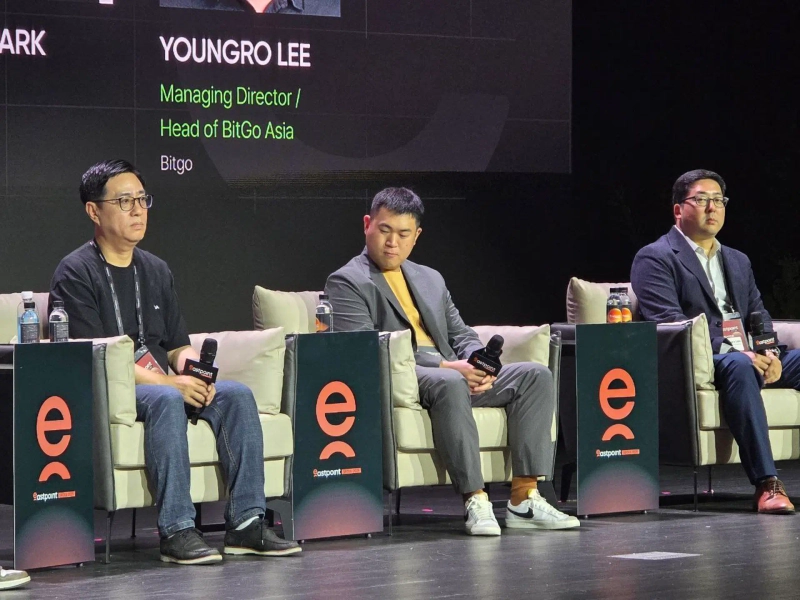
As institutional participation in South Korea's virtual asset (cryptocurrency) market expands, "qualified custodians" have emerged as a new focal point. Global firms and domestic operators are accelerating custody competition based on regulation and trust.
At the global Web3 private conference "Eastpoint: Seoul 2025" held at the Grand Hyatt Seoul in Yongsan-gu, Seoul on the 22nd, Lee Young-ro, BitGo's Asia representative, said, "BitGo started as a custodian business focused on institutional clients," adding, "Especially in the U.S., qualified custodians bear legal responsibilities similar to banks, so regulatory compliance and legal review are central to responding to institutions." He said, "To attract institutional investment, strategies must cover not only custody technology but also legal safeguards."
Domestic virtual asset custodian KODA is also strengthening its competitiveness leveraging the regulatory environment. Jo Jin-seok, KODA CEO, explained, "Korea has its own regulatory system under the Act on Reporting and Using Specified Financial Transaction Information, requiring all operators to meet reporting, certification, and security requirements," and added, "While global firms find it difficult to meet these requirements and face challenges entering the domestic market, KODA is building a regulatory-friendly model by fulfilling reporting obligations to the Financial Supervisory Service and the Financial Services Commission." He went on to say, "We will grow into a company that can compete with BitGo in line with the corporate market in the second half and the trend toward ETF institutionalization."
On relationships with traditional financial firms, he left open the possibility of collaboration. Jo said, "It is not easy for banks in Korea to directly operate blockchain infrastructure," and explained, "Collaborating with custodian companies that already possess related business know-how would be a good model."
There was also a view that demand for custody services will grow during the institutionalization process. John Park, founder of A41, said, "Currently, many individual investors stake directly through non-custodial wallets, but once regulations become clearer, custody demand will increase with institutional capital inflows," and predicted, "Custodians could develop financial products themselves or enhance yields through collaboration." Jo emphasized, "Custody is ultimately like a bank's role," and added, "Technology is fundamental, but protecting and operating assets based on customer trust will determine the industry's success."

Doohyun Hwang
cow5361@bloomingbit.ioKEEP CALM AND HODL🍀