

"Web3 will determine corporate competitiveness… 'Payments · Brand · Finance' spreading across the board" [Eastpoint: Seoul 2025]
Summary
- "Web3" is being recognized as a core infrastructure that strengthens corporate competitiveness.
- The speakers said Web3's utility is increasing in various industries such as payments, finance, and brand strategy.
- They said that if companies proactively address regulatory response, building trust, and improving user experience, they can gain an edge in global competition.
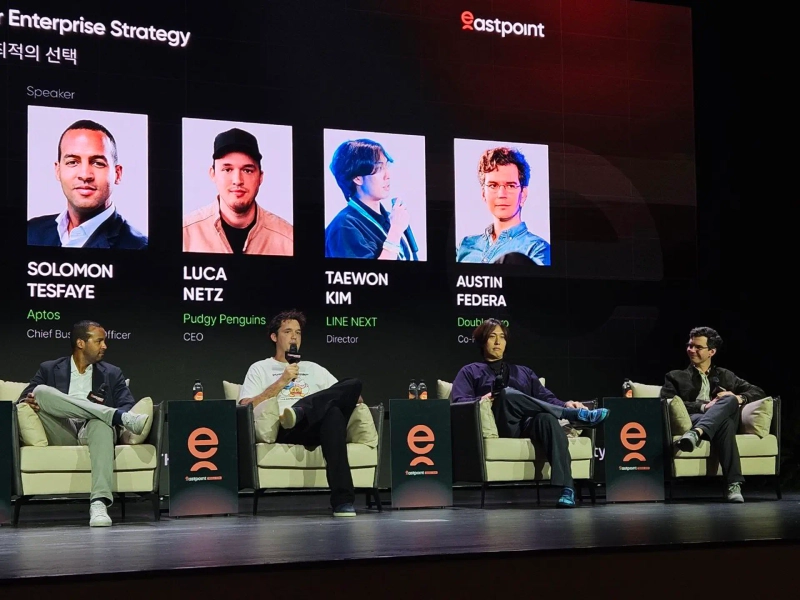
Web3 is attracting attention as the next-generation infrastructure that will determine the competitiveness of global companies. As its utility increases across all areas such as payments, finance, and consumer brand strategies, regulatory response, building trust, and improving user experience have emerged as key factors for its spread.
At a fireside chat at the global blockchain conference 'Eastpoint: Seoul 2025', held on the 22nd in Seoul, Solomon Tesfaye, Aptos Chief Business Officer (CBO), Kim Tae-won, LINE NEXT director, Austin Federa, co-founder of DoubleZero, and Luca Netz, CEO of Fuzzy Penguin, participated to discuss the opportunities and challenges of Web3 adoption.
The speakers commonly assessed that Web3 is establishing itself as a core infrastructure for strengthening corporate competitiveness. CBO Tesfaye said, "Early adoption of blockchain is important in terms of the learning curve and securing competitiveness, just like the early adoption of cloud." Director Kim Tae-won said, "The process of promoting Web3 business within Web2 large companies was not easy, but recently executives have also recognized the need for blockchain."
Consumer brand strategies also drew attention. CEO Netz emphasized, "Buyers of Fuzzy Penguin toys receive non-fungible tokens (NFTs) via a QR code and are naturally brought on-chain," adding, "the power of Web3 is alignment with the community." Co-founder Federa said, "Blockchain must adopt the speed and stability levels of existing financial infrastructure," predicting, "Cross-border payments and B2B remittances will spread first."
Additionally, the speakers agreed that regulatory response, building trust, and improving user experience will be key challenges for the future spread of Web3, and that companies could gain an advantage in global competition if they respond proactively.

Doohyun Hwang
cow5361@bloomingbit.ioKEEP CALM AND HODL🍀