

Canada, over anti-tariff ad…Trump "halts trade negotiations"
Summary
- President Donald Trump announced he would halt trade negotiations citing Canada's anti-tariff advertisement.
- U.S. courts ruled that the Trump administration's reciprocal tariff policy was unlawful, and the case is pending before the U.S. Supreme Court.
- The advertisement emphasized that reciprocal tariffs can lead to market downturns and unemployment, saying this could act as a warning sign from an investment perspective.
Reagan speech about tariffs included
"Reciprocal tariffs cause market downturns"
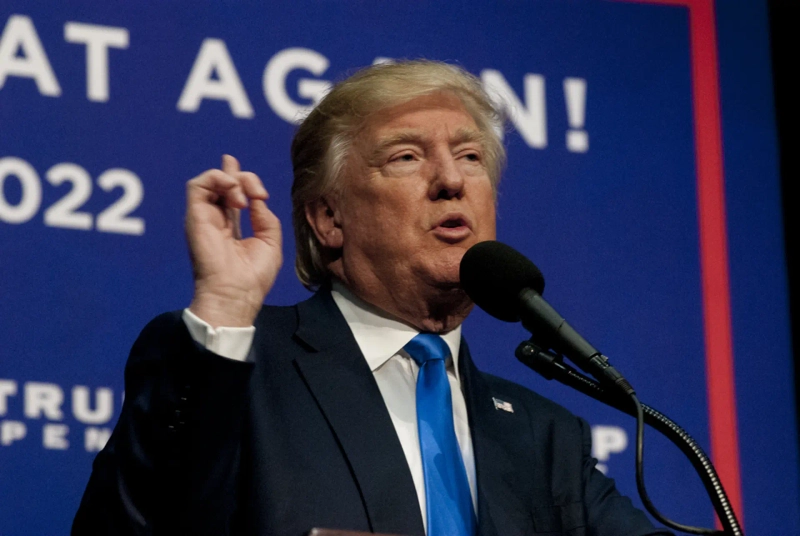
President Donald Trump said he would halt trade negotiations with Canada. He cited an "anti-tariff" TV advertisement aired in Canada as the reason for ending the talks.
On the 23rd (local time), Trump declared on social media, "I am immediately terminating all negotiations with Canada." He said, "The Reagan Foundation has just announced that Canada aired a false ad that made it appear as if former President Ronald Reagan spoke negatively about tariffs."
The ad in question was produced by the Ontario provincial government and argued that U.S. reciprocal tariffs on Canada would have long-term adverse effects on Americans' lives. It suggested that while imposing tariffs on foreign goods may seem to protect domestic jobs in the short term, it can ultimately lead to market downturns and large-scale unemployment. At the end of the ad, a clip of former President Reagan's speech is inserted, giving the impression that he opposed President Trump's tariff policy.
The speech included in the video was a radio address Reagan gave in 1987 after the U.S. imposed a '100% tariff' on Japanese semiconductors. At the time, President Reagan criticized Japan for violating anti-dumping agreements and expressed his belief in supporting free trade. The Reagan Foundation issued a statement saying, "The ad distorts the president's remarks, and the Ontario government did not obtain any permission to use or edit the speech."
President Trump criticized the ad, saying, "Canada produced the advertisement with the intent of influencing rulings by the U.S. Supreme Court and lower courts," calling it "a clear attempt at political interference." Recently, U.S. courts issued a ruling that the reciprocal tariffs imposed by the Trump administration were unlawful. The court held that "the International Emergency Economic Powers Act (IEEPA), which served as the basis for the reciprocal tariffs, grants the president authority to regulate imports but does not permit imposing tariffs by executive order without congressional authorization."
The case is currently pending before the U.S. Supreme Court following an appeal by the Trump administration, and the first hearing is scheduled for November 5. President Trump said, "Tariffs are a key tool to protect U.S. security and the economy," and added, "I am terminating all negotiations in response to Canada's despicable actions."
Reporter Hye-in Lee hey@hankyung.com

Son Min
sonmin@bloomingbit.ioHello I’m Son Min, a journalist at BloomingBit