
Editor's PiCK
FOMC minutes "December rate cut, internal opinions sharply divided" [Fed Watch]
공유하기
- It reported that in the December FOMC there was a sharp division among members over whether to cut the benchmark interest rate.
- It said views differed on the future speed and magnitude of rate cuts, and the financial market sees a high likelihood of a rate hold for the time being.
- It reported that the Fed decided to resume a short-term Treasury purchase program at $40 billion per month to stabilize the short-term funding market.
- The article was summarized using an artificial intelligence-based language model.
- Due to the nature of the technology, key content in the text may be excluded or different from the facts.
Some members "Prefer to keep rates on hold for a considerable period afterwards"
Downside risk to employment, upside risk to inflation
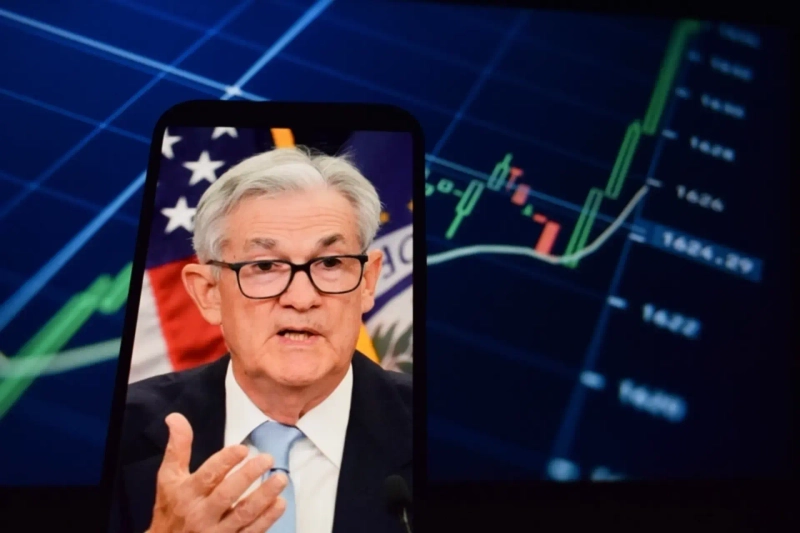
The U.S. central bank (Fed) revealed that there was fierce disagreement among members over a rate cut at the Federal Open Market Committee (FOMC) meeting held on December 9–10.
In the December FOMC minutes released by the Fed on the 30th (local time), it suggested that the decision to cut rates had been a much closer judgment than the final vote indicated.
According to the minutes, the FOMC approved a proposal to lower the benchmark interest rate by 0.25% percentage points by a vote of 9 to 3. This was the largest number of dissenting votes since 2019. With this decision, the U.S. federal funds rate target range was lowered to an annual 3.5~3.75%.
Most members agreed that further rate cuts could be appropriate if inflation slowed as expected. However, views diverged over the speed and magnitude of future rate cuts. Some members said it would be desirable to keep rates unchanged for a considerable period after this cut.
Members judged that the U.S. economy would continue to grow modestly, while employment faced downside risks and prices faced upside risks. There were large differences in views about the relative magnitude of these risks, and the minutes suggested that the vote at the time could have gone either way.
The minutes also contained the statement, "Even some members who supported a rate cut at this meeting said the decision rested on a very delicate balance, and choosing to keep rates unchanged would also have been possible."
At this meeting, the quarterly Summary of Economic Projections (SEP) and the dot plot showing individual members' rate projections were also released. The 19 Fed officials attending the December meeting signaled the possibility of one rate cut in 2026 and another in 2027. In that case, the benchmark interest rate would fall to around an annual 3%, which the Fed views as the neutral level.
Members who preferred to keep rates unchanged stressed that they judged progress toward the 2% inflation target had stalled in 2025, or that additional evidence was needed that inflation was converging steadily to the target.
Members generally agreed that U.S. President Donald Trump's tariff policy was fueling inflation, but they expected the effect to be temporary and to ease toward 2026.
Recent economic indicators show that employment has slowed but layoffs have not surged. Inflation is also gradually declining but remains distant from the Fed's target (an annual 2%). Meanwhile, third-quarter gross domestic product (GDP) grew at an annualized rate of 4.3%, showing solid growth.
However, due to the effects of the government shutdown, there are data gaps in some economic indicators, and both the Fed and the market are taking a cautious approach to interpreting indicators. Accordingly, the financial market sees a high likelihood that the Fed will keep the benchmark interest rate unchanged for the time being.
Meanwhile, changes in the regional Federal Reserve bank presidents who will have FOMC voting rights from next year are expected to alter the committee's tilt. Many of the newly voting officials have shown a cautious stance toward rate cuts in the past.
At this meeting, the Fed also decided to resume a short-term Treasury purchase program to stabilize the short-term funding market. The Fed will purchase short-term Treasuries at a pace of $40 billion per month to prevent reserve balances in the banking system from declining excessively.
New York = Park Shin-young, correspondent nyusos@hankyung.com


![D'CENT Grew 200%, Evolves into an 'All-in-One Investment Wallet'… Accelerates Expansion into Institutional and Corporate Markets [Coin Interview]](https://media.bloomingbit.io/PROD/news/606e1fd0-0619-4c39-a7d9-ecab11a3d843.webp?w=250)
![[Analysis] Bitcoin may see a short-term rebound in early 2026…"Long-term upside momentum is limited"](https://media.bloomingbit.io/PROD/news/f526209f-fc8c-40e3-8412-29f23871039e.webp?w=250)