

Editor's PiCK
US Supreme Court’s tariff ruling could come as early as the 14th… White House: “Plenty of other options even if we lose”
공유하기
Summary
- The US Supreme Court has signaled it could issue a decision in the tariff case on the 14th, drawing market attention to the direction of the Trump administration’s reciprocal tariff policy.
- The White House said that even if the Court finds broad tariff impositions under the International Emergency Economic Powers Act (IEEPA) unlawful, it could maintain the tariff policy through other statutes such as Section 232 of the Trade Expansion Act.
- NEC Director Kevin Hassett said the administration has prepared various legal authorities and emergency-response scenarios that could deliver the same policy effects even in the event of an unfavorable ruling.
US Supreme Court: “May issue decisions in major cases on the 14th,” according to its website
White House says it has many other options even if the Court rules tariffs illegal
Kevin Hassett: “A range of legal authorities exists”
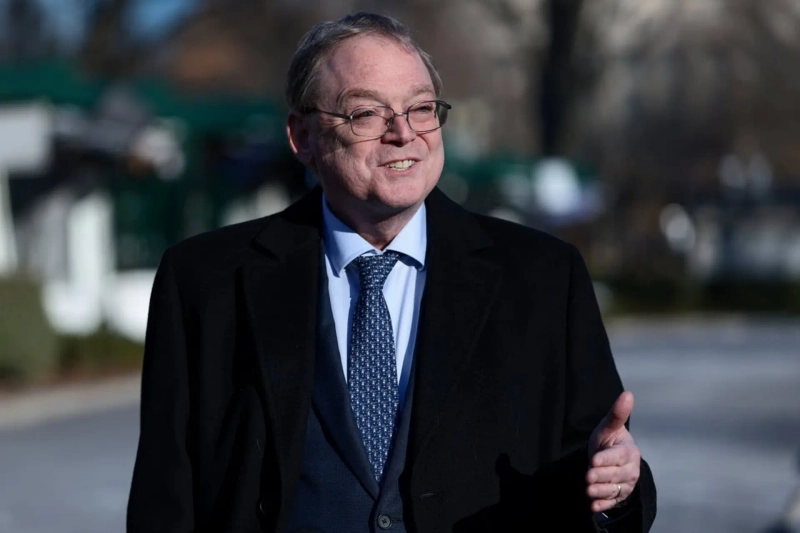
The US Supreme Court is expected to issue a ruling on the legality of the Donald Trump administration’s reciprocal tariff policy on the 14th, after it declined to deliver a decision on the matter on the 9th (local time), when a final determination had been anticipated.
That expectation follows the Court’s schedule notice posted on its website the same day, stating it may announce decisions in major cases on the 14th. Legal experts say a tariff ruling could be handed down as early as that date. The Court customarily does not disclose in advance which cases it will decide.
The Supreme Court is hearing arguments over whether the president can impose sweeping tariffs under the International Emergency Economic Powers Act (IEEPA), in line with President Trump’s claim that the US trade deficit constitutes a national emergency and therefore requires tariffs on countries worldwide.
Twelve states led by Democratic governors and small and midsize businesses have filed suit against the Trump administration. Lower courts previously found the administration’s move—using emergency powers to impose tariffs globally—was unlawful.
The Supreme Court has a 6-3 conservative majority and has previously issued decisions favorable to Trump in major cases.
Even if the Court limits the president’s authority to impose tariffs, Trump is expected to try to maintain the tariff policy by invoking other laws, including Section 232 of the Trade Expansion Act. Still, any effort to pursue tariffs at the same unconstrained level as before is likely to face limits.
The White House said that even if the Supreme Court rules that the large-scale tariff measures imposed by President Donald Trump under emergency powers are unlawful, it can achieve the same policy effects by using other legal tools.
Kevin Hassett, director of the White House National Economic Council (NEC) and a close aide to Trump, also said in a CNBC interview on the 9th (local time) that “assuming the Supreme Court delivers an unfavorable ruling on tariffs imposed under the IEEPA, we held a large meeting last night with all key officials to discuss what the next steps would be.”
Hassett added, “There are various legal authorities that would allow us to replicate the agreements we have reached with other countries, and they can be implemented essentially immediately,” and said, “We expect to win this lawsuit, but even if not, we already know there are other ways to reach the same result.”
He also said Jamieson Greer, the US Trade Representative (USTR), is closely involved in preparing these emergency-response scenarios.
New York—Park Shin-young, Correspondent nyusos@hankyung.com

![[Key Economic & Crypto Calendar for the Week Ahead] US December CPI, etc.](https://media.bloomingbit.io/static/news/brief_en.webp?w=250)

![[Weekly Outlook for New York and Shanghai Stocks] Global investors watch as the U.S. Supreme Court rules on Trump tariffs](https://media.bloomingbit.io/PROD/news/be7091d6-f3b5-43f9-80ed-20e818183d0c.webp?w=250)