
Editor's PiCK
"U.S. tariff burden erodes consumption and liquidity…behind delayed rebound in crypto assets"
공유하기
Summary
- It reported that U.S. tariffs have eroded consumption and liquidity, with roughly $200 billion in tariff revenue from January 2024 to November 2025 effectively absorbed within the U.S. economy.
- BeInCrypto said that tariff-driven pressure on household spending and corporate costs has reduced the capacity of funds to flow into crypto assets, extending a liquidity stagnation phase since October last year.
- It noted that while tariffs did not directly spur crypto-asset volatility, they have drained system-wide liquidity, acting as a factor that delays the recovery timeline for risk assets.
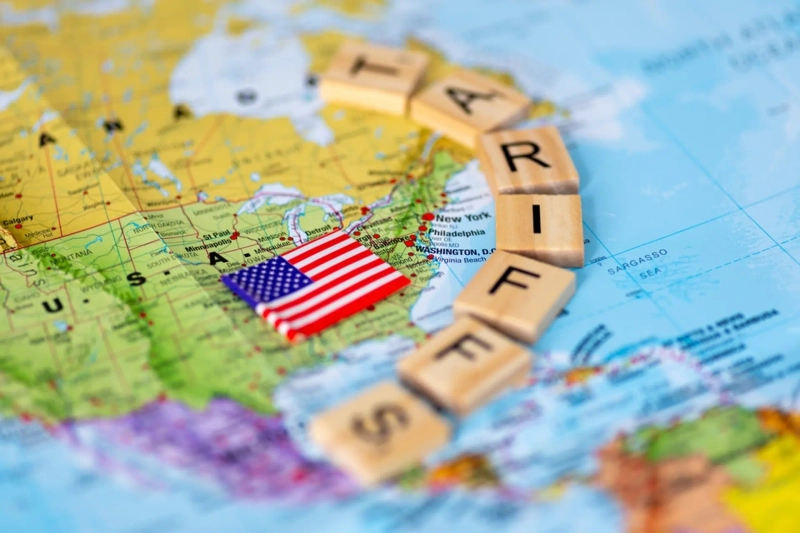
The United States’ tariff policy is emerging as a quiet drag on the domestic economy, and is being cited as a key reason the rebound in the crypto-asset (cryptocurrency) market has been delayed since October last year.
On the 19th (local time), The Wall Street Journal (WSJ), citing research by the Kiel Institute for the World Economy, reported that “96% of the cost of U.S. tariffs imposed from January 2024 to November 2025 was borne by U.S. consumers and importers, while overseas exporters shouldered only 4%.” In effect, roughly $200 billion in tariff revenue over that period was absorbed within the U.S. economy.
This shows that, contrary to the political claim that tariffs are passed on to foreign companies, they in fact erode domestic consumption and raise costs for U.S. businesses. Importers paid tariffs at the border and either absorbed them or gradually reflected them in prices, while overseas firms opted to cut volumes or redirect supply to other markets rather than slash prices. As a result, trade volumes fell, but import prices did not drop significantly.
Economists describe this effect as closer to a “delayed consumption tax.” Rather than triggering an immediate spike in inflation, the tariff burden seeps gradually through distribution channels and supply chains, weakening purchasing power. In fact, only about 20% of tariff costs were reflected in consumer prices within six months, with the remainder accumulating in the form of compressed corporate margins. As a result, U.S. inflation in 2025 appeared relatively stable, but the real capacity of households and businesses was steadily eroded.
Crypto-focused media outlet BeInCrypto assessed that this had a direct impact on the crypto market as well. The outlet said, “Crypto assets are a class that gains upward momentum when excess liquidity and risk appetite are alive,” adding, “But tariffs increased the spending burden on households and squeezed companies with cost pressures, reducing the financial capacity to deploy funds into speculative assets.” As a result, the crypto market since October last year is seen as having entered a “liquidity stagnation phase,” moving sideways without a sharp sell-off.
The interpretation is that while tariffs were not a direct trigger of crypto volatility, they drained liquidity across the system and delayed the recovery of risk assets. The analysis is that there was no panic, but there was also a lack of fuel to drive gains—because real-economy pressure accumulated under the tariff burden.


![[Today’s Key Economic & Crypto Calendar] U.S. President Donald Trump’s Davos Forum Speech, etc.](https://media.bloomingbit.io/static/news/brief_en.webp?w=250)