Editor's PiCK
Blue House scrambles to respond to Trump’s 25% tariff… ruling party and government: “Bill to be handled in February”
공유하기
Summary
- President Trump said he will raise reciprocal tariffs on automobiles, lumber, pharmaceuticals and other items from 15% to 25%.
- The government said it has conveyed to the U.S. its commitment to implement the tariff deal and that it will respond calmly through a meeting on pending trade issues with the U.S.
- The ruling party and government said they will handle the “Special Act on Strategic Investment Management between Korea and the U.S.” (special law on investment in the U.S.) by February.
Blue House: “We conveyed to the U.S. our commitment to implement the tariff deal… we will respond calmly”
Ruling party and government to hold a meeting of the National Assembly’s Finance and Economy Committee next month, aiming to pass a special law on investment in the U.S.
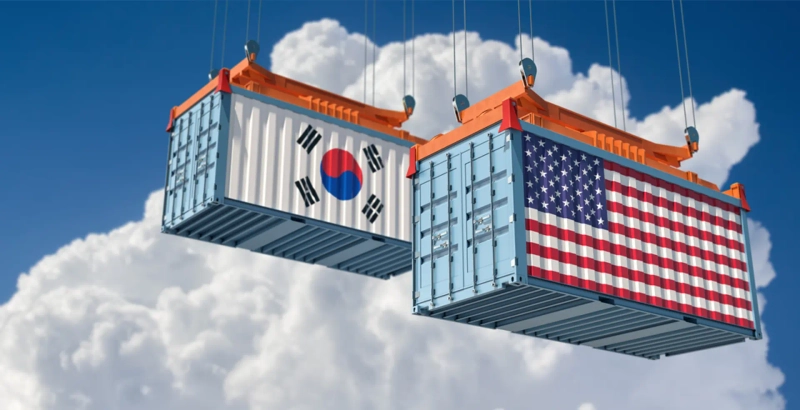
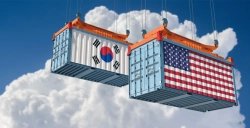
The Blue House moved to respond after U.S. President Donald Trump said he would raise Korea’s reciprocal tariffs and product-specific tariffs, including those on automobiles, back to 25%.
Kang You-jung, spokesperson for the Blue House, said in a written briefing on the 27th that “the Blue House convened a meeting this morning on pending trade issues with the United States, chaired by Policy Chief Kim Yong-beom and National Security Adviser Wi Sung-lac, to review the situation following President Trump’s tariff-hike announcement and to discuss response plans.”
Kang said, “Deputy ministers from relevant ministries attended the meeting, including Yeo Han-koo, minister for trade negotiations, Lee Hyung-il, first vice minister of Finance and Economy, and Kim Jin-a, second vice minister of Foreign Affairs,” adding that “key senior aides also joined, including Ha Jun-kyung, senior secretary for economic growth, Oh Hyun-joo, third deputy director of the National Security Office, and Ha Jung-woo, senior secretary for AI and future planning.” She added, “Chief of Staff Kang Hoon-sik and Minister of Trade, Industry and Energy Kim Jeong-gwan, who are currently in Canada as part of the special envoy delegation for strategic economic cooperation, also participated by phone.”
At the meeting, participants reviewed progress on the “Special Bill for Korea-U.S. Strategic Investment Management,” being pursued as a follow-up measure to the tariff negotiations. Minister Kim Jeong-gwan said he would visit the United States as soon as his Canada trip ends to discuss the matter with Commerce Secretary Lutnick. Trade Minister Yeo Han-koo also said he would soon visit the United States to consult with USTR Representative Greer.
Kang said, “Because a tariff increase takes effect only after administrative steps such as publication in the Federal Register, the government plans to convey to the U.S. side its commitment to implement the tariff deal while responding in a calm manner.”
The Democratic Party of Korea and the government also moved to respond. The ruling party and government said they would handle the special law on investment in the U.S. in February, adding, “The criticism that the Korean government or the National Assembly is intentionally delaying this law may stem from a lack of understanding of the situation in our National Assembly.”
Jung Tae-ho, a Democratic Party lawmaker who serves as the ruling-party floor secretary on the National Assembly’s Finance and Economy Planning Committee, said, “We introduced the bill at the end of November last year, and four additional member-sponsored bills were submitted in December,” adding, “December is the month when we traditionally focus on reviewing tax law revisions related to the new year’s budget bill, and January was not conducive to deliberation because of confirmation hearings.”
He continued, “Under normal circumstances, the (bill) will enter the deliberation process in February,” adding that even the meeting materials prepared for discussion of Lunar New Year measures to stabilize livelihoods included a government request to pass the special law on investment in the U.S. by February. He also asked, “Rather than engaging in a wasteful debate over whether it is ratification or legislation, the People Power Party should actively cooperate in the legislative process.”
Meanwhile, President Trump, on the 26th (local time), notified Korea of the tariff hike, claiming that the Korean legislature is not implementing the Korea-U.S. trade agreement.
On his social media platform Truth Social, Trump wrote, “President Lee Jae-myung and I signed an excellent trade agreement on July 30 last year that benefits both countries, and I reaffirmed the terms of this agreement when I visited Korea on October 29 last year,” adding, “So why has the Korean National Assembly not approved this agreement?” He continued, “Because the Korean National Assembly has not legislated our historic trade agreement, I am raising all reciprocal tariffs on automobiles, lumber, pharmaceuticals, and everything else from 15% to 25%.”
The “Special Act on Korea-U.S. Strategic Investment Management,” introduced as a follow-up to the Korea-U.S. trade deal, remains pending before the National Assembly’s Finance and Economy Planning Committee.
Reporter Lee Song-ryeol, Hankyung.com yisr0203@hankyung.com