

'Red light' blinking coin, turns out to be manipulated… Financial Services Commission detects price-manipulation ring [Hankyung Koala]
Summary
- The Financial Services Commission announced it has uncovered virtual asset price manipulation and referred the suspects to investigative authorities.
- The case involved methods such as high-priced buy orders and artificial inducement of buy pressure using APIs.
- The Financial Services Commission warned that prices can plunge when low-liquidity virtual assets surge in price or see a spike in trading volume, urging investors to exercise extra caution.
!['Red light' blinking coin, turns out to be manipulated… Financial Services Commission detects price-manipulation ring [Hankyung Koala]](https://media.bloomingbit.io/PROD/news/d3e526ff-ab94-4dda-a103-dfb12dc64893.webp?w=800)
Invest in crypto with knowledge!
This article appeared in The Korea Economic Daily's cryptocurrency investment newsletter 'Koala'.
Subscribe to Koala, published every Wednesday morning!
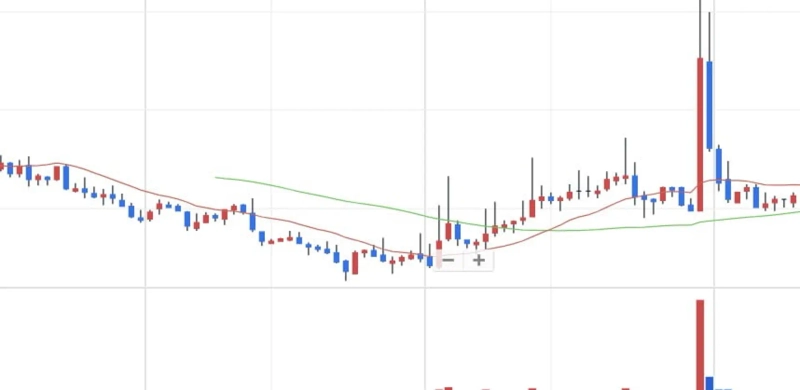
#1. Person A purchased a specific coin in advance with tens of billions of won, then placed a sell order at a 'target price' they wanted. Afterwards, they used an automated trading program (API) to place consecutive high-priced buy orders worth hundreds of billions of won. As the price rose, ordinary investors jumped in to buy, and when A's pre-placed sell orders were executed, they realized tens of billions of won in profit.
#2. Person B, together with several acquaintances, manipulated prices. When B signaled 'Let's go to □□ coin', the others used APIs to place multiple buy and sell orders per second. These artificially created trades caused a visual effect on the exchange screen with red and blue flashing. Ordinary investors mistook this for active trading and followed by buying. They took profits by selling the coins they held and exiting. It is understood that they made gains in the hundreds of millions of won across dozens of coin trades following the same pattern.
The Financial Services Commission announced on the 5th that at its 19th regular meeting it resolved to refer the suspects of virtual asset price manipulation to investigative authorities.
In this case, the suspects lured buying pressure through small-order trading (repeatedly submitting small orders in a short period). Artificial inducement of buying pressure via high-priced buy orders or using APIs can be punished under the Act on the Protection of Virtual Asset Users. Penalties include imprisonment for more than one year, or a fine equal to 3–5 times the illicit gains, and a surcharge of twice that amount. A Financial Services Commission official emphasized, "Repeatedly placing excessive orders in a short period to move prices constitutes price manipulation, which is strictly prohibited by law."
Prices of low-liquidity virtual assets can crash at any time if they surge without special reasons or trade volumes spike, so extra caution is needed.
The Financial Services Commission and the Financial Supervisory Service monitor virtual asset trading through a continuous monitoring system. If suspicious trades are detected, they immediately launch an investigation. A Financial Services Commission official said, "We are strengthening monitoring across the entire process in cooperation with exchanges, from the user order stage to abnormal trade detection," and added, "To protect users and market trust, we will continue to strictly investigate and take action against unfair trading."
Reporter Mihyeon Cho mwise@hankyung.com

Korea Economic Daily
hankyung@bloomingbit.ioThe Korea Economic Daily Global is a digital media where latest news on Korean companies, industries, and financial markets.