

From AI bubble worries to employment shock…Uneasy U.S. market
Summary
- Major institutions such as Goldman Sachs and the IMF officially raised concerns about an AI bubble.
- It reported that in the recent U.S. labor market, large-scale layoffs and a cooling effect due to AI are becoming visible.
- It reported that fears of an AI bubble combined with labor market instability are increasing volatility in assets such as stocks and government bonds.
From Goldman Sachs to the IMF: concerns about an AI bubble
AI replacing workers cooling the labor market
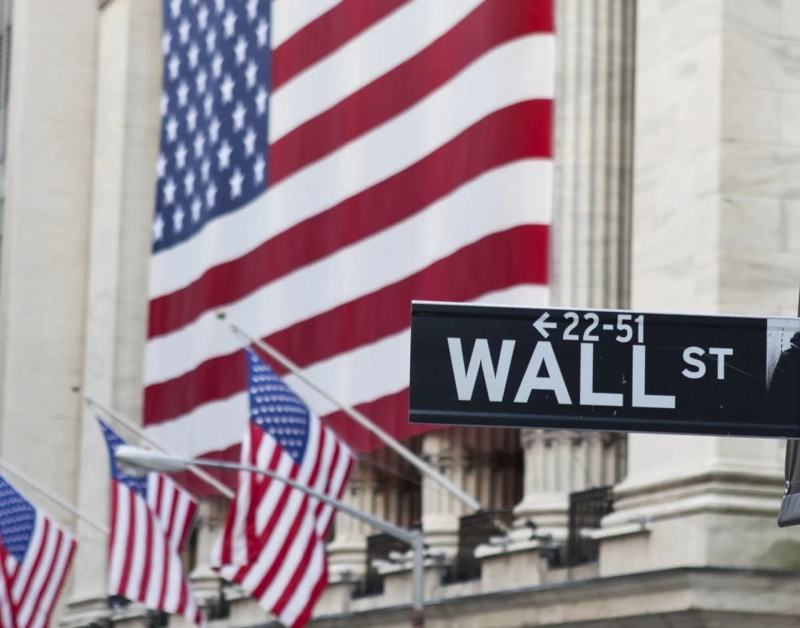
New York Wall Street investors overwhelmingly reacted on the 6th (local time) that worries long raised about the U.S. stock market and the real economy have become reality. In the stock market, forecasts that the bubble in artificial intelligence (AI)-related stocks that had been leading the market would burst at some point have been circulating. In the U.S. real economy, there was an underlying anxiety that the labor market was beginning to cool. Yet until recently AI-related stocks continued to prosper, and employment indicators were not bad.
Market fears began to materialize in October. Institutions from Goldman Sachs to the Bank of England (BOE) officially raised concerns about an AI bubble. The federal government shutdown delayed the release of government employment data, bringing private employment indicators into focus and increasing investor nervousness. It became evident that the U.S. job market was freezing up rapidly.
Growing voices on the AI bubble theory
On the day, Davis Sacks, the White House AI and cryptocurrency policy czar, wrote on his X (formerly Twitter) that "there will be no federal bailouts for the AI industry," and emphasized that "there are at least five major cutting-edge model companies in the U.S., and if one fails, others will take its place."
This was a comment referring to remarks made by OpenAI Chief Financial Officer Sarah Friar.
Friar had said the day before that she wanted to create a new financial structure to build AI infrastructure that combined private equity, banks, and a federal government backstop. The market interpreted this as OpenAI indicating it was seeking government guarantees for large-scale infrastructure investment. That fueled concerns about an AI bubble.
Recently, heads of financial institutions around the world, including in the U.S., have also actively voiced worries about an AI bubble. Andrew Bailey, Governor of the Bank of England, warned at a press conference after the Monetary Policy Committee meeting on the 6th that "there is still a long way to go before AI is actually proven" and added, "at the same time there could be a bubble."
Earlier, Kristalina Georgieva, Managing Director of the IMF, had expressed concern at an event held last month in Washington, D.C., that "sudden reversals in optimistic market sentiment about AI's productivity-enhancing potential could hit the global economy."
Michael Burry, one of the figures who inspired the film 'The Big Short,' was revealed in a filing made public on the 4th to have bet on price declines in AI bellwethers Nvidia and Palantir. Scion Asset Management, led by Burry, net purchased $912 million in Palantir put options and $187 million in Nvidia put options in the last quarter. Investors who buy put options profit if the stock price falls.
David Solomon, CEO of Goldman Sachs, warned on the 4th that "there is a possibility the stock market could fall 10–20% over the next 12–24 months," adding that "after the market rises, there will be a pullback and a period when investors reassess."
Corporate layoffs and cooling employment
While excessive investment in AI-related stocks is a problem for the stock market, large-scale workforce reductions due to AI are threatening the real economy in the labor market.
Amazon is cutting about 14,000 corporate employees as it introduces AI to increase operational efficiency. In a notice to employees on the 27th of last month, Amazon said the move was "to reduce bureaucracy, remove middle-management layers, and focus resources on core businesses."
Global IT and consulting firm IBM will carry out about a 1% global workforce reduction in the fourth quarter of this year.
On the 4th (local time), IBM said it "plans to implement reductions in the low single digits of its global workforce during the fourth quarter." A 1% reduction equates to about 2,700 employees.
As competition in AI intensifies and investment performance falls short of expectations, some firms are restructuring personnel. Meta decided to cut about 600 people from its AI research core organization, 'Superintelligence Labs.'
The U.S. federal government shutdown is also threatening the employment market. According to the Federal Reserve Bank of Chicago, the real-time unemployment rate forecast for the U.S. in October was 4.36%, up 0.01 percentage points from September (4.35%). It is the highest level since October 2021 (4.50%).
On the day, U.S. Treasury yields fell across the board. The surge in private-sector layoffs raised concerns about an economic slowdown, and with the prolonged shutdown, investors flocked to safe-haven bonds. Bond yields and prices move inversely.
After news of a surge in private-sector layoffs, the yield on the 10-year U.S. Treasury fell 6bp (1bp is 0.01%P) from the previous day to 4.09%. The 2-year yield fell 7bp to 3.56%, and the 30-year yield dropped more than 5bp to 4.68%.
New York = Shin-young Park, correspondent nyusos@hankyung.com

Korea Economic Daily
hankyung@bloomingbit.ioThe Korea Economic Daily Global is a digital media where latest news on Korean companies, industries, and financial markets.