

Unresolved U.S. shutdown… "No money even for fuel for commuting vehicles" [Sang-eun Lee's Washington Now]
Summary
- The U.S. federal government shutdown has continued for over 40 days, increasing policy uncertainty.
- The Senate has not reached a negotiated settlement, and the positions of the Democrats and Republicans remain far apart.
- With the prolonged shutdown, negative effects on the U.S. economy are appearing, such as suspension of food assistance for low-income people and unpaid wages at overseas U.S. military bases.
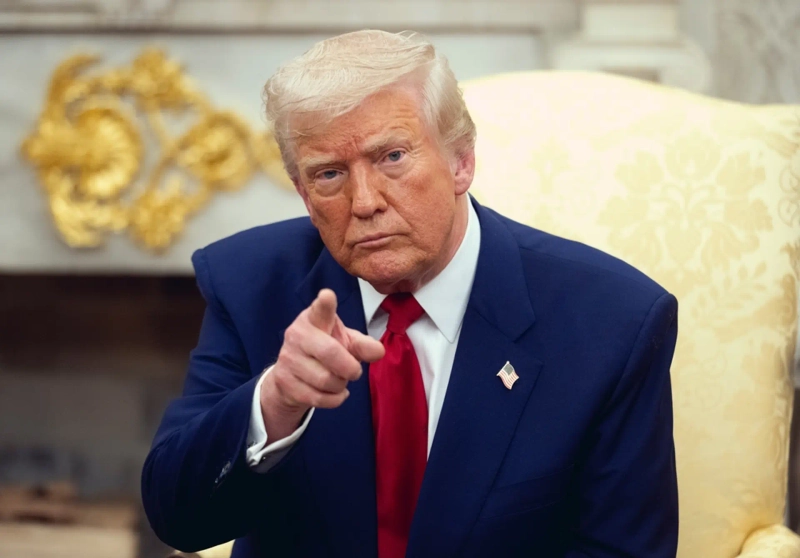
The U.S. federal government shutdown has exceeded 40 days, but the two parties have been unable to find a point of agreement.
According to U.S. media such as CBS, on the 8th (local time) the U.S. Senate held an unusual five-hour session on Saturday to try to end the shutdown, but it did not reach a negotiated settlement. Senate Republican Whip John Thune said the Senate would continue meeting until the government reopens. He added that the scheduled recess could also be canceled. The Senate plans to meet on Sunday the 9th to discuss solutions to the shutdown and attempt a vote.
On the 7th, the Democrats proposed that they could agree to the Republicans' temporary budget in exchange for extending the Obamacare (ACA) tax credits for one year, but the Republicans immediately rejected the proposal. Whip Thune dismissed the proposal as a "nonstarter," saying that health insurance issues can only be discussed after the shutdown is lifted. Republican lawmakers argued that extending the tax credits would give an unfair "Biden bonus" to insurers and is a trick to hide premium increases. Senator Lindsey Graham (Republican, South Carolina) said he would pursue health system reform separate from ending the government shutdown.
As the two sides remain at odds, U.S. President Donald Trump continued to argue that the "nuclear option" to eliminate the filibuster should be used to neutralize Democratic opposition. To end a filibuster, a cloture vote requiring 60 votes is needed, while the Republicans currently hold 53 Senate seats.
President Trump wrote on social media, "The Democrats are winning by destroying our great and miraculous economy," and "Abolish the filibuster." He also told Republican lawmakers that "instead of paying insurers hundreds of billions of dollars to keep the terrible Obamacare system, that money should be given directly to the people."
Vice President J D Vance also wrote on social media, "Senate (Republican) members think the Democrats will not abolish the filibuster, but that is a mistaken judgment." He claimed there was considerable support for abolishing the filibuster when the Democrats were the majority. The Republicans, who have so far accepted President Trump's demands almost 100%, still appear hesitant. If the filibuster is eliminated now, they could lose all the cards that could be used in negotiations if the Republicans become the minority in the future.
The impact of the shutdown on the U.S. economy is deepening. In particular, the food assistance program (SNAP), which was suspended starting this month, is directly tied to the survival of low-income people. Lower courts previously ruled that SNAP amounts must be paid in full, but the U.S. Supreme Court decided to temporarily stay that order.
The Trump administration is, for now, paying the salaries of soldiers and police, but local employees working at overseas U.S. military bases are not receiving their pay on time, AP reported. Angelo Chakaria, a union official at Italy's Aviano Air Base, told the wire, "Workers are having difficulty repaying loans and securing child support, and cannot even afford fuel to commute to work."
Washington=Sang-eun Lee, correspondent selee@hankyung.com

Korea Economic Daily
hankyung@bloomingbit.ioThe Korea Economic Daily Global is a digital media where latest news on Korean companies, industries, and financial markets.