

Exchange rate and bonds, won-dollar rate may 'overshoot' into the 1480-won range
Summary
- Last week the won-dollar exchange rate closed at 1461 won 50 jeon, the highest level in seven months.
- Experts say there is a short-term possibility of the exchange rate 'overshooting' to the 1480-won range.
- Bond yields have continued to rise, and it is said to be difficult to find clear bullish factors in the short term.
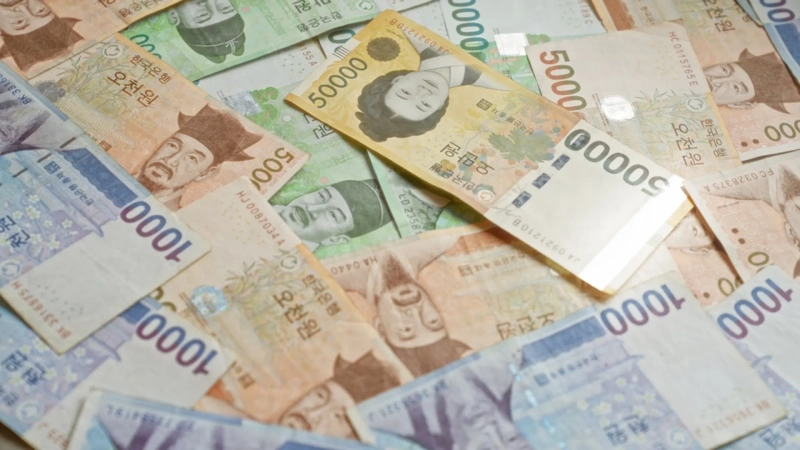
Last week the won-dollar exchange rate closed at 1461 won 50 jeon, up 28 won 50 jeon from one week earlier. On a weekly basis, this is the highest level in seven months since April 9 (1472 won), when President Yoon Suk-yeol's impeachment ruling and U.S.-China tariff tensions overlapped. Many analyses say the recent dollar strength is being led by the stock market. Foreign investors net sold domestic stocks worth 7.2638 trillion won last week alone.
Experts believe the won's weakness is likely to continue this week as well. Some even mention the short-term possibility of the won-dollar rate 'overshooting' into the 1480-won range reached during last December 3's emergency martial law period. Moon Da-un, a researcher at Korea Investment & Securities, analyzed, "As expectations for further won weakness grow, dollar-selling demand, centered on exporters, also appears to have weakened." There is also speculation that the foreign exchange authorities may intervene if the exchange rate spikes sharply in the short term.
Remarks by members of the U.S. Federal Open Market Committee (FOMC) are also cited as a key variable that could affect the won-dollar exchange rate. This week, major U.S. indicators such as October retail sales, industrial production, new housing starts, and consumer prices are scheduled to be released, but they are widely expected to be likely delayed due to a U.S. federal government shutdown (temporary work stoppage).
Last week, bond yields continued to rise (bond prices fell). With growing expectations of an economic recovery, analyses suggest that cautious sentiment was reflected regarding the 3 trillion-won volume of three-year government bonds scheduled for issuance this month. The 'book closing' (closing of accounting books) by major financial institutions ahead of year-end is also cited as a factor suppressing the bond market. Kim Chan-hee, a researcher at Shinhan Investment Corp., said, "It is difficult to find clear (bond) bullish factors in the short term," adding, "Until the Bank of Korea's Monetary Policy Board reconfirms a rate-cutting stance, the uneasy trend is likely to continue."
Reporter Lee Gwang-sik bumeran@hankyung.com

Korea Economic Daily
hankyung@bloomingbit.ioThe Korea Economic Daily Global is a digital media where latest news on Korean companies, industries, and financial markets.