

Rare earths and tariffs get a one-year truce for now… A precarious U.S.-China peace begins
Summary
- It reported that the U.S. and China have agreed to defer some additional tariffs and trade retaliation measures for one year.
- China said it would extend until November next year the deferment of export controls on rare earths and critical materials and the additional tariffs on U.S. goods.
- It reported that the tariff truce between the U.S. and China is expected to reduce uncertainty in trade in raw materials and agricultural products.
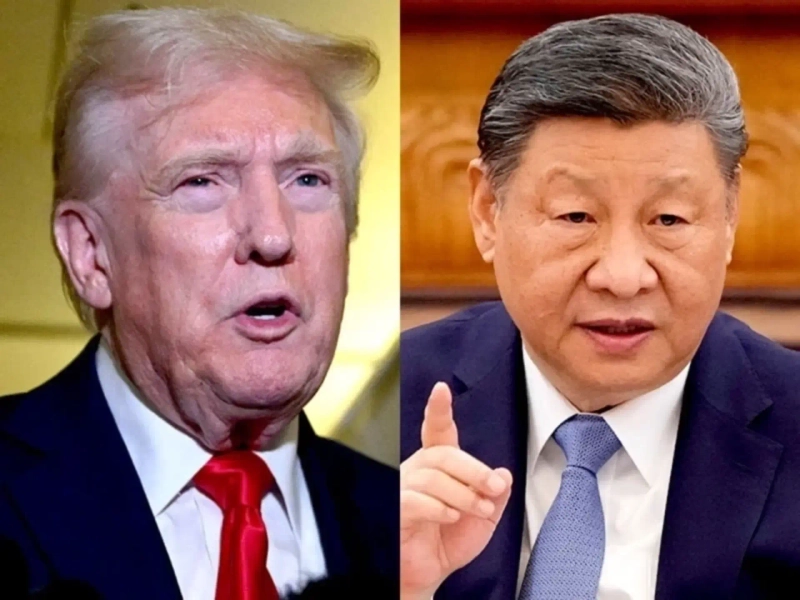
The U.S. and China will defer some additional tariffs and trade retaliation measures targeting each other starting on the 10th. This is the result of the two countries agreeing to refrain from escalating the trade war following the summit between President Donald Trump and President Xi Jinping held last month in Busan.
The U.S. will reduce the so-called 'fentanyl tariff' it has been imposing on Chinese products this year from the previous 20% to 10% at 0:01 (Eastern Time; 2:01 p.m. Korea Time). As a result, the average tariff rate on China under the second Trump administration will fall from 57% to 47%.
President Trump imposed the 20% so-called 'fentanyl tariff' on Chinese products early this year, saying China was not cooperating in blocking the flow of fentanyl, a type of synthetic opioid, into the U.S.
However, President Trump said after the summit with President Xi in Busan on the 30th of last month that China had agreed to cooperate in blocking fentanyl precursors entering the U.S., and that he would lower the 'fentanyl tariff' from 20% to 10%.
China will suspend, from 1:01 p.m. (2:01 p.m. Korea Time) today, the measures that imposed additional tariffs of 15% on U.S. chicken, wheat, corn, and cotton, and 10% on sorghum, soybeans, pork, beef, and seafood. These tariffs were retaliatory measures corresponding to the U.S. 'fentanyl tariff.'
In addition, the U.S. and China will formally implement from today a plan to extend for one year the truce in the dispute over ultra-high tariffs that each imposed at rates exceeding 100% last April.
Earlier, at a high-level Geneva meeting in May, the U.S. agreed with China to cancel 91% of the additional 125% tariffs imposed on Chinese goods and to defer 24% for 90 days.
The two countries extended that deferment by another 90 days in August and then again agreed at last month's U.S.-China summit to extend it for an additional year.
The Chinese government will also defer, for an additional year from today, the 24% additional tariffs on the U.S. that it has already deferred. In addition, China has postponed until November 10 next year the export control measures on rare earths and other items that were originally scheduled to take effect on the 8th.
On the 9th, it also decided to suspend until November 27 next year the export controls to the U.S. on gallium, germanium, antimony, and graphite, which are used in semiconductors, solar panels, lasers, batteries, and weapons. Along with this, it resumed purchases of U.S. soybeans and other agricultural products and temporarily lifted the suspension on imports of U.S. lumber announced in March. It also decided not to enforce, for the next year, the measures that had sanctioned U.S. defense firms over arms sales to Taiwan and other reasons.
Beijing=Eun-jeong Kim, correspondent kej@hankyung.com

Korea Economic Daily
hankyung@bloomingbit.ioThe Korea Economic Daily Global is a digital media where latest news on Korean companies, industries, and financial markets.