

China to lift 'MASGA' sanctions… Hanwha Ocean U.S. subsidiaries' sanctions deferred for 1 year
Summary
- China announced it will defer sanctions on five U.S. subsidiaries of Hanwha Ocean for one year.
- The United States and China said they would mutually suspend some additional tariffs and retaliatory trade measures under their agreement to refrain from escalating the trade war.
- The move is expected to reduce uncertainty for one year around Hanwha Ocean's U.S. subsidiary-related businesses, including the MASGA project.
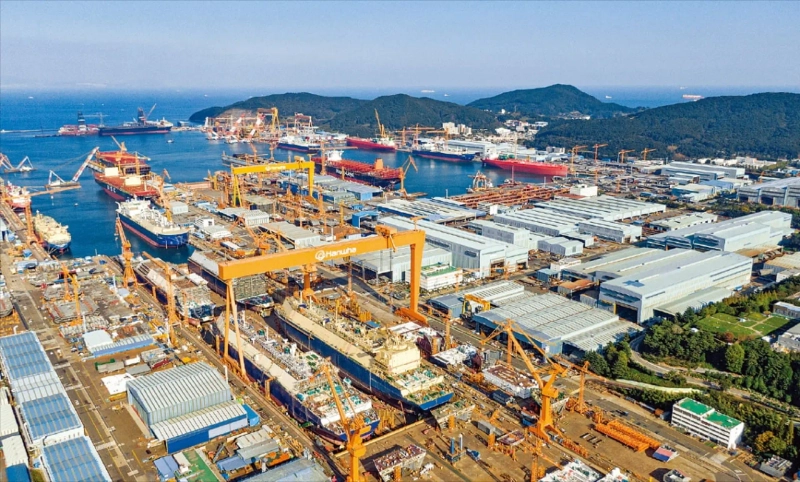
China will defer sanctions on five U.S. subsidiaries of Hanwha Ocean for one year under the U.S.-China agreement to refrain from escalating the trade war.
China's Ministry of Commerce announced on the 10th, "The United States has suspended for one year, from today, the implementation of Section 301 (Trade Act) investigation measures on China's maritime, logistics and shipbuilding industries," and said it will defer sanctions on five U.S.-based subsidiaries of Hanwha Ocean for one year starting today.
Last month China placed five U.S. subsidiaries of Hanwha Ocean on a sanctions list banning transactions with Chinese companies, on the grounds that they had cooperated with the U.S. Trade Representative (USTR)'s 'Section 301 (Trade Act)' investigation targeting China's shipping, logistics and shipbuilding industries.
The sanctioned entities included the Philadelphia Hanwha Philly Shipyard in Pennsylvania — a symbol of the 'MASGA' (MASGA·Make American Shipbuilding Great Again) project, which President Lee Jae-myung visited in August — as well as Hanwha Shipping, Hanwha Ocean USA International, Hanwha Shipping Holdings, and HS USA Holdings.
According to the fact sheet on the trade agreement between the U.S. and China released by the White House on the 1st, China agreed to withdraw measures it had implemented to retaliate against the United States' 'Section 301 (Trade Act)' investigation of China's shipping, logistics and shipbuilding industries, and to lift sanctions it had imposed on various shipping companies.
Meanwhile, following the summit in Busan last month between President Donald Trump and President Xi Jinping, the U.S. and China, which agreed to 'refrain from escalating the trade war,' put some additional tariffs and retaliatory trade measures targeting each other on hold from today.
On that day the United States lowered the so-called 'fentanyl tariffs' it had imposed on Chinese goods this year from the previous 20% to 10%. As a result, the Trump administration's average tariff rate on China fell from 57% to 47%. China also, as of that day, suspended measures that had imposed additional tariffs of 15% on U.S. chicken, wheat, corn and cotton, and 10% on sorghum, soybeans, pork, beef and seafood. These tariffs were retaliatory duties corresponding to the U.S. 'fentanyl tariffs.'
They also deferred the already suspended 24% additional tariffs on U.S. goods and export control measures on rare earths and others, which had been scheduled to take effect on the 8th, until November 10 next year. Purchases of U.S. soybeans and other agricultural products and imports of logs were also resumed.
The U.S. and China also formally implemented from today a plan to extend for one year the 'truce' over the ultra-high tariff skirmish exceeding 100% that they had imposed on each other since April.
Beijing=Correspondent Kim Eun-jung kej@hankyung.com

Korea Economic Daily
hankyung@bloomingbit.ioThe Korea Economic Daily Global is a digital media where latest news on Korean companies, industries, and financial markets.