

"'156 yen per dollar by year-end'…Yen values revised downward in succession"
Summary
- It reported that, due to the Bank of Japan's delayed rate hikes and the government's fiscal expansion policy, the yen/dollar exchange rate forecast was raised to 156 yen per dollar.
- Major financial firms such as JPMorgan Chase Bank and Mitsubishi UFJ Bank simultaneously raised their year-end forecasts, reflecting yen depreciation.
- The market is also raising the possibility of exchange-rate intervention by the Japanese government and the Bank of Japan.
Delayed rate hikes and fiscal expansion policies
Growing expectations of yen weakness…"Possibility of exchange-rate intervention"
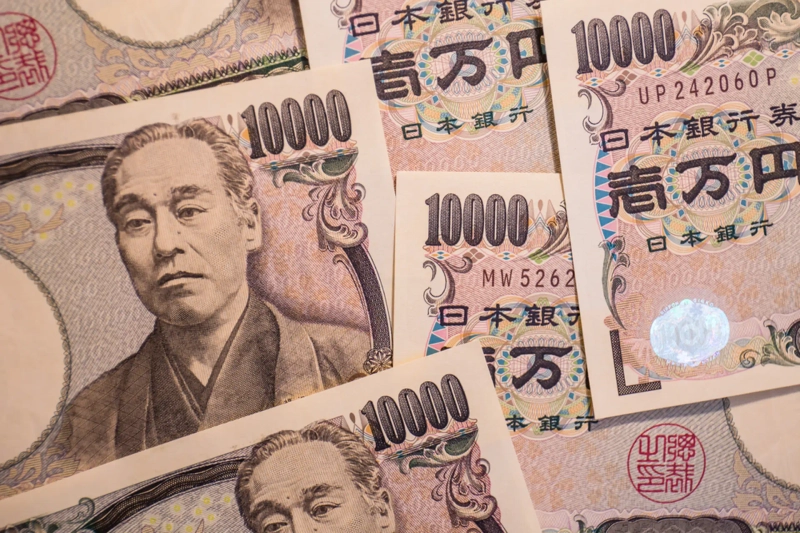
Domestic and international financial firms in Japan have repeatedly issued forecasts that the yen will fall further against the dollar. This is because expectations of an early policy rate hike by the Bank of Japan have receded, and selling pressure on the yen has intensified amid concerns about Prime Minister Sanae Takaichi's fiscal expansion policies. Markets have begun to raise the possibility of exchange-rate intervention by the Japanese government and the Bank of Japan.
According to the Nikkei on the 10th, the yen fell more than 4% against the dollar over the month of October, showing a more pronounced weakness than other currencies. The same has been true in November. The yen/dollar rate rose at one point on the 4th to the mid-154 yen per dollar, bringing the yen to its weakest level since February. On the 10th, it traded around 154 yen per dollar.
JPMorgan Chase Bank in a report on the 31st of last month projected the year-end yen/dollar rate at 156 yen per dollar. The previous forecast was 142 yen per dollar, representing a significant downward revision of the yen's value. On the same day, Mitsubishi UFJ Bank raised its year-end yen/dollar forecast from 144 yen per dollar to 152 yen, and Sumitomo Mitsui Banking Corporation raised theirs from 147 yen to 153 yen. That reflects expectations that the yen's value will decline that much.
The day before financial firms revised their yen/dollar forecasts, the Bank of Japan kept its policy rate unchanged. Governor Kazuo Ueda said at a press conference regarding the decision on a rate increase, "I do not have any preconceived judgment at this time." The market interpreted the Bank of Japan as taking a cautious stance toward further rate hikes, which spread yen selling.
There are also concerns about the Takaichi administration's 'responsible proactive fiscal' policy. The Japanese government plans to prepare inflation measures later this month and to pass a supplementary budget in the Diet to secure funding. The new private-sector members of the Council on Economic and Fiscal Policy announced on the 7th include proponents of active fiscal spending, the 'reflation faction.'
The yen's nominal effective exchange rate (Nikkei currency index, 2020=100) stood at 71.4 on the 31st of last month. It fell to its lowest level since last July, when the Japanese government and the Bank of Japan carried out yen-buying intervention. The Nikkei reported, "The market is also seeing the possibility of exchange-rate intervention."
Tokyo = Kim Il-gyu, correspondent black0419@hankyung.com

Korea Economic Daily
hankyung@bloomingbit.ioThe Korea Economic Daily Global is a digital media where latest news on Korean companies, industries, and financial markets.